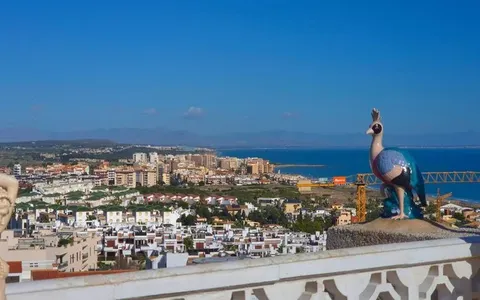
La Mata is an upscale coastal neighbourhood 6 km north of Torrevieja, widely regarded as one of the most desirable residential areas on the southern Costa Blanca. With its 4 km Blue Flag beach, protected natural park, and fresh-water lagoon of La Mata, the area offers a quieter, more refined alternative to the busier resort towns. Property here commands a premium over Torrevieja — reflecting the superior beach quality, lower building density, and a more exclusive residential atmosphere.
La Mata is a small coastal village forming part of the municipality of Torrevieja, situated 6 km north of the city centre. Despite its proximity to one of Spain's busiest resort towns, La Mata has retained its own identity — quieter, greener, and more residential in character.
The property market in La Mata is dominated by resale stock from the 1990s and 2000s, with a smaller number of renovated and new-build properties. In 2026, average prices range from €1,400–1,900 per m² — consistently below Torrevieja city and well below comparable coastal areas like Alicante or Benidorm.
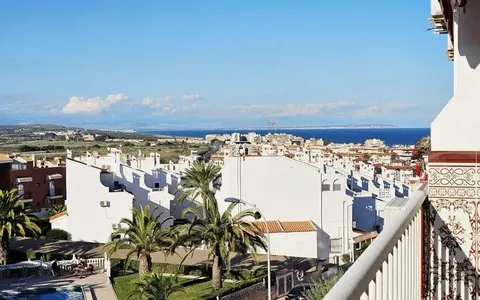
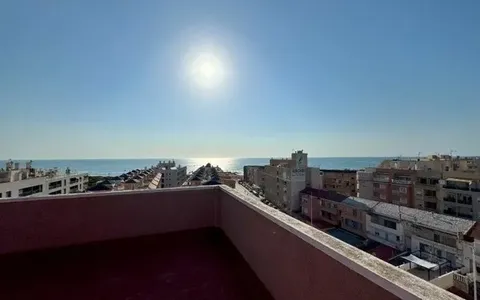
The village sits between the Mediterranean coast to the east and the Laguna de La Mata to the west — a protected salt lagoon that forms part of the Parque Natural de las Lagunas de La Mata y Torrevieja. This unique setting limits future development, which helps stabilise property values and preserves the character of the area.
Transport links are good: Torrevieja city is 15 minutes by car (bus lines also run regularly), and Alicante-Elche airport is reachable in 45 minutes via the AP-7 motorway.
La Mata beach and natural park — what makes this area special
La Mata's 4 km Blue Flag beach is the centrepiece of life in the village. The beach is wide, gently shelving, and consistently cleaner and less crowded than the main Torrevieja beaches. During peak summer, the morning and late afternoon hours remain peaceful — a rarity on the Costa Blanca.
The Parque Natural de las Lagunas de La Mata y Torrevieja borders the village to the west. This protected area hosts over 200 bird species including flamingos, herons, and rare waders. The park has marked walking and cycling trails that wind around the lagoon — a daily ritual for many residents.
The fresh-water Laguna de La Mata creates a microclimate that is noticeably more humid and temperate than Torrevieja city. This is particularly appreciated in summer (milder coastal breeze) and winter (frost-free with mild temperatures).
For water sports, La Mata has two small marinas with kayak and paddleboard rentals, plus scuba diving schools that take advantage of the clear Mediterranean waters and rocky reefs to the north.
Living in La Mata — access to Torrevieja services
One of La Mata's greatest advantages is its proximity to Torrevieja (6 km, 10–15 minutes by car or bus) without the noise and congestion of city living. Residents enjoy village tranquillity while having access to all urban amenities within a short drive.
Healthcare: the Hospital Universitario de Torrevieja is 15 minutes away — one of the most modern public hospitals in the Valencia region. Multiple private clinics (including international-facing options with English-speaking staff) are also available in Torrevieja.
Shopping: Torrevieja has two Mercadona supermarkets, a Carrefour hypermarket, and several shopping centres. The weekly Saturday market in Torrevieja is one of the largest in the province, offering fresh produce, clothing, and household goods.
In La Mata itself: the village has a small supermarket (open year-round), a pharmacy, a post office, several restaurants and beach bars, and a number of estate agencies. For everyday essentials, many residents rarely need to leave the village at all.
Eating out: La Mata has a growing restaurant scene with excellent Spanish seafood and international cuisine. The beachfront chiringuitos (beach bars) are particularly popular from March through November.
Neighbourhoods in La Mata and property prices
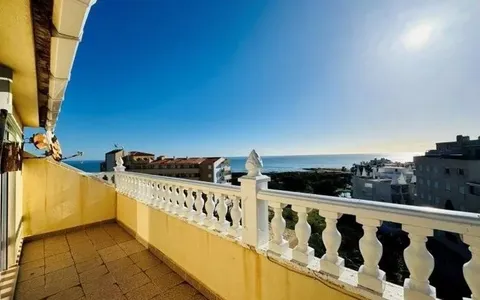
Beachfront (Primera línea / Paseo Marítimo): the most premium location — apartments and bungalows with direct sea views or beach access. Limited supply keeps prices elevated: one-bedroom apartments from €120,000–160,000, two-bedroom from €150,000–220,000.
Village centre (Centro La Mata): within walking distance of the beach and all village amenities. The sweet spot for buyers wanting convenience without the premium price. Apartments from €85,000, bungalows from €100,000.
North La Mata / Urbanisations: slightly further from the beach (5–10 minute walk), with larger plots and more villa options. Quieter streets, more Spanish-style residential character. Bungalows from €90,000, townhouses from €130,000, villas from €180,000.
La Mata Lagoon side: west-facing properties with views of the nature park. Unusual micro-location — not for everyone but valued by those who prioritise nature over sea views. Prices at the lower end of the market, from €80,000 for a one-bedroom.
La Mata lifestyle — peace, nature, and community
La Mata attracts buyers who prioritise quality of life over nightlife. The village has no large clubs or loud bars — the evenings are characterised by walks along the paseo, outdoor dining at the beachside restaurants, and the social life of a close-knit international community.
The year-round population in La Mata is relatively stable compared to many Costa Blanca resorts that become ghost towns in winter. A core of permanent residents keeps local businesses open and maintains the community's social fabric.
Outdoor activities are central to life here: morning walks on the beach, cycling around the lagoon, birdwatching in the natural park, and paddleboarding in the summer. Many residents report that their fitness and wellbeing improve significantly after moving to La Mata.
The social calendar includes regular events: outdoor markets, cultural festivals during summer, live music at the chiringuitos, and community gatherings organised by the various expat clubs (British, Scandinavian, German). It is easy to build a social life here even if you arrive knowing nobody.
Investing in La Mata property — rental yields and appreciation
La Mata offers solid investment fundamentals for the Costa Blanca market. The combination of low entry prices, a long rental season, and limited new supply creates a favourable environment for buy-to-let investors.
Rental season: La Mata's season extends from late April through October — approximately 7 months. Peak demand is June–September, with occupancy rates of 85–95% for well-presented properties. The protected natural park setting attracts eco-conscious tourists who return year after year.
Gross rental yield: typically 5–7% annually for a well-located two-bedroom apartment. Ground-floor bungalows with private gardens can achieve 7–8% due to high demand from families with children or pets.
Capital appreciation: La Mata prices have grown at approximately 5–8% per year since 2020, driven by increasing demand from Northern European buyers and limited new development. The protected natural park status means the land supply cannot expand, adding to long-term scarcity value.
Tip: properties within 300 m of the beach command the highest rental premiums and are the most liquid — easiest to resell. Ground-floor bungalows and apartments with sea views or garden access let at 20–30% higher weekly rates than comparable upper-floor units.
How to buy property in La Mata — step by step
Buying property in La Mata follows the standard Spanish purchase process. Here is what to expect:
Step 1 — NIE number: all foreign buyers need a Spanish tax identification number (NIE). It can be obtained at the nearest police station or through a Spanish consulate in your home country. Allow 2–4 weeks if applying from abroad.
Step 2 — Spanish bank account: required for paying ongoing costs (community fees, utility bills, taxes). Opening takes 1–3 days with a valid passport and NIE.
Step 3 — Reservation and due diligence: once you find a property, a reservation deposit (typically €3,000–6,000) is paid to take it off the market. Your lawyer then conducts checks — title verification, outstanding debts, planning status.
Step 4 — Private purchase contract (Contrato de Arras): a binding agreement where you pay typically 10% of the purchase price. If you pull out, you lose this deposit. If the seller pulls out, they return double.
Step 5 — Completion (Notaría): the final signing before a notary. You pay the remaining balance plus purchase costs: ITP tax (10% for resale properties in Valencia region), notary fees (~0.5%), land registry fees (~0.2%), and lawyer fees (typically 1–1.5% of purchase price).
Total buying costs: budget approximately 12–14% on top of the purchase price for all taxes and fees combined.
Why buy property in La Mata?
La Mata offers something increasingly rare on the Spanish coast: a genuine village atmosphere with direct beach access and affordable prices. Situated between the Mediterranean Sea and the Laguna de La Mata natural park, the area is protected from over-development, ensuring its character is preserved.
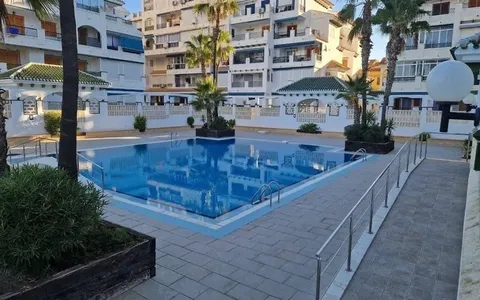
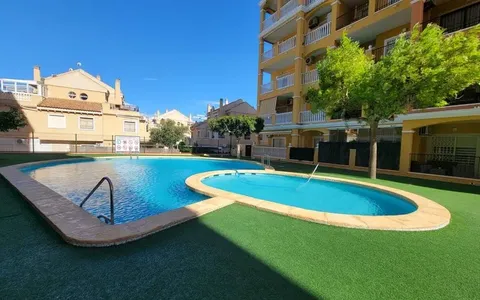
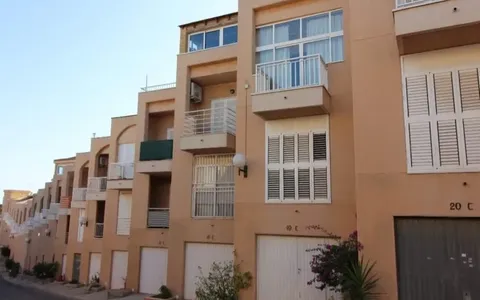
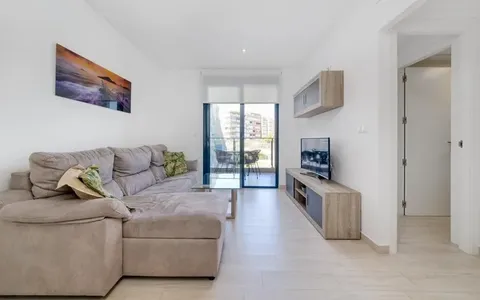
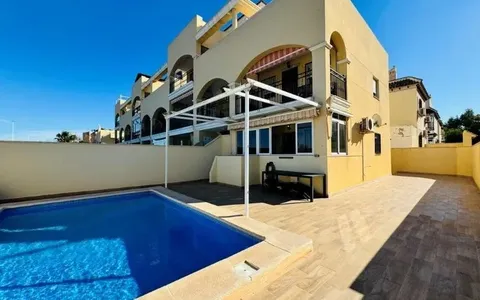
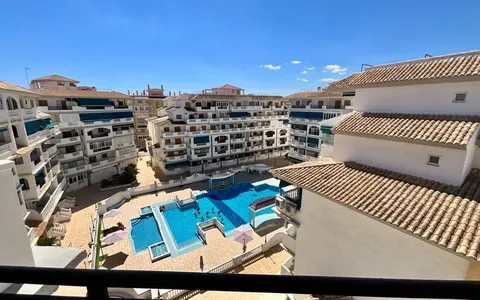
The property market here is largely made up of resale apartments and bungalows in low-rise complexes with communal pools. Most buildings are 2–4 storeys, so the village retains an open, spacious feel. Ground-floor bungalows with private gardens are particularly popular — available from €90,000.
La Mata's beachfront promenade has restaurants, bars, and a small supermarket, giving residents everything for daily life within a 10-minute walk. Larger services — hospitals, shopping centres, and the weekly Saturday market — are a 10-minute drive in Torrevieja.
Who buys in La Mata?
The typical buyer in La Mata is looking for a peaceful holiday home or permanent residence away from the noise of larger resorts. Northern European retirees (Scandinavian, British, German, Belgian) make up a significant share. The community is international but close-knit, with many year-round residents.
Investors are also attracted by the area's consistent rental demand during the long summer season (May–October). La Mata's beach quality and natural surroundings command strong occupancy rates, with weekly rental yields outperforming comparable properties in busier urban areas.
Types of property and prices in La Mata
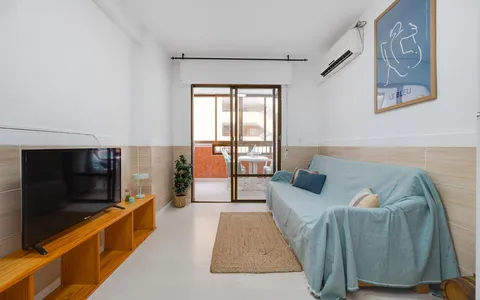
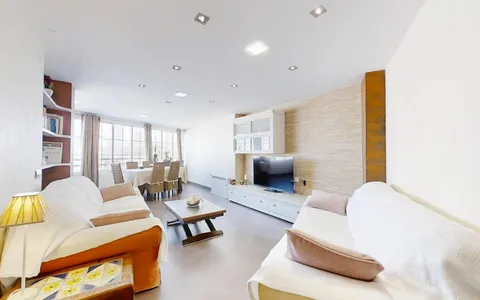
Apartments (one-bedroom): the most affordable entry point, from €80,000–110,000 for resale. Typically 45–60 m² with a balcony or terrace. Ideal for couples or as a rental investment.
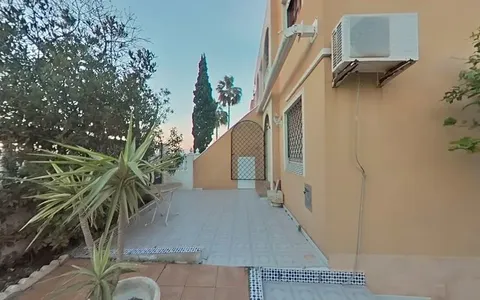
Bungalows and ground-floor units: from €90,000–140,000, with private garden or solarium. The sweet spot of the La Mata market — high demand, limited supply.
Townhouses: two-storey homes within gated communities, from €130,000–180,000. Often with private garden, two bathrooms, and rooftop solarium.
Detached villas: from €180,000 for smaller plots near the village; larger sea-view villas from €300,000+. A rare and sought-after category in La Mata.
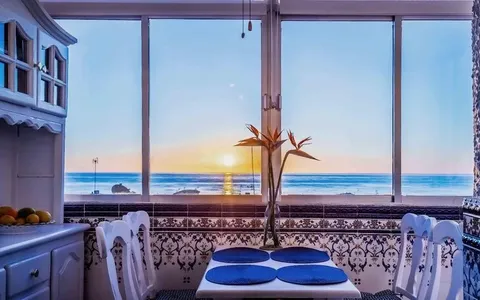
Life in La Mata means morning coffee with a sea view, a run along the promenade, Saturday market and an evening walk among the flamingos. We cover infrastructure, healthcare, transport and the international community first-hand.
700 hectares of salt lake with pink flamingo colonies — a 10-minute walk from the La Mata promenade. A nature park with walking trails, observation platforms and therapeutic mud.
Garden bungalows are La Mata's signature property type. This format is rarely built new but is hugely popular on the resale market. Plus apartments for every budget — from studios at €65,000 to penthouses at €250,000.