


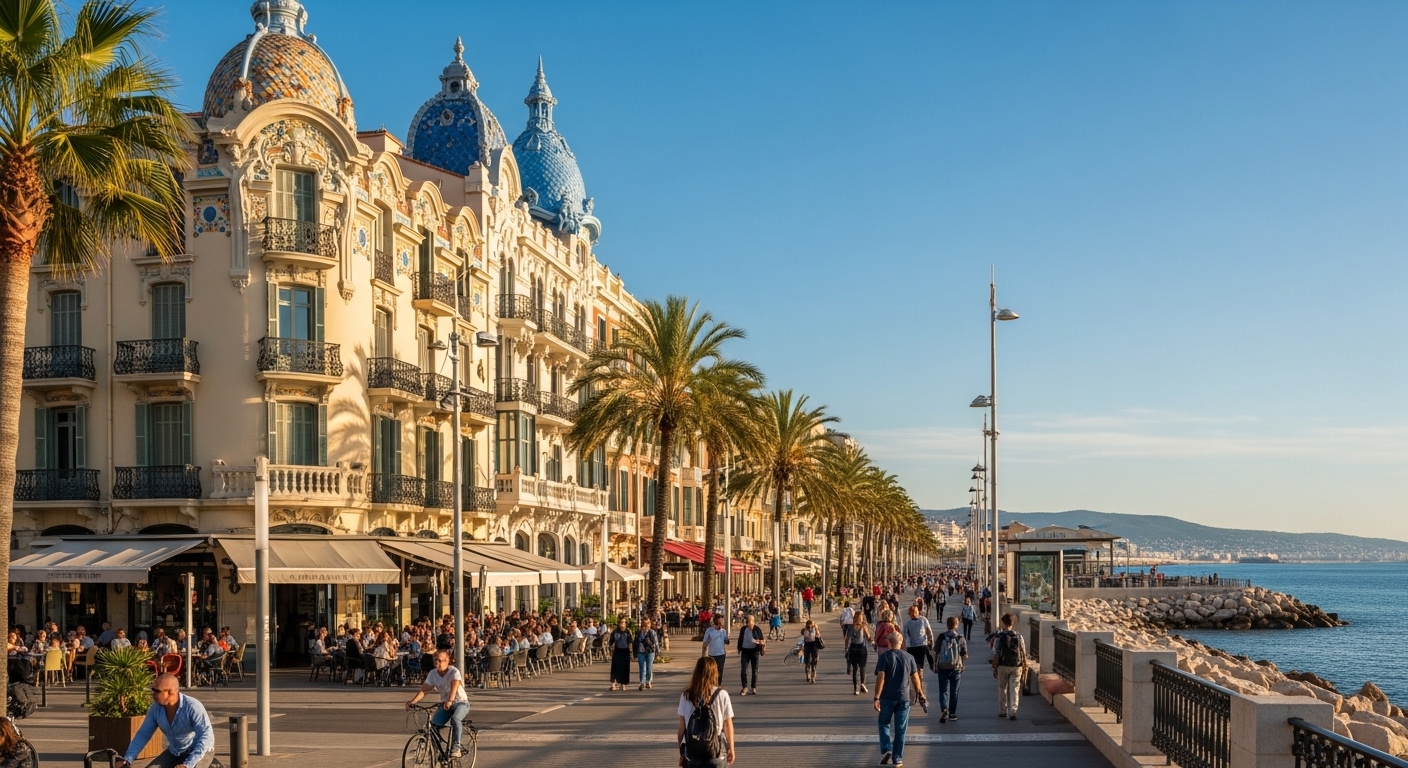
Why Barcelona and the Costa Brava?
Catalonia's capital and its stunning northern coastline have long attracted international property buyers seeking a blend of world-class urban living and Mediterranean coastal charm. Barcelona ranks consistently among Europe's most desirable cities — a cultural powerhouse with architectural marvels, a thriving tech scene, and an enviable climate. The Costa Brava, stretching from Blanes to the French border, offers rugged cliffs, hidden coves, and picturesque fishing villages that have captivated artists from Dalí to modern-day remote workers.
Together, Barcelona and the Costa Brava present a compelling property market: strong capital appreciation in the city, attractive rental yields on the coast, and a quality of life that few European regions can match. This guide walks international buyers through everything they need to know — from neighborhood-by-neighborhood pricing to the strict tourist rental licensing regime that shapes the investment landscape.
Barcelona Neighborhoods: A Buyer's Guide
Eixample — The Grand Boulevard District
Eixample is Barcelona's most iconic residential district, defined by its grid layout designed by Ildefons Cerdà in the 19th century. The chamfered corners of each block create distinctive octagonal intersections, and the neighborhood is home to some of Gaudí's greatest works, including Casa Batlló and La Pedrera. Property prices in Eixample range from €4,000 to €6,000 per square meter, depending on the specific street, floor level, and whether the apartment has been renovated.
The Eixample Esquerra (left side) tends to be slightly more affordable and is popular with families and professionals. Eixample Dreta (right side), closer to Passeig de Gràcia, commands premium prices and attracts luxury buyers. Apartments here typically feature high ceilings (3.5–4 meters), original mosaic floors, and large windows — architectural hallmarks that are increasingly rare and highly valued.
For investors, Eixample offers stability. Rental demand is consistently high due to the central location, excellent metro connections, and the concentration of offices and universities. Expect gross rental yields of 3.5–4.5% for long-term lets.
Gràcia — The Village Within the City
Gràcia retains the feel of the independent town it once was before Barcelona absorbed it in the late 19th century. Narrow streets, intimate plazas, independent boutiques, and a bohemian atmosphere make it one of the most sought-after neighborhoods for younger buyers and creative professionals. Prices range from €3,500 to €5,200/m², with older unrenovated apartments at the lower end and fully modernized flats near Plaça del Sol commanding premiums.
Gràcia's main limitation is apartment size — units tend to be smaller than in Eixample, and buildings rarely have lifts. However, the neighborhood's walkability, vibrant food market (Mercat de l'Abaceria), and proximity to Park Güell make it a perennial favorite among international residents.
El Born — Historic Heart, Premium Prices
El Born (part of the Ciutat Vella district) is Barcelona's most atmospheric neighborhood: medieval streets, the stunning Santa Maria del Mar basilica, and a concentration of galleries, cocktail bars, and design studios. Property here is among the most expensive in the old city, with prices reaching €4,500 to €6,500/m² for renovated apartments. The neighborhood's UNESCO-adjacent historic status means renovation projects face stricter planning controls, but the payoff is owning a piece of architectural history.
El Born attracts a mix of short-stay tourists and long-term residents, though the Ajuntament (city council) has been clamping down on tourist apartments in this area. Buyers should verify the tourism license status of any property marketed as a rental investment.
Poblenou — The Innovation District
Poblenou has undergone Barcelona's most dramatic transformation. Once an industrial zone known as the "Manchester of Catalonia," it is now home to the 22@ innovation district, attracting tech companies, startups, and creative agencies. Property prices range from €3,200 to €4,800/m², making it more accessible than the central neighborhoods while offering excellent growth potential.
The neighborhood combines converted factory lofts, modern new-builds, and traditional Catalan apartments. Rambla del Poblenou provides a leafy boulevard for daily life, while Bogatell and Mar Bella beaches are a short walk away. For investors seeking capital appreciation rather than immediate yield, Poblenou is one of Barcelona's strongest bets.
Barceloneta — Beachfront Living
Barceloneta is Barcelona's traditional fishing quarter and its most beach-adjacent neighborhood. Small, characterful apartments line narrow streets just meters from the sand. Prices are €3,800 to €5,500/m², reflecting the premium for waterfront proximity. However, apartments here are typically compact (40–60 m²), and the neighborhood can feel overwhelmed by tourism in peak season.
The city has imposed some of the strictest tourist rental bans in Barceloneta, revoking hundreds of licenses since 2016. This makes it a better choice for personal use or long-term rental than for holiday let investment.
Barcelona Neighborhood Comparison
| Neighborhood | Price Range (€/m²) | Typical Size | Best For | Rental Yield (Gross) | Metro Access |
|---|---|---|---|---|---|
| Eixample | 4,000–6,000 | 80–140 m² | Families, professionals | 3.5–4.5% | Excellent |
| Gràcia | 3,500–5,200 | 50–90 m² | Young professionals, creatives | 3.8–4.8% | Good |
| El Born | 4,500–6,500 | 50–100 m² | Culture seekers, investors | 3.2–4.0% | Good |
| Poblenou | 3,200–4,800 | 60–120 m² | Tech workers, growth investors | 4.0–5.0% | Good |
| Barceloneta | 3,800–5,500 | 40–60 m² | Beach lifestyle, personal use | 3.0–3.8% | Good |
Beyond Barcelona: Sitges
Just 35 kilometers south of Barcelona, Sitges is the region's most prestigious coastal town. Known for its vibrant cultural scene, long sandy beaches, and elegant Modernista architecture, it has earned a reputation as the "Saint-Tropez of Spain." Property prices range from €3,500 to €5,500/m², with seafront villas and penthouses commanding significantly more.
Sitges offers a year-round community — unlike many Spanish coastal towns that empty out in winter — thanks to its proximity to Barcelona and a well-established international resident population. The town has excellent international schools, a lively restaurant scene, and regular Rodalies commuter trains that reach Barcelona Passeig de Gràcia in around 40 minutes.
For families relocating to the Barcelona area who want coastal living without sacrificing access to the city, Sitges is often the top choice. Rental yields are moderate (3–4% long-term) but capital appreciation has been strong, averaging 5–7% annually over the past five years.
Costa Brava: Town-by-Town Overview
Lloret de Mar
Lloret de Mar is the Costa Brava's most commercially developed resort, offering the widest range of property at accessible price points. Apartments start from €1,800/m², making it one of the most affordable coastal options in Catalonia. The town has excellent beaches, a water park, and a bustling nightlife scene. It attracts primarily budget-conscious investors and holiday home buyers. Rental yields during the summer season can be strong (5–7% gross), but off-season occupancy drops significantly.
Tossa de Mar
Tossa de Mar strikes a balance between accessibility and charm. Its walled old town (Vila Vella) is one of the most photographed spots on the Costa Brava, and the town maintains a more authentic atmosphere than neighboring Lloret. Property prices range from €2,200 to €3,800/m². The town appeals to buyers seeking a genuine Mediterranean lifestyle with good tourist infrastructure. Year-round living is feasible, with a resident population of around 6,000 that swells to over 30,000 in summer.
Cadaqués
Cadaqués is the jewel of the Costa Brava — the whitewashed fishing village where Salvador Dalí made his home. Reaching it requires driving over a winding mountain pass, which has preserved its exclusivity and beauty. Property prices reflect this: €4,000 to €7,000/m² for village houses, with premium seafront properties exceeding €8,000/m². The market here is small and illiquid — properties rarely come to market, and when they do, they sell quickly to a well-informed buyer pool. Cadaqués is best suited for buyers seeking a prestige second home rather than a pure investment play.
Begur
Begur is a hilltop medieval village with access to some of the Costa Brava's most beautiful coves: Sa Riera, Aiguafreda, Sa Tuna, and Aiguablava. Property prices range from €3,500 to €6,000/m², with luxury villas offering sea views reaching well beyond that. The town has experienced significant interest from Northern European buyers, particularly from the Netherlands, Germany, and the UK. Begur combines natural beauty with a sophisticated dining and cultural scene, making it one of the most balanced options on the Costa Brava for both lifestyle and investment.
Tourist Rental Regulations in Catalonia
Catalonia — and Barcelona in particular — has some of Spain's strictest tourist rental regulations. Understanding these rules is critical for any buyer considering short-term rental income.
Barcelona city: The Ajuntament imposed a moratorium on new tourist accommodation licenses (Habitatge d'Ús Turístic, or HUT) in most central neighborhoods in 2014. In 2024, the city announced plans to phase out all existing tourist apartment licenses by November 2028, affecting approximately 10,000 licensed properties. This makes Barcelona one of the most restrictive cities in Europe for short-term rentals. Buyers should never assume they can obtain a tourist license for a Barcelona apartment — the vast majority cannot.
Costa Brava municipalities: Outside Barcelona, regulations vary by town. Many Costa Brava municipalities still issue HUT licenses, particularly for standalone houses and villas. However, the Generalitat de Catalunya (regional government) has been tightening rules across the board, requiring properties to meet specific habitability standards and imposing limits on the number of licenses per zone. Always verify the licensing situation with the local ajuntament before purchasing with rental intent.
Penalties: Operating an unlicensed tourist rental in Catalonia carries fines of €30,000 to €600,000. Enforcement has intensified, with the authorities using data from booking platforms and neighbor complaints to identify illegal operators.
Catalonia Tax Specifics
Property taxation in Catalonia has several region-specific elements that buyers should understand:
- Transfer Tax (ITP): For resale properties, the rate is 10% of the purchase price in Catalonia — higher than the 6–7% in some other Spanish regions. This is a significant additional cost that should be factored into your budget.
- VAT (IVA) on new builds: 10% applies to new-build residential properties, plus 1.5% stamp duty (AJD) in Catalonia.
- Wealth Tax: Catalonia applies Spain's national wealth tax with regional modifications. Non-residents with Spanish property worth over €700,000 are subject to rates from 0.2% to 3.5%. Catalonia's rates are among the highest in Spain.
- Solidarity Tax: An additional tax on net wealth exceeding €3 million, introduced nationally in 2023, applies at rates from 1.7% to 3.5%.
- Municipal Capital Gains Tax (Plusvalía): Levied on the increase in land value when you sell. Rates vary by municipality — Barcelona's rates are among Spain's highest.
- Non-Resident Income Tax: If you do not rent out your Spanish property, you must still pay imputed income tax at 24% (or 19% for EU/EEA residents) on 1.1% of the cadastral value annually.
Overall, Catalonia is one of Spain's most expensive regions from a tax perspective. Buyers should compare the total cost of ownership carefully against regions like Valencia or Andalusia.
International Schools
Barcelona has one of Spain's strongest selections of international schools, a major draw for relocating families:
- The British School of Barcelona (BSB): Located in Castelldefels, offering the English National Curriculum and IB Diploma. One of the most established international schools in Spain.
- American School of Barcelona (ASB): In Esplugues de Llobregat, following a US-aligned curriculum with IB programmes.
- Deutsche Schule Barcelona: German curriculum school in Esplugues with an excellent academic reputation.
- Lycée Français de Barcelone: French curriculum school in Pedralbes, part of the global AEFE network.
- Zürich Schule Barcelona: Swiss-model school offering multilingual education in German, Spanish, Catalan, and English.
- SEK Catalunya: Part of the SEK group, offering the IB curriculum in a modern campus in La Garriga, north of Barcelona.
On the Costa Brava, options are more limited. Families in Begur or Cadaqués typically choose schools in Girona, where the Escola Internacional del Camp and other private institutions offer bilingual or international programmes. Sitges families benefit from proximity to the Barcelona schools listed above.
Barcelona vs. Madrid: Market Comparison
International buyers often weigh Barcelona against Madrid. Here are the key differences:
| Factor | Barcelona | Madrid |
|---|---|---|
| Average price (prime areas) | €4,500–6,000/m² | €5,000–8,000/m² |
| Price growth (5-year avg.) | 5–7% p.a. | 6–9% p.a. |
| Tourist rental regulation | Very strict (license moratorium) | Strict but licenses still available |
| Transfer Tax (ITP) | 10% | 6% |
| Wealth Tax | 0.2–3.5% | Effectively 0% (100% rebate) |
| Beach access | Yes — city beaches | No — inland city |
| International airport | El Prat (BCN) | Barajas (MAD) |
| Climate | Mediterranean coastal | Continental (hot summers, cold winters) |
| Lifestyle | Coastal, design-focused, Catalan identity | Urban, cosmopolitan, central hub |
Madrid offers lower transaction taxes, no effective wealth tax, and stronger recent price growth. Barcelona counters with beach access, the Costa Brava on its doorstep, and a lifestyle that many international buyers find more immediately appealing. For pure investment returns, Madrid currently has the edge; for lifestyle-driven purchases, Barcelona often wins.
Seasonal vs. Year-Round Living
One of the most important decisions for property buyers in this region is whether they plan to live year-round or seasonally. This choice affects everything from neighborhood selection to property type and rental strategy.
Year-round living is highly feasible in Barcelona and Sitges, both of which have full urban infrastructure, healthcare, and vibrant off-season communities. The city's mild winters (average January temperature 10°C) make outdoor living possible almost year-round. Costa Brava towns vary: Begur and Tossa de Mar maintain modest year-round populations, while smaller coves can feel isolated from October to April.
Seasonal buyers (typically April–October use) should consider the Costa Brava, where properties are purpose-built for summer enjoyment and the price-to-quality ratio is often better than in the city. A villa in Begur with a pool and sea views may cost the same as a two-bedroom apartment in Eixample, but the lifestyle during summer months is incomparable. Be aware that winterizing a Costa Brava property (heating systems, dehumidification, security) adds to ownership costs.
Many buyers adopt a hybrid strategy: a modest apartment in Barcelona for year-round urban access and a Costa Brava property for summer weekends and holidays. The two areas are connected by the AP-7 motorway (1–1.5 hours to most Costa Brava towns) and regional train services.
Transport and Connectivity
Catalonia's transport infrastructure is a major asset for property owners:
- El Prat Airport (BCN): Spain's second-busiest airport, with direct flights to over 200 destinations. Located 15 km southwest of Barcelona, accessible via Aerobus, metro (L9 Sud), and taxi. The planned expansion and new terminal will increase capacity significantly.
- Girona-Costa Brava Airport (GRO): A smaller airport serving budget carriers (primarily Ryanair), useful for Costa Brava property owners flying from Northern Europe. Located 20 minutes from Girona and 40–70 minutes from most Costa Brava towns.
- AVE High-Speed Rail: Barcelona Sants is connected to Madrid (2h 30min), Seville (5h 30min), and Marseille (4h 45min) by high-speed train. The Barcelona–Madrid route runs roughly hourly and is often faster than flying door-to-door.
- Rodalies Commuter Rail: Extensive suburban network connecting Barcelona to Sitges, Vilanova, Castelldefels, and other coastal towns. Affordable and frequent.
- Ferries: Regular services from Barcelona port to Mallorca (Palma), Ibiza, and Menorca. Journey times range from 4 to 8 hours (or 2 hours by fast ferry to Palma), making island-hopping feasible for weekend trips.
- Road Network: The AP-7 motorway runs the length of the Costa Brava. The C-32 coastal motorway connects Barcelona to Sitges and the Garraf coast. Road quality is excellent throughout Catalonia.
Investment Analysis: Capital Appreciation vs. Rental Yields
The Barcelona and Costa Brava markets present distinct investment profiles that suit different buyer strategies.
Capital Appreciation
Barcelona's property market has shown consistent long-term appreciation, recovering strongly from the 2008–2014 correction. Prime neighborhoods have appreciated 40–60% since 2015 trough levels. Key appreciation drivers include limited new supply in central neighborhoods (strict planning controls on the Eixample grid, heritage protections in Ciutat Vella), sustained demand from international buyers and digital nomads, and Barcelona's growing status as a Southern European tech hub.
On the Costa Brava, appreciation has been more selective. Premium locations (Cadaqués, Begur, Calella de Palafrugell) have seen strong growth of 5–8% annually, while more commoditized resort towns (Lloret, Platja d'Aro) have lagged at 2–4%. The scarcity factor — many of the best Costa Brava locations simply cannot expand due to natural park protections and planning restrictions — supports long-term price resilience.
Rental Yields
Barcelona's strict tourist rental regime has paradoxically strengthened long-term rental yields. With short-term supply constrained, long-term rental demand has intensified, pushing rents to record levels. A well-located two-bedroom apartment in Eixample or Gràcia can achieve gross yields of 4–5% on long-term lets. However, Catalonia's rent control legislation (Llei de contenció de rendes) caps annual increases and limits rents in designated "tensed market" zones, which now include most of Barcelona.
The Costa Brava offers higher seasonal yields but more variable annual returns. A licensed holiday villa in Begur might generate €25,000–€40,000 in gross summer rental income (June–September), translating to gross yields of 4–6% on the property value. Off-season, the same property may sit empty or earn minimal income. The all-in yield after management fees, maintenance, and vacancy typically nets 3–4%.
Recommendation by Buyer Profile
- Capital growth focus: Barcelona Poblenou or Eixample Esquerra — strong fundamentals, improving neighborhoods, limited supply.
- Rental income focus: Licensed Costa Brava villa in Begur or Tossa de Mar — higher gross yields, seasonal demand.
- Balanced approach: Sitges — moderate appreciation, stable year-round rental demand, lifestyle premium.
- Prestige / legacy purchase: Cadaqués or El Born — trophy locations with long-term value resilience but lower liquidity.
Final Considerations
Barcelona and the Costa Brava offer one of Europe's most compelling property markets — but it is also one of the most complex. The regulatory environment, particularly around tourist rentals and taxation, demands careful due diligence. Engage a local lawyer (abogado) experienced in Catalan property law, verify all licenses before committing, and model your investment with realistic assumptions about rental restrictions and tax obligations.
For lifestyle buyers, this region delivers an extraordinary quality of life: world-class culture, exceptional cuisine, reliable sunshine, and a Mediterranean coastline that remains genuinely beautiful despite decades of development pressure. The combination of Barcelona's urban energy and the Costa Brava's natural splendor is difficult to replicate anywhere else in Southern Europe.
Frequently Asked Questions
Barcelona Neighborhoods: A Buyer's Guide?
Eixample — The Grand Boulevard District
Eixample is Barcelona's most iconic residential district, defined by its grid layout designed by Ildefons Cerdà in the 19th century. The chamfered corners of each block create distinctive octagonal intersections, and the neighborhood is home to some of Gaudí's greatest works, including Casa Batlló and La Pedrera. Property prices in Eixample range from €4,000 to €6,000 per square meter, depending on the specific street, floor level, and whether the apartment has been renovated. The Eixample Esquerra (left side) tends to be slightly more affordable and is popular with families and professionals. Eixample Dreta (right side), closer to Passeig de Gràcia, commands premium prices and attracts luxury buyers. Apartments here typically feature high ceilings (3.5–4 meters), original mosaic floors, and large windows — architectural hallmarks that are increasingly rare and highly valued.
Beyond Barcelona: Sitges?
Just 35 kilometers south of Barcelona, Sitges is the region's most prestigious coastal town. Known for its vibrant cultural scene, long sandy beaches, and elegant Modernista architecture, it has earned a reputation as the "Saint-Tropez of Spain." Property prices range from €3,500 to €5,500/m², with seafront villas and penthouses commanding significantly more. Sitges offers a year-round community — unlike many Spanish coastal towns that empty out in winter — thanks to its proximity to Barcelona and a well-established international resident population. The town has excellent international schools, a lively restaurant scene, and regular Rodalies commuter trains that reach Barcelona Passeig de Gràcia in around 40 minutes.
Tourist Rental Regulations in Catalonia?
Catalonia — and Barcelona in particular — has some of Spain's strictest tourist rental regulations. Understanding these rules is critical for any buyer considering short-term rental income. Barcelona city: The Ajuntament imposed a moratorium on new tourist accommodation licenses (Habitatge d'Ús Turístic, or HUT) in most central neighborhoods in 2014. In 2024, the city announced plans to phase out all existing tourist apartment licenses by November 2028, affecting approximately 10,000 licensed properties. This makes Barcelona one of the most restrictive cities in Europe for short-term rentals. Buyers should never assume they can obtain a tourist license for a Barcelona apartment — the vast majority cannot.
International Schools?
Barcelona has one of Spain's strongest selections of international schools, a major draw for relocating families: The British School of Barcelona (BSB): Located in Castelldefels, offering the English National Curriculum and IB Diploma. One of the most established international schools in Spain. American School of Barcelona (ASB): In Esplugues de Llobregat, following a US-aligned curriculum with IB programmes. Deutsche Schule Barcelona: German curriculum school in Esplugues with an excellent academic reputation. Lycée Français de Barcelone: French curriculum school in Pedralbes, part of the global AEFE network. Zürich Schule Barcelona: Swiss-model school offering multilingual education in German, Spanish, Catalan, and English. SEK Catalunya: Part of the SEK group, offering the IB curriculum in a modern campus in La Garriga, north of Barcelona. On the Costa Brava, options are more limited. Families in Begur or Cadaqués typically choose schools in Girona, where the Escola Internacional del Camp and other private institutions offer...
Seasonal vs. Year-Round Living?
One of the most important decisions for property buyers in this region is whether they plan to live year-round or seasonally. This choice affects everything from neighborhood selection to property type and rental strategy. Year-round living is highly feasible in Barcelona and Sitges, both of which have full urban infrastructure, healthcare, and vibrant off-season communities. The city's mild winters (average January temperature 10°C) make outdoor living possible almost year-round. Costa Brava towns vary: Begur and Tossa de Mar maintain modest year-round populations, while smaller coves can feel isolated from October to April.
Why Granfield Estate?
-
⚑
Office on the coast — we live here
Our office is in La Mata, Torrevieja. We know every neighbourhood, every street and the real prices — not from a catalogue, but from daily work on the ground.
-
⚖
In-house lawyer — 10+ years of experience
NIE, bank account, property check, contract, notary — legal support at every step. First consultation free.
-
🏠
Property management
Buying to rent? Our management company handles tenant search, maintenance and all questions.
-
🌐
We speak your language
English, Spanish, Russian, German, Finnish, Swedish and more. Licence RAICV 1663, member of Asivega.
Granfield Estate · Av. Bélgica 1, C.C. Parquemar, La Mata, 03188 Torrevieja · +34 865 44 33 33
Read also

Benidorm: Investment and Rental Property
21.05.2026
Complete guide to property investment in Benidorm: 6-8% rental yields, area comparisons, updated prices and year-round rental potential.

Costa Blanca Property Guide 2026: Complete Buyer's Handbook
22.05.2026
Everything you need to know about buying property on Spain's Costa Blanca — from Dénia in the north to Torrevieja in the south, with real prices, honest area comparisons, and practical advice.

Costa del Sol Property Guide: Malaga to Gibraltar
23.05.2026
From Marbella luxury to Nerja charm — a complete guide to buying property on Spain's Costa del Sol, with prices, area comparisons, and investment insights.