


Beaches of Los Alcázares: Warm Waters for Families All Year
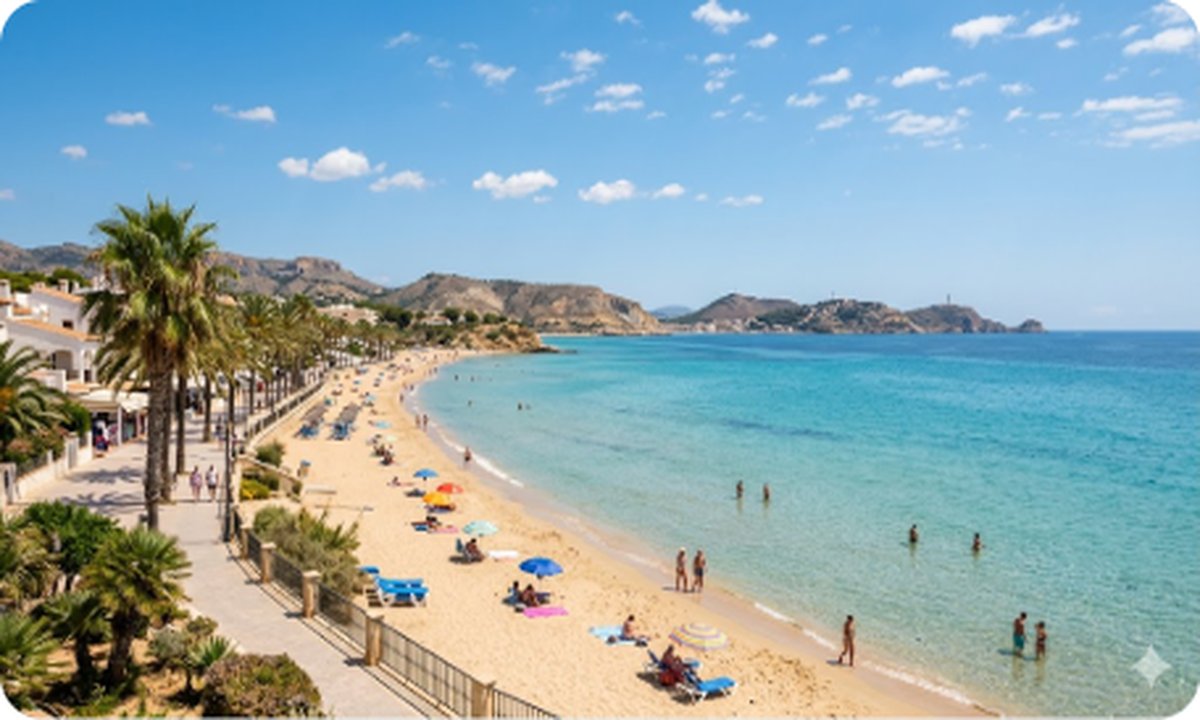
Los Alcázares is fundamentally about water. The town exists because of the Mar Menor — a saltwater lagoon covering 135 km², separated from the Mediterranean Sea by the narrow La Manga sandbar. This lagoon is the primary reason people buy property here, come on holiday and decide to stay.
At Granfield Estate, we often start property viewings with a walk along the seafront promenade. Clients see the water, feel the air temperature, hear children playing in the shallows — and begin to understand why this place works.
Mar Menor Beaches in Los Alcázares
The Los Alcázares coastline stretches approximately 7 kilometres along the Mar Menor. All of it features a gentle entry to the water, minimal waves and warm temperatures. But the beaches differ in infrastructure and character.
Playa de la Concha
The town's main beach, directly opposite the centre. Approximately 800 metres long and 30-50 metres wide. Fine golden sand with full infrastructure: showers, toilets, chiringuitos, sun lounger and parasol hire. Lifeguard service operates from June to September. The seafront promenade with restaurants and shops is right behind it. The busiest beach, but there is enough space even in August.
Its distinctive feature is the curved shoreline, which gives the beach its name — La Concha means "The Shell". The bay shape makes the water even calmer than along the rest of the lagoon's coast.
Playa del Espejo
South of La Concha, in the area of older villas. Quieter and less developed. About 600 metres long. The name "Mirror" comes from the exceptionally smooth water surface on windless days — the Mar Menor literally reflects the sky. Less infrastructure than La Concha, but showers and lifeguards are present. A good choice for those who prefer tranquillity.
Playa de los Narejos
North of the centre, in the Los Narejos district. Over 1 kilometre long. A wide sandy beach with a gentle slope. This area has many new residential complexes, and the beach is becoming increasingly well-equipped. There are playgrounds right on the promenade and volleyball courts on the sand. Less crowded than La Concha but with solid infrastructure.
Playa Manzanares
The southernmost beach in Los Alcázares, closer to the boundary with Los Urrutias. Quiet, natural, with no chiringuitos or sun loungers. About 500 metres long. Used mainly by locals who value solitude. The water is equally warm, the entry equally gentle — simply fewer people and less infrastructure.
Why the Mar Menor Is Special
No Waves
The Mar Menor is an enclosed lagoon. The La Manga sandbar shields it from the open sea. Waves in the conventional sense do not exist here. There may be light ripples when the wind picks up, but nothing more. For families with small children, for older people, for anyone who is not entirely comfortable in the water — this is a fundamental advantage.
Water Temperature: 2-5°C Warmer Than the Mediterranean
The lagoon is shallow — average depth just 3.5 metres, maximum around 7 metres. The water heats up faster and cools down more slowly than the open sea. In July and August, temperatures reach 28-32°C. The bathing season runs from May to November — nearly two months longer than on the open Mediterranean coast.
Shallow Water for Children
The depth increases so gradually that a child can walk 30-50 metres from the shore and still be standing waist-deep. This is not an exaggeration — it is a characteristic of the lagoon. Parents sit calmly on the shore while children play in the water. This is precisely why Los Alcázares has remained Murcia's number one family resort for decades.
Therapeutic Mud
The Mar Menor's muds are rich in minerals — iodine, magnesium, calcium. The tradition of therapeutic mud baths has existed here since the 19th century. The mud is collected directly from the lagoon shore (particularly in the Lo Pagán area) and applied to the skin. Official studies confirm benefits for dermatitis, arthritis and rheumatism. This is not marketing — it is a centuries-old practice recognised by medicine.
The Mediterranean Nearby
The Mar Menor is wonderful, but sometimes you want the open sea — bigger waves, deeper water, rocky coves. All of that is 15-30 minutes away by car.
La Manga (15 minutes)
The La Manga sandbar is a narrow strip of land with beaches on both sides. On one side, the Mar Menor; on the other, the Mediterranean Sea. La Manga's Mediterranean beaches are wide, sandy, with clear water and gentle surf. Infrastructure is excellent: restaurants, bars, water sports equipment hire.
Cabo de Palos (30 minutes)
A fishing village with a lighthouse and magnificent rocky coves. One of the best spots for snorkelling and diving in the region — the Islas Hormigas marine reserve. The restaurant El Mosqui is a regional legend, known for serving the best caldero (a rice and fish dish).
Calblanque (30 minutes)
A nature park with untouched beaches. No buildings, no infrastructure — just sand, rocks and sea. One of the most beautiful beaches in Spain. In summer, visitor numbers are limited and you need to arrive early. Parking is outside the park, with a 15-20 minute walk to the beach.
Beach Infrastructure
Paseo Marítimo (Seafront Promenade)
The Los Alcázares promenade runs along the entire central coastline — approximately 3 kilometres. It is wide, paved, lined with palm trees, benches and playgrounds. In the evenings, the whole town comes out for a stroll. Restaurants, cafes and ice cream shops stand in a row along the sea. A cycle path runs the full length.
Lifeguards and Safety
From June to September, lifeguards are on duty at the main beaches (La Concha, Los Narejos, El Espejo). Working hours are typically 10:00 to 19:00. The flag system applies: green for safe, yellow for caution, red for no swimming. On the Mar Menor, the red flag is raised very rarely — only during strong winds.
Accessibility
Wooden walkways to the water for wheelchairs and pushchairs. Special bathing chairs are available at La Concha. Adapted showers. Los Alcázares has received awards for beach accessibility for people with disabilities.
Chiringuitos (Beach Bars)
At La Concha and Los Narejos, chiringuitos serve drinks, snacks and full meals. Prices are moderate: beer €2-3, paella for two €15-20, a glass of wine €3-4. They operate from May to October. El Espejo and Manzanares have no chiringuitos — bring your own supplies.
Water Activities
The Mar Menor is one of Europe's best locations for water sports, particularly for beginners. The absence of waves and shallow depth make the lagoon ideal for learning.
- Windsurfing and kitesurfing — consistent wind, flat water, schools for all levels. Los Alcázares is one of Spain's kitesurfing capitals.
- Kayaking and SUP (stand-up paddle) — perfect conditions for beginners. Equipment hire available at La Concha and Los Narejos beaches.
- Sailing — Club Náutico Los Alcázares offers courses and boat hire. The Mar Menor is a traditional venue for learning to sail.
- Snorkelling and diving — the Mar Menor's underwater world is limited, but Cabo de Palos (30 minutes) is one of Spain's top dive sites.
- Jet skiing, water skiing, parasailing — available in summer at La Concha.
Beach Season by Month
| Month | Mar Menor water | Air | Activities |
|---|---|---|---|
| January | 12–14°C | 10–16°C | Promenade walks, cycling |
| February | 12–14°C | 11–17°C | Walking, birdwatching (flamingos) |
| March | 14–16°C | 13–19°C | First kitesurfers, walks |
| April | 16–18°C | 16–22°C | Kayaking, SUP, start of water season |
| May | 19–22°C | 19–25°C | First swimming, all water sports |
| June | 23–26°C | 23–29°C | Full swimming season, kitesurfing, sailing |
| July | 27–30°C | 26–33°C | Peak season, all activities |
| August | 28–32°C | 27–34°C | Warmest water, mud baths |
| September | 25–28°C | 24–30°C | Best month: warm water, fewer crowds |
| October | 21–24°C | 19–25°C | Comfortable swimming, kitesurfing |
| November | 17–19°C | 14–20°C | Last swims, walks |
| December | 14–16°C | 11–17°C | Walks, winter relaxation |
Living by the Beach
Los Alcázares is a rare case where virtually any point in town is within a 5-15 minute walk from the beach. The town stretches along the coast and is compact in width. This is not a resort where the "beach zone" is separate from the residential area — here, the beach is part of daily life.
Morning coffee on the promenade, an evening walk along the Paseo Marítimo, a quick swim before work — these are the norm for Los Alcázares residents, not a holiday luxury.
At Granfield Estate, we select properties with beach proximity in mind — because we know how much it matters for quality of life. Browse our Los Alcázares property listings.
More about Los Alcázares:
- Complete Guide to Los Alcázares
- Property Prices in Los Alcázares
- Apartments and Penthouses: Investment Guide
- Living in Los Alcázares
Frequently Asked Questions
Can you swim in Los Alcázares in winter?
Swimming in the conventional sense — no. Mar Menor water temperature drops to 12-14°C in winter. However, many Scandinavian and British residents practise winter swimming — brief immersions for cold-water therapy. There are informal "winter swimmer" groups that meet at La Concha year-round. If you are accustomed to cold water, the Mar Menor in winter is warmer than the Baltic or the North Sea in summer. The full bathing season runs from May to November.
Which beach is best for children?
Playa de la Concha is the optimal choice. Shallow water with a very gentle slope, lifeguards, chiringuitos, playgrounds on the promenade, toilets and showers. Children can play in the water 30-50 metres from shore — waist-deep for an adult. Playa de los Narejos is a good alternative, slightly quieter, with the same gentle slope and new playgrounds.
Are there dog beaches in Los Alcázares?
Yes. Los Alcázares has a designated dog bathing area — Playa Canina, located in the southern part of the coastline. It operates year-round. Dogs are prohibited on main beaches from June to September but allowed at other times (before 10:00 and after 20:00). In winter, restrictions are minimal. Many dog owners walk their pets along less-developed stretches of coastline beyond the main beaches.
Is it easy to find parking near the beach?
From October to May, it is straightforward. Free parking along the promenade and adjacent streets. In July and August, it gets tighter — spaces are available in the morning but taken by 11:00. The municipal car park near Plaza de España is a reliable option. Paid underground parking in the centre costs €1-2 per hour. The best advice: if you live in Los Alcázares, walk to the beach — the town is compact enough that a car is unnecessary for a beach trip.
Why Granfield Estate?
-
⚑
We live on the coast
Our team lives and works on the Costa Blanca. We know every neighbourhood, every street and the real prices — not from a catalogue, but from daily work on the ground.
-
⚖
In-house lawyer — 10+ years of experience
NIE, bank account, property check, contract, notary — legal support at every step. First consultation free.
-
🏠
Property management
Buying to rent? Our management company handles tenant search, maintenance and all questions.
-
🌐
We speak your language
English, Spanish, Russian, German, Finnish, Swedish and more. Licence RAICV 1663, member of Asivega.
Read also

Beaches of Guardamar del Segura: Dunes, Pine Forest and Blue Flags
02.04.2026
Guardamar's beaches are among the finest on the Costa Blanca. Wide golden sand, dunes, pine forest reaching the shore and not a single high-rise on the horizon. We cover every beach — from family-friendly Centro to wild Babilonia.

La Mata Beach: 4 Kilometres of Blue Flag Sand and Nature Park
05.04.2026
La Mata Beach is one of the best on the Costa Blanca coast. 4 kilometres of wide golden sand, Blue Flag status, gentle entry to the water and a nature park as the backdrop. We live here and will tell you everything you need to know.

Beaches of Pilar de la Horadada: Blue Flags, Dunes and Crystal Water
10.04.2026
The coastline of Pilar de la Horadada stretches for over 4 kilometres at the southernmost tip of Alicante province. Multiple Blue Flag beaches, a marina, pine-backed dunes, and water temperatures that allow swimming from May through October make this one of the most underrated beach destinations on the Costa Blanca.