


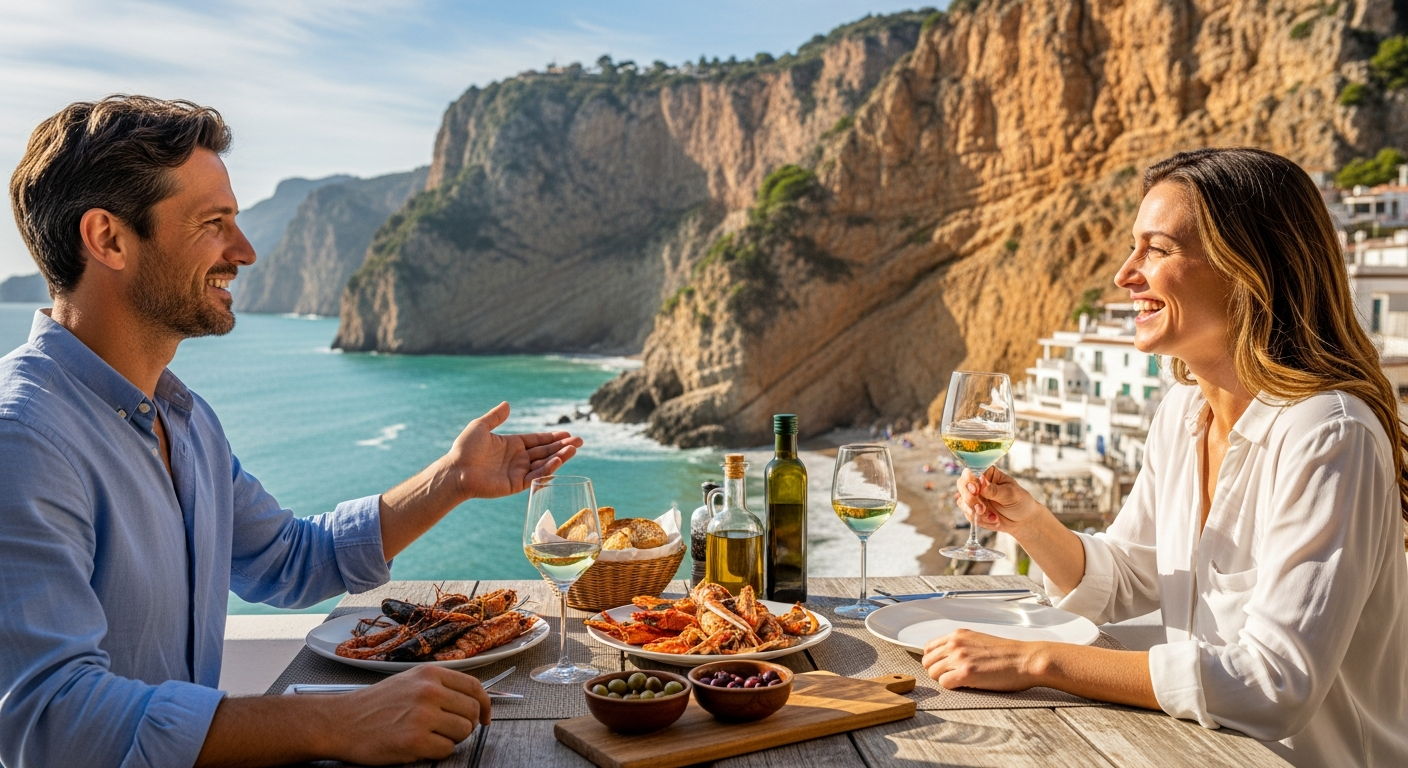
Calpe: Where the Rock Defines Everything
There is no town on the Spanish Mediterranean coast with a landmark quite like Calpe's Peñón de Ifach. This colossal limestone rock, rising 332 metres straight out of the sea, dominates the town's skyline, its beaches, and its identity. Visible from dozens of kilometres in every direction, the Peñón has served as a navigation point for sailors since Phoenician times, and today it functions as a natural park, a hiking destination, and the defining image of Calpe on every postcard, property listing, and tourist brochure ever produced about the town.
But Calpe is far more than its rock. This coastal town of approximately 22,000 permanent residents — swelling to over 60,000 in summer — sits at a fascinating geographical and cultural crossroads on the Costa Blanca. Located roughly midway between Alicante and Valencia, Calpe marks the transition zone between the more developed, budget-oriented southern Costa Blanca and the upmarket, quieter northern stretches. This position gives the town a unique character: it has the infrastructure and amenities of a well-established resort, the natural beauty and microclimate of the northern coast, and property prices that sit comfortably between the two extremes.
The Peñón de Ifach: A Natural Monument
The Peñón de Ifach Natural Park is the smallest natural park in Spain, but what it lacks in size it compensates for in impact. The rock is essentially a miniature Gibraltar — a massive limestone outcrop connected to the mainland by a narrow isthmus, with steep cliffs plunging into the Mediterranean on three sides.
A hiking trail leads from the base to the summit, taking approximately one hour each way. The path passes through a tunnel carved through the rock and emerges onto the exposed upper slopes, where the views are genuinely spectacular — on clear days, you can see the island of Ibiza, 80 kilometres offshore. The ascent is moderately challenging and requires some scrambling near the top, but it is accessible to anyone with reasonable fitness.
The ecological importance of the Peñón is considerable. The rock supports nesting colonies of Eleonora's falcon, shag, and various gull species. The marine environment at its base is rich in marine life, making it a popular diving and snorkelling spot. The Natural Park status ensures that the rock and its immediate surroundings are permanently protected from development — a guarantee that the views and character of Calpe will endure.
For property owners, the Peñón is more than scenery. It is the anchor that gives Calpe its identity and protects its long-term appeal. Towns with ordinary waterfronts can change character quickly; a town defined by an immovable 332-metre rock will always be Calpe.
Two Beaches, Two Personalities
The Peñón divides Calpe's coastline into two distinct beaches, each with its own character and residential area behind it.
Playa del Arenal-Bol
To the south of the rock, Arenal-Bol is Calpe's main beach — a long, wide crescent of golden sand that curves gently along a sheltered bay. The beach is backed by a busy promenade lined with restaurants, cafés, and shops, and behind this rises the main residential and hotel district. Arenal-Bol is the livelier of the two beaches, with full facilities, lifeguards in summer, water sports, and a social atmosphere that draws families and younger visitors.
The residential area behind Arenal-Bol contains the densest concentration of apartments and is where much of Calpe's international community lives. Many of the buildings date from the 1980s and 1990s development boom, offering functional apartments at accessible prices. Newer developments have added modern complexes with communal pools, underground parking, and contemporary finishes.
Playa de la Fossa (Levante)
To the north of the Peñón, Playa de la Fossa is a quieter, slightly more refined beach with fine sand and exceptionally clear water. The beach faces east, catching the morning sun, and is sheltered from the prevailing winds by the rock. The residential area behind La Fossa tends to be slightly more upmarket, with newer apartment complexes and better-maintained buildings.
La Fossa is particularly popular with Scandinavian and German residents, who appreciate its quieter atmosphere and the stunning views of the Peñón from the beach. The beachfront promenade has some excellent restaurants, including several that serve directly on the sand during summer months.
Old Town and Fish Market
Between the two beaches, at the foot of the Peñón, lies Calpe's old town (Casco Antiguo). This compact historic quarter features narrow streets, traditional whitewashed buildings, the remains of medieval walls, and small plazas where elderly residents gather in the shade. The old town is pleasantly free of tourist tat and maintains a genuinely Spanish atmosphere, with local bars, bakeries, and traditional shops.
Adjacent to the old town, the fishing port and its lonja (fish auction house) remain a working commercial operation. Every afternoon, the day's catch is auctioned to restaurants and wholesalers in a fast-paced, theatrical process that visitors can observe from a gallery above the auction floor. The fish market sells directly to the public, and several of the restaurants lining the harbour specialise in fresh-from-the-boat seafood at remarkably reasonable prices.
Calpe's fish market is not a tourist attraction dressed up as tradition — it is a genuine commercial fishing operation that has sustained the town for centuries. The quality of the seafood in Calpe's restaurants is a direct consequence: dishes like arroz del señoret (a shellfish rice served already peeled), suquet de peix (fish stew), and grilled red prawns from Calpe's own waters are among the finest on the Costa Blanca.
International Communities
Calpe has one of the most diverse international communities on the Costa Blanca. Unlike towns such as Torrevieja (predominantly British and Scandinavian) or Jávea (heavily British), Calpe hosts significant populations from several European countries, each contributing to the town's cosmopolitan character.
Russian Community
Calpe has attracted a substantial Russian-speaking community over the past two decades. Russian-language signs, shops, and services are visible throughout the town, particularly in the Arenal-Bol area. Russian restaurants, food shops, and professional services (lawyers, estate agents, medical practices) cater to this community. The Russian presence has contributed to a distinctive culinary and commercial scene that is unique on the Costa Blanca.
German Community
Germans form one of the largest expat groups in Calpe, with a well-established community that includes social clubs, German-speaking medical services, and cultural activities. The German community tends to be concentrated in the La Fossa area and the hillside urbanisations above the town. German-language newspapers, churches, and community organisations are active year-round.
Scandinavian Community
Norwegians, Swedes, and Danes have a long history in Calpe, particularly in the residential areas above La Fossa beach. Scandinavian churches, social clubs, and community groups are well established. The Scandinavian residents tend to be a mix of retirees and younger families, many of whom split their time between Calpe and their home countries.
British and Dutch Communities
While smaller than the Russian and German populations, British and Dutch residents maintain active community groups, participate in local charitable organisations, and contribute to Calpe's multicultural fabric. English is widely spoken in shops, restaurants, and service businesses.
Property Prices: The Best of Both Coasts
Calpe's property market benefits from its position between the more affordable south and the premium north. Prices are higher than in Torrevieja or Orihuela Costa, but significantly lower than in Moraira, Jávea, or Altea — offering what many consider the sweet spot of Costa Blanca value.
| Property Type | Price Range | Typical Locations |
|---|---|---|
| Apartments (2 bed) | €140,000 - €220,000 | Arenal-Bol, La Fossa, town centre |
| Apartments (3 bed, modern) | €200,000 - €280,000 | New developments, beachfront |
| Townhouses | €180,000 - €320,000 | Old town, urbanisations |
| Villas (3-4 bed) | €300,000 - €600,000 | Hillside urbanisations, Cometa area |
| Luxury villas | €600,000 - €800,000+ | Maryvilla, Oltamar, elevated positions |
The value proposition becomes clearer in comparison: a three-bedroom apartment with sea views and pool that might cost €250,000 in Calpe would start at €350,000 in Moraira and €400,000+ in Jávea. Conversely, the same budget in Torrevieja would buy more square metres but in a town with less natural beauty and a more mass-market character.
Calpe's hillside urbanisations deserve particular attention. Developments like Maryvilla, Oltamar, and the Cometa area offer detached villas with panoramic views of the Peñón and the Mediterranean at prices that represent genuine value by northern Costa Blanca standards. A well-maintained three-bedroom villa with pool and views might cost €350,000-€500,000 — expensive by southern standards but a fraction of what equivalent properties command in Moraira or Jávea.
Between North and South: The Best of Both Worlds
Calpe's geographical position is one of its greatest assets. The town sits at the hinge point of the Costa Blanca, where the character shifts from the mass-market south to the exclusive north. This means residents can enjoy:
- Northern qualities: Dramatic mountain scenery, protected natural areas, better air quality, less urban sprawl, and a more refined dining and cultural scene.
- Southern practicalities: Better infrastructure, more commercial services, larger supermarkets, more accessible property prices, and a livelier year-round atmosphere.
The practical connectivity is excellent. Alicante-Elche airport (ALC) is approximately 75 minutes south via the AP-7 motorway. Valencia airport is about 90 minutes north. The town is served by the narrow-gauge TRAM railway connecting to Benidorm and Alicante, and the AP-7/N-332 provides quick road access in both directions.
- Alicante airport: 75 km / 55-70 minutes
- Valencia airport: 115 km / 75-90 minutes
- Benidorm: 22 km / 20 minutes
- Altea: 12 km / 10 minutes
- Moraira: 10 km / 12 minutes
- Jávea/Dénia: 25-30 km / 25-30 minutes
Dining, Culture, and Year-Round Life
Calpe's dining scene reflects its international character. Beyond the excellent Spanish seafood restaurants at the port, the town offers Russian, German, Scandinavian, Italian, and Asian cuisines. The quality is generally high — the international community demands it, and competition keeps standards up.
The town hosts a regular programme of cultural events, markets, and festivals. The Calpe Arts Festival, music concerts at the Salón de Actos, and regular art exhibitions add cultural depth. The weekly Wednesday market is one of the largest on the Costa Blanca, attracting visitors from surrounding towns.
Year-round life in Calpe is notably more active than in smaller northern towns like Moraira or Altea. The permanent international population ensures that restaurants, shops, and services remain open throughout the winter months. While summer is undeniably the peak season, Calpe avoids the ghost-town feeling that affects some coastal towns between October and April.
Investment Perspective
Calpe's property market has shown consistent growth of 5-8% annually in recent years, driven by several factors. The limited buildable land around the Peñón and along the coastline constrains new supply. The diverse international demand base — rather than being dependent on a single nationality — provides resilience. The town's natural attractions (the rock, the beaches, the marine park) are permanent assets that will continue to draw buyers and visitors.
Rental yields are solid, with holiday apartments near the beaches generating strong summer income. The long tourist season — extending from Easter to late October — and the permanent international population support year-round rental demand. Two-bedroom beachfront apartments typically generate gross rental yields of 5-7% in well-managed holiday rental programmes.
Is Calpe Right for You?
Calpe suits buyers who want the natural beauty and quality of life associated with northern Costa Blanca, but at prices that do not require a premium budget. If you appreciate a cosmopolitan atmosphere, excellent seafood, dramatic scenery, and the security of buying in a town whose defining landmark — the Peñón de Ifach — guarantees it will never lose its character, Calpe offers a compelling and uniquely positioned proposition on the Costa Blanca.
Frequently Asked Questions
The Peñón de Ifach: A Natural Monument?
The Peñón de Ifach Natural Park is the smallest natural park in Spain, but what it lacks in size it compensates for in impact. The rock is essentially a miniature Gibraltar — a massive limestone outcrop connected to the mainland by a narrow isthmus, with steep cliffs plunging into the Mediterranean on three sides. A hiking trail leads from the base to the summit, taking approximately one hour each way. The path passes through a tunnel carved through the rock and emerges onto the exposed upper slopes, where the views are genuinely spectacular — on clear days, you can see the island of Ibiza, 80 kilometres offshore. The ascent is moderately challenging and requires some scrambling near the top, but it is accessible to anyone with reasonable fitness.
Two Beaches, Two Personalities?
The Peñón divides Calpe's coastline into two distinct beaches, each with its own character and residential area behind it. Playa del Arenal-Bol To the south of the rock, Arenal-Bol is Calpe's main beach — a long, wide crescent of golden sand that curves gently along a sheltered bay. The beach is backed by a busy promenade lined with restaurants, cafés, and shops, and behind this rises the main residential and hotel district. Arenal-Bol is the livelier of the two beaches, with full facilities, lifeguards in summer, water sports, and a social atmosphere that draws families and younger visitors.
Old Town and Fish Market?
Between the two beaches, at the foot of the Peñón, lies Calpe's old town (Casco Antiguo). This compact historic quarter features narrow streets, traditional whitewashed buildings, the remains of medieval walls, and small plazas where elderly residents gather in the shade. The old town is pleasantly free of tourist tat and maintains a genuinely Spanish atmosphere, with local bars, bakeries, and traditional shops. Adjacent to the old town, the fishing port and its lonja (fish auction house) remain a working commercial operation. Every afternoon, the day's catch is auctioned to restaurants and wholesalers in a fast-paced, theatrical process that visitors can observe from a gallery above the auction floor. The fish market sells directly to the public, and several of the restaurants lining the harbour specialise in fresh-from-the-boat seafood at remarkably reasonable prices.
International Communities?
Calpe has one of the most diverse international communities on the Costa Blanca. Unlike towns such as Torrevieja (predominantly British and Scandinavian) or Jávea (heavily British), Calpe hosts significant populations from several European countries, each contributing to the town's cosmopolitan character. Russian Community Calpe has attracted a substantial Russian-speaking community over the past two decades. Russian-language signs, shops, and services are visible throughout the town, particularly in the Arenal-Bol area. Russian restaurants, food shops, and professional services (lawyers, estate agents, medical practices) cater to this community. The Russian presence has contributed to a distinctive culinary and commercial scene that is unique on the Costa Blanca.
Property Prices: The Best of Both Coasts?
Calpe's property market benefits from its position between the more affordable south and the premium north. Prices are higher than in Torrevieja or Orihuela Costa, but significantly lower than in Moraira, Jávea, or Altea — offering what many consider the sweet spot of Costa Blanca value. Property TypePrice RangeTypical Locations Apartments (2 bed)€140,000 - €220,000Arenal-Bol, La Fossa, town centre Apartments (3 bed, modern)€200,000 - €280,000New developments, beachfront Townhouses€180,000 - €320,000Old town, urbanisations Villas (3-4 bed)€300,000 - €600,000Hillside urbanisations, Cometa area Luxury villas€600,000 - €800,000+Maryvilla, Oltamar, elevated positions
The value proposition becomes clearer in comparison: a three-bedroom apartment with sea views and pool that might cost €250,000 in Calpe would start at €350,000 in Moraira and €400,000+ in Jávea. Conversely, the same budget in Torrevieja would buy more square metres but in a town with less natural beauty and a more mass-market character.
Why Granfield Estate?
-
⚑
Office on the coast — we live here
Our office is in La Mata, Torrevieja. We know every neighbourhood, every street and the real prices — not from a catalogue, but from daily work on the ground.
-
⚖
In-house lawyer — 10+ years of experience
NIE, bank account, property check, contract, notary — legal support at every step. First consultation free.
-
🏠
Property management
Buying to rent? Our management company handles tenant search, maintenance and all questions.
-
🌐
We speak your language
English, Spanish, Russian, German, Finnish, Swedish and more. Licence RAICV 1663, member of Asivega.
Granfield Estate · Av. Bélgica 1, C.C. Parquemar, La Mata, 03188 Torrevieja · +34 865 44 33 33
Read also

Benidorm: Investment and Rental Property
21.05.2026
Complete guide to property investment in Benidorm: 6-8% rental yields, area comparisons, updated prices and year-round rental potential.

Costa Blanca Property Guide 2026: Complete Buyer's Handbook
22.05.2026
Everything you need to know about buying property on Spain's Costa Blanca — from Dénia in the north to Torrevieja in the south, with real prices, honest area comparisons, and practical advice.

Costa del Sol Property Guide: Malaga to Gibraltar
23.05.2026
From Marbella luxury to Nerja charm — a complete guide to buying property on Spain's Costa del Sol, with prices, area comparisons, and investment insights.