


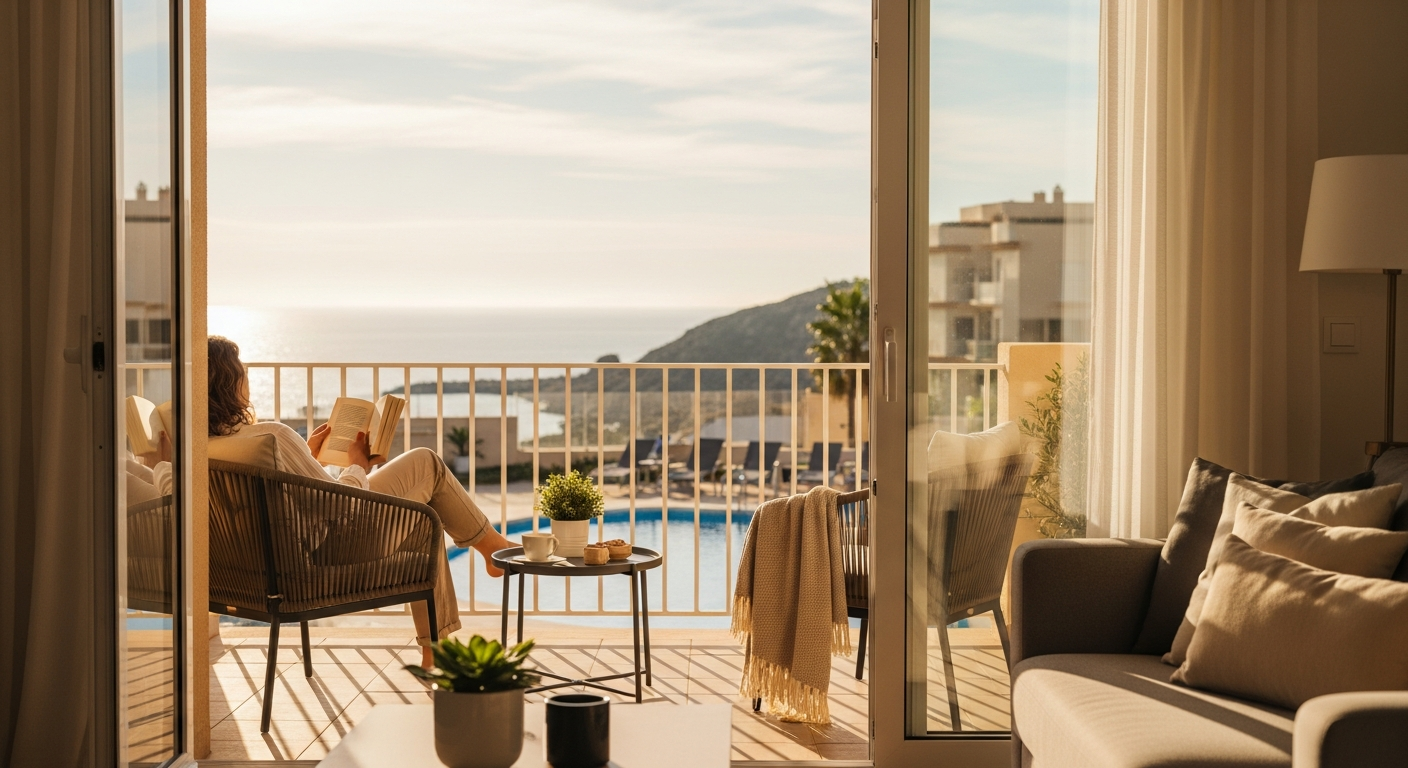
The €200,000 Question: Can You Still Buy Quality Coastal Property in Spain?
In 2026, with property prices climbing across much of Europe and many Mediterranean markets feeling out of reach, one question dominates conversations among buyers looking at Spain: can you still find genuine quality on the coast for under €200,000?
The short answer is yes — emphatically so. But the longer answer is more nuanced, and understanding those nuances is the difference between securing an exceptional property and making a purchase you regret. Spain's coastline stretches over 7,900 kilometres, encompassing everything from the Atlantic-battered shores of Galicia to the volcanic beaches of the Canary Islands. Within that enormous range, €200,000 buys wildly different things depending on where you look, what you prioritise, and how well you understand the market.
This guide is built on real market data from early 2026. We have analysed thousands of listings, spoken with local agents across five coastal regions, and crunched the numbers on rental yields, running costs, and total purchase expenses. What follows is not speculation or wishful thinking. It is a practical, town-by-town breakdown of exactly what your budget can achieve.
The Sweet Spot: Why €150,000 to €200,000 Is the Magic Range
Before diving into specific areas, it is worth understanding why this particular price bracket is so significant. Below €100,000, you are largely restricted to studio apartments, inland villages, or properties needing substantial renovation. Above €250,000, you have access to most of the Spanish coast with reasonable choices. But between €150,000 and €200,000, something interesting happens: the market opens up dramatically.
At this price point, you can realistically expect a quality two or three bedroom apartment with a communal pool within walking distance of the beach, or a three-bedroom townhouse with a solarium and possibly sea views in the right location. This is not a compromise budget. For large parts of the Spanish coast, this is mainstream buyer territory — the price range where the majority of sales to foreign buyers actually happen.
The properties in this bracket tend to be well-maintained, in established urbanisations with functioning communities, close to amenities, and suitable for both personal use and holiday letting. In many cases, you are buying into a lifestyle that would cost three or four times as much in southern France, the Italian Riviera, or the Greek islands.
One key distinction: the €150-200K range buys quality in areas where the local economy supports year-round living. You are not restricted to ghost-town resorts that empty out in October. With careful selection, you can find properties in towns with supermarkets, medical centres, transport links, and enough permanent population to sustain restaurants and services twelve months a year.
Area-by-Area Guide: What €200,000 Buys in 2026
Costa Blanca South (Torrevieja to Pilar de la Horadada)
The Costa Blanca South remains the strongest value proposition on the entire Spanish Mediterranean coast. This stretch from Torrevieja down through Orihuela Costa to Pilar de la Horadada consistently delivers the most property for the money, and in 2026 it continues to outperform expectations.
For €150,000 to €175,000, you can find a well-maintained two-bedroom apartment with a communal pool in areas like Playa Flamenca, La Zenia, Cabo Roig, or Villamartín. Many of these urbanisations sit within five to ten minutes walk of the beach, have multiple pools, landscaped gardens, and established communities with a healthy mix of nationalities. At the top of the budget — €175,000 to €200,000 — three-bedroom apartments become available, particularly in Torrevieja itself, and you start seeing two-bedroom penthouses with large solariums and partial sea views.
The area benefits from Alicante-Elche airport just 45 minutes north, with extensive flight connections across Europe. The infrastructure is mature: multiple shopping centres, international supermarkets, a hospital in Torrevieja, and the stunning salt lakes that give the region its distinctive microclimate — one of the healthiest in Europe according to the World Health Organization.
Typical examples at this price point: a two-bedroom, one-bathroom apartment in a gated community in Punta Prima with communal pool, 800 metres from the beach, at €155,000. A three-bedroom ground-floor apartment with private garden in Villamartín at €179,000. A renovated two-bedroom penthouse with rooftop solarium and sea views in La Zenia at €195,000.
Costa Cálida (Murcia Coast)
The Costa Cálida — the "Warm Coast" — runs from the southern tip of Costa Blanca down through the Mar Menor lagoon and along the Murcia coastline toward Almería. This region has been one of Spain's best-kept property secrets for years, but word is spreading.
The standout here is what €200,000 buys in and around the Mar Menor area. Three-bedroom townhouses with solarium terraces are achievable for €160,000 to €190,000 in towns like San Pedro del Pinatar, Santiago de la Ribera, and Los Alcázares. Some of these properties come with sea views over the Mar Menor lagoon — Europe's largest saltwater lagoon and a magnet for water sports enthusiasts. For apartment buyers, two-bedroom units with pool in newer developments start from €120,000, leaving substantial budget for furnishing and upgrades.
Further south, Mazarrón and its port (Puerto de Mazarrón) offer some of the most unspoilt coastline in southeastern Spain. Here, €175,000 to €200,000 can stretch to a three-bedroom villa with private pool if you look slightly inland, or a spacious two-bedroom apartment directly overlooking the sea. Águilas, at the southern end, remains one of the most authentically Spanish coastal towns where foreign buyers can find extraordinary value.
The Costa Cálida has a major advantage: the Corvera International Airport opened in 2019, and flight connections have expanded steadily. The region averages 315 days of sunshine per year, and the Mar Menor's shallow, warm waters make it particularly appealing for families and retirees.
Almería Province
Almería is where serious value hunters look in 2026. This southeastern corner of Andalucía combines genuinely low property prices with some of Spain's most dramatic coastal scenery — the Cabo de Gata-Níjar Natural Park is often compared to parts of North Africa for its raw, unspoilt beauty.
The numbers here are striking. For €150,000 to €180,000, you can find two-bedroom beachfront apartments in towns like Roquetas de Mar, Garrucha, or Mojácar Playa. At the top of the budget, three-bedroom apartments in newer blocks with communal pools and sea views become realistic. For buyers willing to go slightly inland — five to fifteen minutes from the coast — €180,000 to €200,000 can buy a three-bedroom detached villa with private pool in areas around Turre, Bédar, or the Almanzora valley.
Mojácar deserves special mention. This whitewashed hilltop village above a long sandy beach has attracted an international community over decades, offering the rare combination of authentic Andalusian character with good infrastructure for foreign residents. A two-bedroom apartment in Mojácar Playa with sea views can be found for €155,000 to €185,000.
Almería's weather statistics are remarkable: it is the driest province in continental Europe, with over 3,000 hours of sunshine annually. The Cabo de Gata coastline has no high-rise development — it is protected parkland — which guarantees that the dramatic landscape will remain unspoilt. Almería airport has limited international connections, but the high-speed AVE train to Madrid takes under four hours, and Murcia's Corvera airport is roughly ninety minutes north.
Costa del Sol (Eastern Section: Nerja to Vélez-Málaga)
The Costa del Sol west of Málaga — Marbella, Estepona, Fuengirola — is largely beyond the €200,000 threshold for quality coastal property in 2026. But the eastern Costa del Sol tells a very different story. The stretch from Vélez-Málaga through Torre del Mar to Nerja remains surprisingly affordable compared to its western counterpart, despite offering equally impressive coastline and better year-round authenticity.
In Nerja — one of Spain's most beautiful coastal towns — €175,000 to €200,000 buys a well-located two-bedroom apartment, potentially with sea views in the older parts of town. The famous Balcón de Europa, the Maro-Cerro Gordo cliffs, and some of the best beaches on the entire Costa del Sol are on your doorstep. Nerja has a large year-round population and a thriving restaurant and social scene that does not shut down in winter.
In Vélez-Málaga and Torre del Mar, values are even better. Two-bedroom apartments close to the beach start from €130,000, and for €180,000 to €200,000 you can find three-bedroom apartments or smaller townhouses. Torre del Mar has an excellent paseo marítimo, good local schools, and a genuine Spanish town centre where the majority of residents are Spanish year-round — something that matters enormously for quality of life and integration.
The major advantage of the eastern Costa del Sol is proximity to Málaga airport — one of Spain's best connected, with flights to virtually every European city. Vélez-Málaga is thirty minutes from the terminal. Nerja is about fifty minutes. The AVE station in Málaga provides high-speed rail connections to Madrid, Barcelona, and Seville.
Canary Islands
The Canaries present a different proposition entirely. Subtropical climate year-round, with winter temperatures rarely dropping below 18°C, makes the islands the only part of Spain where you can genuinely swim in the sea in January. The volcanic landscapes are spectacular, and the cost of living benefits from reduced VAT (IGIC at 7% instead of mainland IVA at 21%).
In Las Palmas de Gran Canaria — a proper city of 380,000 people — two-bedroom apartments in desirable neighbourhoods like Guanarteme, Mesa y López, or Las Canteras beachfront start from €160,000. Las Canteras is routinely rated among Europe's best urban beaches, and a two-bedroom apartment two blocks back from the sand with ocean views can be found for €180,000 to €200,000.
On the southern resort coasts of Gran Canaria and Tenerife, the market is different. Areas like Playa del Inglés, Maspalomas, Costa Adeje, and Los Cristianos cater heavily to tourism, and €150,000 to €200,000 buys one or two bedroom apartments in complexes geared toward holiday rentals. The rental income potential here is among the highest in Spain — we will cover this in detail below.
For buyers seeking quieter island living, La Palma, Lanzarote, and Fuerteventura offer remarkable value. Two-bedroom apartments in towns like Puerto del Carmen (Lanzarote), Corralejo (Fuerteventura), or Los Llanos de Aridane (La Palma) range from €120,000 to €175,000, well within budget.
The trade-off with the Canaries is distance. Flights from most European cities take four to five hours. Shipping personal belongings is more expensive. And island life, for all its beauty, can feel isolated for some buyers — particularly in winter when the tourism pace slows.
New Build vs Resale at the €200,000 Price Point
This is one of the most consequential decisions you will make, and the answer at this budget level is more nuanced than most guides suggest.
The Case for New Build
New-build properties under €200,000 exist on the Spanish coast, but your options are significantly more limited than in the resale market. Developers target higher price points where margins are better, so sub-€200K new builds tend to be concentrated in specific areas: the Costa Cálida around the Mar Menor, parts of the Costa Blanca South, and some developments in Almería province.
What you get: modern energy efficiency (important for both comfort and running costs), a ten-year structural guarantee (seguro decenal), brand-new installations, contemporary design, and typically well-planned communal areas. Many new builds at this price include fitted kitchens and bathroom furniture, air conditioning, and allocated parking.
What you give up: choice of location. New developments at this price are usually on the outskirts of towns or in newer urbanisations further from the beach. You are also buying off-plan in many cases, meaning a 12-24 month wait and the inherent uncertainty of whether the finished product matches expectations.
Tax implications are significant. New-build purchases attract IVA at 10% plus stamp duty (AJD) at 1.5%, totalling 11.5%. Resale properties attract transfer tax (ITP) at rates varying from 6% to 10% depending on the region, but typically 8% in Valencia and 7% in Murcia and Andalucía. The tax difference can represent €3,000-€7,000 on a €175,000 purchase — money that could go toward furnishing and upgrades on a resale property.
The Case for Resale
The resale market under €200,000 is vast. You have far more choice of location, orientation, floor level, and proximity to the beach. You can see exactly what you are buying — no renders, no promises, no waiting. Established urbanisations have mature gardens, proven community management, and a track record you can investigate.
The primary risk with resale is condition. Properties built during Spain's construction boom (1998-2008) vary enormously in quality. Some are solidly built and well-maintained. Others have thin walls, poor insulation, outdated plumbing, and single-glazed aluminium windows that leak heat and sound. Budget €5,000-€15,000 for potential renovation needs on any resale property in this price range — new windows, bathroom update, kitchen refresh, or air conditioning installation.
Our recommendation at this budget: resale offers better overall value for most buyers. The wider choice of location and the ability to see exactly what you are buying outweigh the appeal of new-build finishes. The exception is if you are buying purely for rental investment — in that case, a new-build apartment with modern amenities can command premium rental rates and requires zero immediate maintenance spend.
What to Prioritise: Location vs Size vs Condition
With a ceiling of €200,000, you cannot maximise everything. You will face trade-offs, and understanding which compromises matter least is critical.
Location: The Non-Negotiable
Location is the one factor you cannot change after purchase. It determines your resale value, your rental potential, your daily quality of life, and your running costs. Within a given town, a property five minutes' walk from the beach and amenities will always outperform an identical property twenty minutes away — in value appreciation, in rental demand, and in how often you actually use it.
Do not sacrifice location for an extra bedroom. A well-located two-bedroom apartment will outperform a poorly located three-bedroom apartment on every metric that matters.
Size: Where You Can Compromise
Most buyers overestimate how much space they need in a Mediterranean climate. You will spend more time on terraces, at the pool, and outdoors than you ever would in northern Europe. A well-designed 70-square-metre two-bedroom apartment with a good terrace can feel more spacious than a 100-square-metre three-bedroom apartment with no outdoor space.
The critical number is not total square metres but usable square metres. Look for efficient layouts, good storage, and outdoor space. A 10-square-metre terrace with morning sun is worth more than a third bedroom you will use as a store room.
Condition: The Variable You Control
Unlike location, condition can be improved. A dated but structurally sound apartment in a prime location is a better investment than a newly renovated apartment in a secondary area. Budget for updates: €3,000-€5,000 refreshes a bathroom, €4,000-€7,000 updates a kitchen, €2,500-€4,000 installs air conditioning throughout, and €3,000-€6,000 replaces windows with double glazing.
The total renovation budget for a comprehensive refresh of a two-bedroom apartment is typically €12,000-€20,000. On a €170,000 purchase, that puts you at €190,000 maximum — still under budget — with a property tailored to your preferences in a location you have chosen carefully.
Rental Income Potential Under €200,000
For many buyers, rental income is a key factor. Whether you plan to offset ownership costs with occasional lets or maximise return as an investment, the numbers at this price point are worth examining carefully.
Holiday Rental Yields by Area
Gross rental yields on coastal apartments in the €150,000-€200,000 range vary significantly by location:
Canary Islands (south Tenerife, south Gran Canaria): Gross yields of 6-8% are achievable, driven by year-round demand. A €175,000 one or two bedroom apartment in Costa Adeje or Playa del Inglés can generate €12,000-€15,000 gross annually with good occupancy. The year-round season is the critical advantage — there is no dead winter period.
Costa Blanca South: Gross yields of 4-6%. Strong demand from March through October, with a quieter but not dead winter period. A €165,000 two-bedroom apartment in a popular urbanisation can generate €8,000-€11,000 gross from 20-26 weeks of holiday rentals.
Costa del Sol (eastern): Gross yields of 4-5%. Nerja commands premium nightly rates due to its reputation and beauty, offsetting a slightly shorter peak season. A €190,000 two-bedroom in central Nerja can achieve €9,000-€11,000 gross.
Costa Cálida: Gross yields of 3.5-5%. The Mar Menor area is seasonal, with strong summer demand but a quieter off-season. €7,000-€10,000 gross from a €170,000 property is realistic.
Almería: Gross yields of 3-4.5%. The area is less established as a rental market, with lower nightly rates but also lower competition. Mojácar performs best, with €7,000-€9,000 gross achievable on a €175,000 apartment.
The Regulatory Reality
Holiday rental regulation in Spain varies by autonomous community and is changing rapidly. In 2026, the key points are: Valencia region (which includes Costa Blanca) requires a tourist licence and has imposed restrictions on new licences in some zones. Andalucía (Costa del Sol, Almería) requires registration but remains relatively open. Murcia (Costa Cálida) requires a tourist licence. The Canary Islands have their own regulatory framework with municipal-level rules.
Before buying with rental income as a primary objective, verify that the specific property can legally obtain a tourist rental licence. Check whether the community statutes permit short-term letting — many communities have voted to restrict or ban holiday rentals. This is not a theoretical risk: unlicensed holiday rentals face fines of €30,000 to €600,000 depending on the region.
Net Income After Costs
Gross yield means nothing without understanding costs. From gross rental income, deduct: property management (15-25% of rental income), cleaning between guests (€50-€80 per turnover), platform commissions (Airbnb 3%, Booking.com 15%), utilities during occupied periods, maintenance and replacements, insurance, community fees, IBI (property tax), and non-resident income tax on rental earnings (19% for EU residents, 24% for others, with deductible expenses for EU residents).
As a rule of thumb, net rental income is 45-55% of gross for owner-managed properties and 35-45% of gross for properties with professional management. A property generating €10,000 gross will net you roughly €4,500-€5,500 if you self-manage or €3,500-€4,500 with a management company.
Total Cost Breakdown for a €175,000 Purchase
Understanding the true cost of buying is essential for budgeting. Here is a detailed breakdown for a €175,000 resale apartment on the Costa Blanca (Valencia region), where transfer tax is 10%:
| Cost Item | Amount | Notes |
|---|---|---|
| Purchase price | €175,000 | Agreed sale price |
| Transfer Tax (ITP) | €17,500 | 10% in Valencia region |
| Notary fees | €850 | Based on property value |
| Land Registry | €550 | Based on property value |
| Lawyer fees | €1,800 | Plus 21% IVA = €2,178 |
| Gestoría (tax processing) | €400 | Plus 21% IVA = €484 |
| Bank charges | €200 | Account opening, transfers |
| Currency transfer cost | €700 | Using specialist provider at 0.4% |
| Total purchase cost | €197,462 | 12.8% above property price |
For a new build at the same price, replace Transfer Tax with IVA (10% = €17,500) plus Stamp Duty (AJD, 1.5% = €2,625), bringing the total tax to €20,125 — roughly €2,625 more than the resale scenario. Total new-build cost would be approximately €200,087.
In Murcia (Costa Cálida) or Andalucía (Almería, Costa del Sol), transfer tax is lower at 7-8%, reducing the total to approximately €191,000-€193,500. This regional tax difference is meaningful — it effectively gives you €4,000-€6,000 more to spend on the property itself or on furnishing and renovations.
Annual Running Costs
After purchase, budget for these recurring costs on a two-bedroom coastal apartment:
| Annual Cost | Typical Range |
|---|---|
| Community fees | €600-€1,800 |
| IBI (property tax) | €300-€700 |
| Basura (refuse tax) | €50-€150 |
| Home insurance | €200-€400 |
| Utilities (electricity, water) | €800-€1,500 |
| Non-resident income tax | €200-€400 |
| Fiscal representative / gestoría | €150-€300 |
| Total annual | €2,300-€5,250 |
Community fees are the biggest variable. A small community with a pool might charge €60/month. A large resort complex with multiple pools, gardens, security, and lifts can charge €150/month or more. Always check the current quota and ask whether any special assessments (derramas) are planned.
10 Best-Value Coastal Towns for Under €200,000 in 2026
Based on our analysis of price per square metre, proximity to the beach, infrastructure quality, rental potential, flight connections, and year-round livability, these are our ten top picks:
1. Torrevieja (Costa Blanca South, Alicante)
Spain's most popular town for foreign buyers, and for good reason. The sheer volume of property means excellent choice and competitive pricing. A proper Spanish city with 80,000+ residents, full hospitals, shopping, and year-round life. Two-bedroom apartments with pool from €120,000. The salt lakes create a unique microclimate. Alicante airport 45 minutes. Average price per square metre: €1,450-€1,800.
2. Los Alcázares (Costa Cálida, Murcia)
A genuine Spanish seaside town on the Mar Menor lagoon. Excellent value with three-bedroom townhouses under €180,000. The long promenade, calm lagoon waters, and strong Spanish community make it a year-round proposition. Corvera airport 25 minutes. Growing international community without losing its Spanish character. Average price per square metre: €1,200-€1,600.
3. Garrucha (Almería)
A working fishing port with an authentic atmosphere that tourist towns cannot replicate. The daily fish auction, beachfront restaurants, and long sandy beach make this a favourite among buyers who want real Spain at coastal prices. Two-bedroom seafront apartments from €130,000. Almería airport 90 minutes, Corvera airport 120 minutes. Average price per square metre: €1,100-€1,400.
4. Torre del Mar (Costa del Sol, Málaga)
The affordable gateway to the Costa del Sol. A proper Spanish town with an excellent beach promenade, vibrant market, and year-round population. Two-bedroom apartments from €140,000, with three-bedroom options under €200,000. Málaga airport 30 minutes with connections everywhere. Average price per square metre: €1,600-€2,000.
5. San Pedro del Pinatar (Costa Cálida, Murcia)
Known for its therapeutic mud baths and salt flats, this small town on the northern Mar Menor offers remarkable value. Three-bedroom properties with solarium under €175,000. Lo Pagán beach and the natural park provide genuine character. Corvera airport 30 minutes, Alicante airport 50 minutes. Average price per square metre: €1,100-€1,500.
6. Mojácar (Almería)
Two towns in one: the whitewashed hilltop pueblo with stunning views, and Mojácar Playa below with a long beach and established tourist infrastructure. The combination of authentic Andalusian character with a well-integrated international community is rare. Two-bedroom beach apartments from €150,000. Average price per square metre: €1,300-€1,700.
7. Las Palmas de Gran Canaria (Canary Islands)
A real city with year-round subtropical climate, one of Europe's best urban beaches (Las Canteras), excellent dining scene, and genuine cultural life. Two-bedroom apartments near the beach from €160,000. Direct flights across Europe. No winter — temperatures stay between 18-25°C year-round. Average price per square metre: €1,800-€2,400.
8. Águilas (Costa Cálida, Murcia)
One of the most undervalued towns on the entire Mediterranean coast. Thirty-five beaches and coves, a dramatic castle, thriving carnival tradition, and year-round Spanish life. Two-bedroom apartments from €100,000, three-bedroom villas inland from €170,000. Still largely undiscovered by international buyers, which means prices have room to grow. Average price per square metre: €1,000-€1,300.
9. Guardamar del Segura (Costa Blanca South, Alicante)
Stunning pine-backed dune beaches — among the most beautiful in the region — combined with a relaxed Spanish town atmosphere. The weekly market is legendary. Two-bedroom apartments with pool from €135,000. Positioned between Torrevieja and the Orihuela Costa urbanisations with access to both. Alicante airport 35 minutes. Average price per square metre: €1,400-€1,800.
10. Roquetas de Mar (Almería)
A large Spanish town with extensive beaches, a marina, and full infrastructure. The nearby Cabo de Gata natural park is a spectacular bonus. Two-bedroom apartments from €110,000, with sea-view properties available under €170,000. The Almería climate is the sunniest in continental Europe. Almería airport 25 minutes. Average price per square metre: €1,000-€1,400.
Practical Strategy: How to Buy Smart at This Budget
Having analysed the areas, here is the practical strategy for maximising your €200,000 budget:
Start with region, then narrow to town. Decide first which coast suits your lifestyle — year-round living, holiday use, or investment. Then visit two or three towns in that region for at least a week each, including off-season.
Set your purchase price at €170,000-€175,000. This leaves €25,000-€30,000 for buying costs (12-13%), which is realistic in most regions. Do not budget the full €200,000 for the property price — you will blow through your total budget with taxes and fees.
Search the resale market first. You will find 10 times the choice compared to new build at this price. Focus on properties built after 2000 with reasonable community sizes (30-150 properties). Avoid very large resort complexes where community fees tend to creep up and management can be poor.
Prioritise south-facing or east-facing orientation. In winter, a south-facing apartment gets sun all day. A north-facing apartment at the same price feels like a different climate. Orientation affects everything: warmth, light, terrace usability, energy costs, and ultimately your enjoyment of the property.
Visit in January or February. See the town at its quietest. If you like it then, you will love it in summer. If it feels dead and depressing, walk away — no amount of summer charm compensates for six months of emptiness.
Check flight connections before falling in love. A beautiful property you cannot reach conveniently becomes a property you rarely use. Map the journey from your home airport to the property's front door. If it takes more than four hours door-to-door, you will visit less than you think.
Get a lawyer before you start viewing. Not after you find something. Before. A good independent lawyer costs €1,500-€3,000 and will save you from potentially catastrophic mistakes. They should review everything before you sign even a reservation contract.
The Bottom Line
Spain's coast in 2026 remains one of the best property markets in Europe for buyers with a budget under €200,000. The combination of climate, lifestyle, infrastructure, and value for money is simply not available anywhere else in the western Mediterranean at this price point.
The key is knowing where to look. The Costa Blanca South and Costa Cálida offer the most property for your money. Almería provides the most dramatic scenery and authentic character. The eastern Costa del Sol gives you the best airport connections and year-round town life. The Canary Islands deliver the best climate and strongest rental yields.
Whatever you choose, the fundamentals remain the same: buy in a location you have visited in winter, hire an independent lawyer, budget 12-13% above the property price for buying costs, and prioritise location over size. Do these things, and a €175,000 property on the Spanish coast can deliver a quality of life that no amount of money buys in most of northern Europe.
Frequently Asked Questions
The Sweet Spot: Why €150,000 to €200,000 Is the Magic Range?
Before diving into specific areas, it is worth understanding why this particular price bracket is so significant. Below €100,000, you are largely restricted to studio apartments, inland villages, or properties needing substantial renovation. Above €250,000, you have access to most of the Spanish coast with reasonable choices. But between €150,000 and €200,000, something interesting happens: the market opens up dramatically. At this price point, you can realistically expect a quality two or three bedroom apartment with a communal pool within walking distance of the beach, or a three-bedroom townhouse with a solarium and possibly sea views in the right location. This is not a compromise budget. For large parts of the Spanish coast, this is mainstream buyer territory — the price range where the majority of sales to foreign buyers actually happen.
Area-by-Area Guide: What €200,000 Buys in 2026?
Costa Blanca South (Torrevieja to Pilar de la Horadada) The Costa Blanca South remains the strongest value proposition on the entire Spanish Mediterranean coast. This stretch from Torrevieja down through Orihuela Costa to Pilar de la Horadada consistently delivers the most property for the money, and in 2026 it continues to outperform expectations. For €150,000 to €175,000, you can find a well-maintained two-bedroom apartment with a communal pool in areas like Playa Flamenca, La Zenia, Cabo Roig, or Villamartín. Many of these urbanisations sit within five to ten minutes walk of the beach, have multiple pools, landscaped gardens, and established communities with a healthy mix of nationalities. At the top of the budget — €175,000 to €200,000 — three-bedroom apartments become available, particularly in Torrevieja itself, and you start seeing two-bedroom penthouses with large solariums and partial sea views.
New Build vs Resale at the €200,000 Price Point?
This is one of the most consequential decisions you will make, and the answer at this budget level is more nuanced than most guides suggest. The Case for New Build New-build properties under €200,000 exist on the Spanish coast, but your options are significantly more limited than in the resale market. Developers target higher price points where margins are better, so sub-€200K new builds tend to be concentrated in specific areas: the Costa Cálida around the Mar Menor, parts of the Costa Blanca South, and some developments in Almería province.
What to Prioritise: Location vs Size vs Condition?
With a ceiling of €200,000, you cannot maximise everything. You will face trade-offs, and understanding which compromises matter least is critical. Location: The Non-Negotiable Location is the one factor you cannot change after purchase. It determines your resale value, your rental potential, your daily quality of life, and your running costs. Within a given town, a property five minutes' walk from the beach and amenities will always outperform an identical property twenty minutes away — in value appreciation, in rental demand, and in how often you actually use it.
Rental Income Potential Under €200,000?
For many buyers, rental income is a key factor. Whether you plan to offset ownership costs with occasional lets or maximise return as an investment, the numbers at this price point are worth examining carefully. Holiday Rental Yields by Area Gross rental yields on coastal apartments in the €150,000-€200,000 range vary significantly by location:
Why Granfield Estate?
-
⚑
Office on the coast — we live here
Our office is in La Mata, Torrevieja. We know every neighbourhood, every street and the real prices — not from a catalogue, but from daily work on the ground.
-
⚖
In-house lawyer — 10+ years of experience
NIE, bank account, property check, contract, notary — legal support at every step. First consultation free.
-
🏠
Property management
Buying to rent? Our management company handles tenant search, maintenance and all questions.
-
🌐
We speak your language
English, Spanish, Russian, German, Finnish, Swedish and more. Licence RAICV 1663, member of Asivega.
Granfield Estate · Av. Bélgica 1, C.C. Parquemar, La Mata, 03188 Torrevieja · +34 865 44 33 33
Read also

How to Buy Property in Spain: Step-by-Step Guide 2026
05.06.2026
A complete step-by-step guide to buying property in Spain in 2026 — from getting your NIE number to signing at the notary. Costs, timelines, and pitfalls explained.

NIE Number in Spain: What It Is and How to Get One
06.06.2026
The NIE number is your essential ID for buying property, opening a bank account, and paying taxes in Spain. Here is exactly how to get one — in Spain or from abroad.

Mortgage in Spain for Foreigners: Complete Guide 2026
08.06.2026
Everything you need to know about getting a Spanish mortgage as a foreigner — LTV ratios, interest rates, required documents, best banks, and a step-by-step timeline.