


Costa Blanca North vs South: Key Differences for Property Buyers
One Name, Two Coastlines
The Costa Blanca stretches roughly 200 kilometres along the Alicante province, from Dénia in the north to Pilar de la Horadada in the south. Property agents, tourism boards, and residents all use the same name — Costa Blanca — but the north and south are so different that calling them the same coast is almost misleading. Prices, landscape, climate, community composition, infrastructure, and daily lifestyle diverge sharply. Choosing the wrong half for your personality or budget can mean years of regret.
This guide lays out every major difference so you can make an informed choice. The dividing line is roughly the city of Alicante itself — everything north of Alicante is Costa Blanca North, everything south is Costa Blanca South.
Landscape and Geography
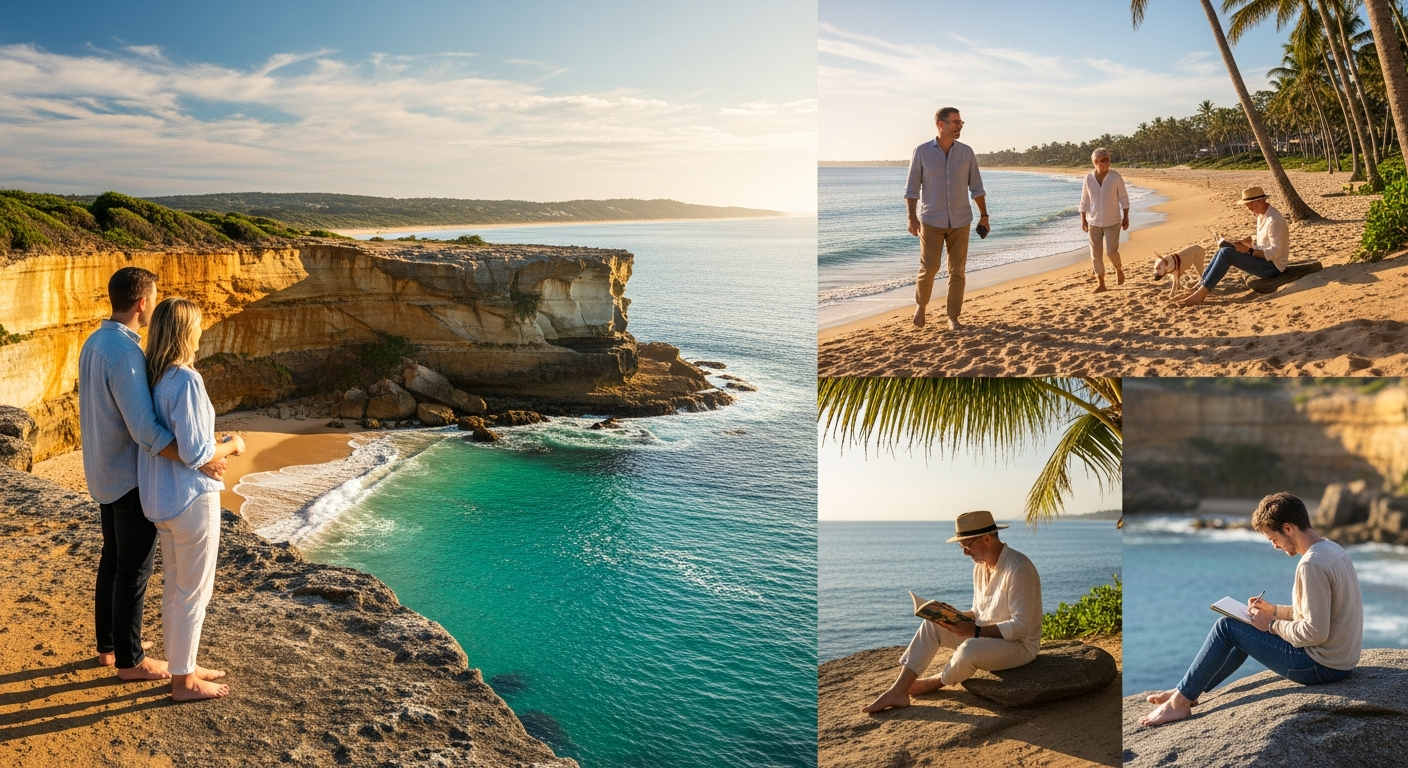
Costa Blanca North is dramatic. The mountains of the Sierra de Bernia, Montgó, and Sierra de Aitana drop steeply into the sea. Cliffs, coves, rocky headlands, pine forests, and terraced hillsides define the scenery. Towns like Jávea, Moraira, Altea, and Calpe sit between mountain and coast. The iconic Peñón de Ifach rock in Calpe is the symbol of this landscape — vertical, wild, Mediterranean. Properties here often sit on hillsides with panoramic sea views, accessed by winding roads through orange and almond groves.
Costa Blanca South is flat. The terrain is low-lying, arid, and open. Salt lakes (the Torrevieja and La Mata lagoons), wide sandy beaches, and purpose-built urbanisations define the scenery. Towns like Torrevieja, Orihuela Costa, Guardamar del Segura, and Pilar de la Horadada sit on gentle coastal plains. The landscape is less photogenic but highly functional — flat terrain means easier walking, better accessibility, and larger developments with communal pools and gardens.
Climate and Weather
Both halves are warm and sunny, but there are real differences:
Costa Blanca North receives more rainfall — around 500–650mm per year in areas like Jávea and Dénia, compared to 250–300mm in the south. The mountains catch clouds and trigger localised downpours, especially in autumn (the gota fría phenomenon). Winters are mild but slightly cooler than the south. Summers are hot but the mountain breezes provide some relief. The vegetation is greener and more lush — you will see pine forests, palm trees, and flowering gardens that would struggle to survive in the south without heavy irrigation.
Costa Blanca South is one of the driest places in Europe. Torrevieja and Orihuela Costa receive barely 280mm of rain per year — less than parts of North Africa. The landscape reflects this: dry scrubland, palm trees, and irrigated golf courses. Winters are warmer, with average January temperatures 1–2°C above the north. The World Health Organisation has historically cited the Torrevieja microclimate as one of the healthiest in Europe due to the salt lakes. Summer heat is more intense and unrelenting on the flat terrain, with less natural shade.
Property Prices: The 2x–3x Gap
This is where the two halves diverge most dramatically:
| Property Type | Costa Blanca North | Costa Blanca South | Ratio |
|---|---|---|---|
| 2-bed apartment | €180,000–350,000 | €75,000–150,000 | 2–2.5x |
| 3-bed townhouse | €280,000–500,000 | €120,000–220,000 | 2–2.5x |
| Detached villa with pool | €450,000–1,200,000 | €180,000–400,000 | 2.5–3x |
| Luxury villa, sea views | €800,000–3,000,000+ | €350,000–800,000 | 2–3x |
| Building plot | €150,000–500,000 | €50,000–150,000 | 3x |
The price gap exists for good reasons — the north has stricter building regulations, less available land (mountains restrict development), more established and exclusive communities, and genuinely spectacular scenery. But the gap also means that what buys you a modest apartment in Jávea gets you a detached villa with pool and garden in Villamartín. For many buyers, especially retirees on a fixed budget, this arithmetic is decisive.
Community Composition
Costa Blanca North attracts a wealthier, often older demographic. The dominant expat nationalities are German, Dutch, Belgian, and British — but a different type of British buyer than the south. Northern buyers tend to be affluent retirees or second-home owners who want privacy, culture, and natural beauty. Many speak some Spanish. The German and Dutch communities are particularly well-established in Jávea, Moraira, and Altea, with their own clubs, restaurants, and social networks. The overall atmosphere is quieter, more integrated with Spanish life, and less overtly expat.
Costa Blanca South is the most internationally diverse stretch of coast in Spain. British, Scandinavian (particularly Norwegian and Swedish), Russian, Ukrainian, Polish, Belgian, Dutch, and Irish communities all coexist. Torrevieja has expat populations from over 100 nationalities. The south attracts a broader economic range — from budget retirees to young families to holiday investors. Many urbanisations have English as the de facto common language. Expat social clubs, international churches, charity shops, and English-speaking services are everywhere. Integration with Spanish culture varies — some expats live largely within English-speaking bubbles, others blend in.
Lifestyle Differences
North — quieter, rural, cultural: Daily life in the north revolves around the natural environment. Hiking in the Montgó national park, sailing from Jávea or Moraira, cycling mountain roads, visiting local markets, lunching at family-run Spanish restaurants in hilltop villages. Evening entertainment is limited — a few restaurants, perhaps a concert at the Casa de Cultura. Shopping means driving to Dénia or Ondara. The north rewards people who enjoy solitude, nature, good food, and a slower rhythm. It punishes those who need constant social stimulation or get restless without nightlife.
South — social, year-round, active: Life in the south is far more social. Weekly pub quizzes, expat club meetings, charity events, live music in bars, Sunday markets, organised day trips, golf societies, walking groups, and a full calendar of community activities. Torrevieja has a permanent year-round population of expats — this is not a ghost town in winter. The Habaneras shopping centre, multiple cinema complexes, the Zenia Boulevard mall, water parks, and countless restaurants and bars ensure there is always something to do. The south rewards extroverts, joiners, and people who want a ready-made social life. It may disappoint those seeking Spanish authenticity or quiet contemplation.
Infrastructure and Services
| Factor | Costa Blanca North | Costa Blanca South |
|---|---|---|
| Airport access | Alicante airport 45–90 min; Valencia airport 60–90 min | Alicante airport 20–45 min; Murcia-Corvera 20–40 min |
| Public transport | Limited bus routes, tram from Dénia to Alicante (scenic but slow) | Better bus links, closer to Alicante train station, more frequent services |
| Healthcare | Hospital de Dénia (public, managed by DKV), Marina Salud; private clinics in Jávea, Calpe | Torrevieja hospital (public, well-regarded), Vinalopó hospital Elche; multiple private clinics |
| English-speaking services | Available but less common; more German/Dutch service providers | Extremely widespread; English-speaking lawyers, doctors, dentists, mechanics, estate agents everywhere |
| Shopping | Smaller local shops, Dénia and Ondara retail parks, fewer large malls | Zenia Boulevard, Habaneras centre, La Marina retail parks, multiple supermarket chains |
| Road quality | Mountain roads can be narrow and winding; AP-7 motorway runs inland | Flat, modern road network; AP-7 and N-332 easily accessible |
| Internet | Fibre available in towns; rural and hillside properties may rely on 4G/5G or satellite | Fibre widely available across urbanisations; good coverage overall |
| International schools | Several options: Laude Lady Elizabeth (Jávea), El Plantío (Elche nearby) | King's College (Elche), El Limonar (Murcia nearby), more limited locally |
The south wins on convenience and accessibility. Proximity to two airports (Alicante and Murcia-Corvera), flat roads, abundant English-speaking services, and large retail infrastructure make daily life easy for non-Spanish speakers. The north requires more self-sufficiency, a willingness to drive mountain roads, and ideally some Spanish language ability.
Investment Perspective
Capital appreciation: The north has historically appreciated more steadily and held value better during downturns. Premium locations like Jávea and Moraira have limited supply — you cannot build more mountains or create new sea-view plots. The south saw sharper declines during the 2008–2014 crisis because oversupply of apartments drove prices down. Since 2015, the south has recovered strongly, with Torrevieja and Orihuela Costa seeing 30–50% price increases, but from a lower base.
Rental yield: The south delivers higher percentage yields (5–8% gross) due to lower purchase prices and strong tourist demand. The north delivers lower percentage yields (3–5% gross) because purchase prices are higher. However, the absolute rental income per property can be similar — a €600,000 villa in Moraira renting at 4% earns €24,000/year, while a €150,000 apartment in Torrevieja at 7% earns €10,500/year.
Liquidity: The south has a faster-moving market with more transactions and more buyers at the €80,000–200,000 price point. The north has fewer transactions, longer selling times, but more committed buyers. If you need to sell quickly, a competitively priced south property will move faster.
Risk profile: The north is lower risk, lower return in percentage terms — more like a premium asset that preserves wealth. The south is higher yield but more sensitive to market cycles and oversupply. For pure investment, the south makes better sense on the numbers. For wealth preservation and lifestyle, the north wins.
Comparison Summary
| Factor | Costa Blanca North | Costa Blanca South |
|---|---|---|
| Landscape | Mountains, cliffs, coves, green | Flat, sandy beaches, salt lakes, dry |
| Rainfall | 500–650mm/year | 250–300mm/year |
| Property prices | 2–3x higher | More affordable, entry from €75K |
| Dominant expat groups | German, Dutch, Belgian, upscale British | British, Scandinavian, Eastern European, diverse |
| Lifestyle | Quiet, nature, cultural, private | Social, active, year-round community |
| Airport proximity | 45–90 min to Alicante | 20–45 min to Alicante or Murcia |
| Rental yield | 3–5% gross | 5–8% gross |
| Capital growth | Steady, resilient | More volatile, stronger recent recovery |
| English-speaking services | Moderate | Extensive |
| Best for | Privacy, nature lovers, second homes, wealth preservation | Budget buyers, social retirees, investors, year-round living |
Which Half Is Right for You?
Choose the North if: You have a budget above €300,000. You value natural beauty and privacy over social life. You want a second home or retirement retreat rather than a pure investment. You enjoy hiking, sailing, and quiet village life. You are comfortable driving mountain roads and can manage with limited English-speaking services. You want your property to hold its value in a downturn.
Choose the South if: Your budget is under €250,000. You want a ready-made expat community and year-round social life. You plan to live permanently rather than visit occasionally. You want easy airport access, flat terrain, and abundant English-speaking services. You are investing for rental yield rather than lifestyle. You prefer a larger property for less money.
There is no objectively better half — only the half that better matches your budget, personality, and intentions. Visit both for at least a week each before committing. The Costa Blanca North and South attract genuinely different people, and the happiest buyers are those who recognised which camp they belong to before signing.
Frequently Asked Questions
Landscape and Geography?
Costa Blanca North is dramatic. The mountains of the Sierra de Bernia, Montgó, and Sierra de Aitana drop steeply into the sea. Cliffs, coves, rocky headlands, pine forests, and terraced hillsides define the scenery. Towns like Jávea, Moraira, Altea, and Calpe sit between mountain and coast. The iconic Peñón de Ifach rock in Calpe is the symbol of this landscape — vertical, wild, Mediterranean. Properties here often sit on hillsides with panoramic sea views, accessed by winding roads through orange and almond groves. Costa Blanca South is flat. The terrain is low-lying, arid, and open. Salt lakes (the Torrevieja and La Mata lagoons), wide sandy beaches, and purpose-built urbanisations define the scenery. Towns like Torrevieja, Orihuela Costa, Guardamar del Segura, and Pilar de la Horadada sit on gentle coastal plains. The landscape is less photogenic but highly functional — flat terrain means easier walking, better accessibility, and larger developments with...
Climate and Weather?
Both halves are warm and sunny, but there are real differences: Costa Blanca North receives more rainfall — around 500–650mm per year in areas like Jávea and Dénia, compared to 250–300mm in the south. The mountains catch clouds and trigger localised downpours, especially in autumn (the gota fría phenomenon). Winters are mild but slightly cooler than the south. Summers are hot but the mountain breezes provide some relief. The vegetation is greener and more lush — you will see pine forests, palm trees, and flowering gardens that would struggle to survive in the south without heavy irrigation.
Property Prices: The 2x–3x Gap?
This is where the two halves diverge most dramatically: Property TypeCosta Blanca NorthCosta Blanca SouthRatio 2-bed apartment€180,000–350,000€75,000–150,0002–2.5x 3-bed townhouse€280,000–500,000€120,000–220,0002–2.5x Detached villa with pool€450,000–1,200,000€180,000–400,0002.5–3x Luxury villa, sea views€800,000–3,000,000+€350,000–800,0002–3x Building plot€150,000–500,000€50,000–150,0003x
The price gap exists for good reasons — the north has stricter building regulations, less available land (mountains restrict development), more established and exclusive communities, and genuinely spectacular scenery. But the gap also means that what buys you a modest apartment in Jávea gets you a detached villa with pool and garden in Villamartín. For many buyers, especially retirees on a fixed budget, this arithmetic is decisive.
Community Composition?
Costa Blanca North attracts a wealthier, often older demographic. The dominant expat nationalities are German, Dutch, Belgian, and British — but a different type of British buyer than the south. Northern buyers tend to be affluent retirees or second-home owners who want privacy, culture, and natural beauty. Many speak some Spanish. The German and Dutch communities are particularly well-established in Jávea, Moraira, and Altea, with their own clubs, restaurants, and social networks. The overall atmosphere is quieter, more integrated with Spanish life, and less overtly expat. Costa Blanca South is the most internationally diverse stretch of coast in Spain. British, Scandinavian (particularly Norwegian and Swedish), Russian, Ukrainian, Polish, Belgian, Dutch, and Irish communities all coexist. Torrevieja has expat populations from over 100 nationalities. The south attracts a broader economic range — from budget retirees to young families to holiday investors. Many urbanisations have English as the de facto common language....
Lifestyle Differences?
North — quieter, rural, cultural: Daily life in the north revolves around the natural environment. Hiking in the Montgó national park, sailing from Jávea or Moraira, cycling mountain roads, visiting local markets, lunching at family-run Spanish restaurants in hilltop villages. Evening entertainment is limited — a few restaurants, perhaps a concert at the Casa de Cultura. Shopping means driving to Dénia or Ondara. The north rewards people who enjoy solitude, nature, good food, and a slower rhythm. It punishes those who need constant social stimulation or get restless without nightlife. South — social, year-round, active: Life in the south is far more social. Weekly pub quizzes, expat club meetings, charity events, live music in bars, Sunday markets, organised day trips, golf societies, walking groups, and a full calendar of community activities. Torrevieja has a permanent year-round population of expats — this is not a ghost town in winter. The Habaneras...
Why Granfield Estate?
-
⚑
Office on the coast — we live here
Our office is in La Mata, Torrevieja. We know every neighbourhood, every street and the real prices — not from a catalogue, but from daily work on the ground.
-
⚖
In-house lawyer — 10+ years of experience
NIE, bank account, property check, contract, notary — legal support at every step. First consultation free.
-
🏠
Property management
Buying to rent? Our management company handles tenant search, maintenance and all questions.
-
🌐
We speak your language
English, Spanish, Russian, German, Finnish, Swedish and more. Licence RAICV 1663, member of Asivega.
Granfield Estate · Av. Bélgica 1, C.C. Parquemar, La Mata, 03188 Torrevieja · +34 865 44 33 33
Read also

Benidorm: Investment and Rental Property
21.05.2026
Complete guide to property investment in Benidorm: 6-8% rental yields, area comparisons, updated prices and year-round rental potential.

Costa Blanca Property Guide 2026: Complete Buyer's Handbook
22.05.2026
Everything you need to know about buying property on Spain's Costa Blanca — from Dénia in the north to Torrevieja in the south, with real prices, honest area comparisons, and practical advice.

Costa del Sol Property Guide: Malaga to Gibraltar
23.05.2026
From Marbella luxury to Nerja charm — a complete guide to buying property on Spain's Costa del Sol, with prices, area comparisons, and investment insights.