


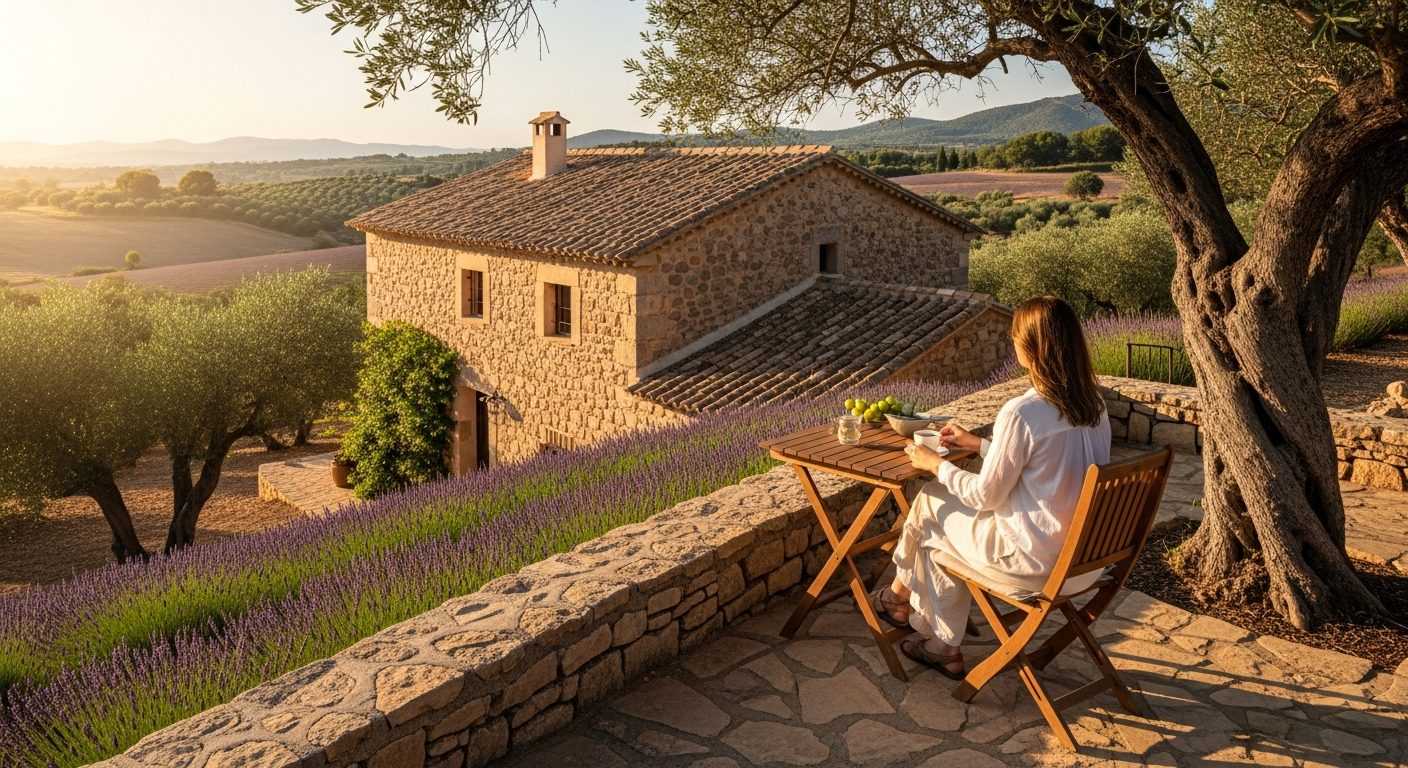
What Exactly Is a Finca?
The word "finca" is one of the most misused terms in Spanish property. Estate agents — especially those targeting foreign buyers — use it to describe everything from a two-bedroom country cottage to a 500-hectare olive estate. In strict legal terms, a finca is simply a plot of registered land. It can be urban or rural, built upon or empty. But in common usage, and in the context of this guide, a finca refers to a rural property on rustic land (suelo rústico).
Understanding this distinction is critical. In Spain, all land is classified by the local urban plan (Plan General de Ordenación Urbana or PGOU). The two fundamental categories are suelo urbano (urban land) and suelo rústico (rustic land). Everything about what you can build, how you can use the property, and what permits you need depends on which category your land falls into.
Many foreign buyers fall in love with a beautiful stone farmhouse surrounded by almond groves, sign the purchase contract, and only then discover that the house was built illegally, can't be extended, has no habitation certificate, and can't be connected to mains water or electricity. This guide exists to help you avoid that fate.
Suelo Rústico vs Suelo Urbano: The Crucial Legal Difference
This is the single most important concept in Spanish rural property. Get this wrong and you risk buying a property you can't legally live in, can't renovate, or can't sell at a fair price later.
Suelo urbano (urban land)
Land designated for development. It has (or will have) road access, water supply, sewage, and electricity connections. Building is permitted subject to planning permission. Most apartments, townhouses, and villas on urbanisations sit on suelo urbano.
Suelo rústico (rustic land)
Land designated for agricultural, forestry, or livestock use. Building is heavily restricted. The primary purpose of rustic land is farming, not housing. Any construction must be justified by the agricultural use of the land — and even then, it requires special permission.
Sub-categories of rustic land
Rustic land is further divided into categories that determine what, if anything, can be built:
- Suelo rústico común (common rustic) — agricultural land where limited building may be permitted under strict conditions
- Suelo rústico protegido (protected rustic) — environmentally, historically, or landscape-protected land with even tighter restrictions. Subcategories include protection by flora/fauna, water courses, archaeological sites, or scenic value
- Suelo no urbanizable de especial protección — the most restrictive category. Essentially, no building is allowed at all
Key point: These classifications vary by autonomous community. What's permissible in Andalucía may be illegal in Valencia or the Balearics. Always check with the local town hall (ayuntamiento) and a lawyer who knows the specific regional legislation.
How to check land classification
Your lawyer should obtain a certificado urbanístico (urban planning certificate) from the town hall. This confirms the plot's classification, what building is permitted, minimum plot sizes, and any restrictions. In the Valencian Community, you can also check the online viewer at visor.gva.es. In Andalucía, check the PGOU through the Junta de Andalucía's planning portal. Never rely solely on what the seller or estate agent tells you.
Types of Rural Property in Spain
Spain's diverse geography and regional cultures have produced a rich variety of rural property types. Understanding these helps you know what you're looking at — and what you're paying for.
Finca rústica (rustic farm plot)
In its purest sense, a finca rústica is simply a plot of agricultural land. It may have no buildings at all, or it may have a small storage building (caseta) or traditional farm structure. Prices for bare land vary enormously: from €1-2 per square metre in inland Murcia or Almería to €20+ per square metre in desirable areas like the Jalón Valley or Mallorca's interior.
Casa de campo (country house)
A general term for any house in the countryside. It could be a modest rural dwelling or a substantial country home. The key question is always: was it built legally, and does it have a habitation certificate?
Cortijo (Andalusian farmhouse)
A traditional Andalusian rural dwelling, originally the centre of a working farm or estate. Cortijos range from small whitewashed cottages to massive complexes with courtyards, outbuildings, and staff quarters. Many of the larger cortijos in provinces like Granada, Jaén, and Córdoba are in various states of ruin and can be purchased cheaply — but renovation costs are often eye-watering. A ruined cortijo bought for €80,000 can easily require €200,000-400,000 to restore to modern standards, assuming you can get the permits.
Masía (Catalan farmhouse)
The Catalan equivalent of the cortijo. Masías are typically stone-built with distinctive arched doorways and tile roofs. Found throughout Catalonia, they're especially common in the comarcas of Empordà, Osona, and Berguedà. Prices have risen sharply as Barcelona professionals seek rural retreats. A habitable masía within 90 minutes of Barcelona now rarely sells for under €400,000, with renovated examples reaching well into seven figures.
Caserío (Basque farmhouse)
The traditional Basque rural dwelling, characterised by a timber-framed structure with stone walls and a steep roof designed for the Atlantic climate. Caseríos are found throughout the Basque Country and Navarra. They're increasingly sought after, and the Basque government has strict regulations about their preservation. Renovation must often follow heritage guidelines.
Other regional types
- Pazo — a Galician manor house, often with considerable land and outbuildings
- Possessió — the Mallorcan equivalent of a large rural estate
- Alquería — a Valencian farmhouse, traditionally surrounded by huerta (irrigated farmland)
- Barraca — a traditional Valencian dwelling with a distinctive triangular thatched roof, now extremely rare
Where to Find Rural Property in Spain
Jalón Valley, Costa Blanca (Valencian Community)
The Jalón Valley (Vall de Pop / Valle del Jalón) in Alicante province is one of the most popular areas for foreigners seeking rural property near the coast. The valley runs inland from the coast between Jávea/Dénia and Benidorm, centred on the towns of Jalón (Xaló), Alcalalí, Parcent, and Murla. It offers almond and cherry orchards, mountain views, and a thriving international community — while being just 20-30 minutes from the coast. Fincas here range from €100,000 for a small unrenovated property to €500,000+ for a renovated villa with land and a pool.
Inland Andalucía
The provinces of Granada, Málaga (interior), Jaén, and Córdoba offer vast quantities of rural property at lower prices. The Alpujarras region south of Granada is particularly popular, with its white villages clinging to the Sierra Nevada slopes. Further east, the Almanzora Valley in Almería attracted waves of British buyers in the 2000s, though the area was also the centre of Spain's worst illegal building scandal. Due diligence is especially critical in Almería and inland Málaga.
Mallorca interior
The interior of Mallorca — particularly the Tramuntana mountain range (UNESCO World Heritage), the Es Raiguer foothills, and the Pla (central plain) — offers traditional stone fincas with centuries of character. Prices are significantly higher than the mainland: a small unrenovated finca in the Pla might cost €250,000-400,000, while anything in or near the Tramuntana starts at €500,000 and rises quickly into the millions. Planning restrictions in the Tramuntana are also among the strictest in Spain.
Asturias and Galicia
Spain's green north offers a completely different rural experience: lush pastures, Atlantic climate, stone villages, and prices that are a fraction of the Mediterranean coast. You can still find rural properties for €30,000-80,000 in parts of inland Asturias, Lugo, and Ourense. The trade-off: cooler, wetter weather, a smaller international community, and renovation challenges specific to the climate (damp, heating requirements, stone construction).
Other notable areas
- Extremadura — among the cheapest rural property in Spain. Vast dehesa (oak woodland) landscapes, very low population density
- Aragón — particularly the Maestrazgo and Matarraña comarcas. Spectacular landscapes, very affordable, but remote
- Inland Murcia — hot, dry, cheap. The Ricote Valley and northwest Murcia offer surprisingly green mountain landscapes
Prices: What Does a Finca Cost?
Rural property prices in Spain span an enormous range. Here's a realistic overview for 2026:
Unrenovated / ruin: from €50,000
At the bottom end, you can find abandoned cortijos, casas de campo, and small rural dwellings for €30,000-80,000 in less fashionable areas of Andalucía, Castilla-La Mancha, Extremadura, Galicia, and Aragón. These are genuine renovation projects — often without a roof, electricity, running water, or a habitation certificate. Many have unclear legal status. They are not bargains if you factor in the €100,000-300,000 it may cost to make them liveable, the years of bureaucracy, and the possibility that you can't get building permission at all.
Habitable but basic: €100,000-200,000
A functioning rural property with a roof, basic services, and some land. May need updating (kitchen, bathrooms, insulation) but is liveable. Typical of the Jalón Valley, inland Costa Blanca, Murcia interior, and mid-range Andalucía. At this price point, you're usually getting 2-3 bedrooms, a modest garden or small plot, and potentially a pool (or space for one).
Renovated and comfortable: €200,000-500,000
A well-renovated country house with modern amenities, often with a pool, outbuildings, and a hectare or more of land. In the Jalón Valley or inland Costa Blanca, this is the sweet spot for most international buyers. In Mallorca or fashionable parts of Andalucía, the same budget buys less.
Luxury finca: €500,000+
Large estates with substantial land, high-end renovation, guest houses, extensive agricultural features (olive groves, vineyards), and often a rural tourism licence. In Mallorca, Ibiza, or prestige areas of Andalucía, luxury fincas routinely sell for €1-5 million and beyond.
The Legal Minefield: Illegal Construction on Rustic Land
This is where buying a finca diverges most sharply from buying a coastal apartment. Illegal construction on rustic land is not a marginal issue in Spain — it is rampant, widespread, and deeply embedded in decades of lax enforcement.
How did this happen?
For decades, especially in the boom years before the 2008 crisis, town halls across Spain either turned a blind eye to illegal building on rustic land or actively facilitated it. Thousands of properties were built without proper planning permission, on plots that were too small, or in protected areas where no construction was allowed. In some cases, developers built entire urbanisations on rustic land — the Almanzora Valley scandal in Almería being the most notorious example, where properties were demolished years after purchase.
What constitutes illegal construction?
- A house built on rustic land without planning permission (licencia de obras)
- A house built on a plot smaller than the legal minimum for that municipality
- Extensions, pools, or outbuildings added without permits
- A building that exceeds the permitted footprint or height for rustic land
- Construction on protected rustic land where no building is allowed
- A property where the actual construction doesn't match the registered description in the catastro or land registry
Can illegal buildings be legalised?
Sometimes — but not always. In most Spanish regions, if a building has existed for a certain number of years without the town hall taking enforcement action, the infraction becomes "time-barred" (prescrito). In the Valencian Community, this is typically 15 years from the date of completion (previously 4 years, increased by the 2014 LOTUP law). In Andalucía, it's 6 years for most infractions. But — and this is critical — prescription does not mean legalisation. The building may be immune from demolition but still can't get a habitation certificate, a legal water connection, or full registration in the land registry. It exists in a legal grey zone.
Some regions, including Andalucía and the Valencian Community, have introduced processes to regularise certain categories of illegal buildings on rustic land (DAFO/AFO in Andalucía, the minimización de impacto territorial process in Valencia). These can bring properties into a quasi-legal status but are complex, expensive (€10,000-30,000+ in fees and technical reports), and don't guarantee all the rights of a fully legal property.
How to protect yourself
- Always hire an independent lawyer — not one recommended by the seller or agent. The lawyer must check the property's urban planning status, not just the land registry
- Obtain a certificado urbanístico from the town hall confirming the property's legal status
- Compare the catastro records with reality — if the catastro shows 80m² and the house is clearly 150m², there's an unregistered extension
- Check the land registry description against the actual property. Any mismatch is a red flag
- Ask for the original building licence (licencia de obra) and first occupation licence (licencia de primera ocupación)
- Commission a topographic survey to confirm plot boundaries and building positions
Building Permits on Rustic Land
If you're planning to build on rustic land or significantly extend an existing property, the rules are strict and vary considerably by region.
General principles that apply across Spain
- Construction on rustic land must be justified by the land's agricultural use (a farmer's dwelling, agricultural storage, livestock facilities)
- There are minimum plot sizes below which no building is permitted — typically 10,000m² (1 hectare) but varying from 5,000m² to 25,000m² depending on the municipality and land classification
- The maximum buildable footprint is usually a tiny percentage of the total plot — often 2-3%
- Maximum height restrictions apply (usually 1-2 storeys)
- You typically need a declaración de interés comunitario (DIC) or equivalent special authorisation to build anything beyond a basic agricultural structure
Regional variations
Valencian Community: The LOTUP (Ley de Ordenación del Territorio, Urbanismo y Paisaje) governs construction on rustic land. Minimum plot sizes are set by each municipality's PGOU but are typically 10,000m². A DIC is required for any use beyond basic agriculture, and they cost €10,000-20,000+ in fees. The process can take 12-18 months.
Andalucía: The LOUA (Ley de Ordenación Urbanística de Andalucía) and its 2021 replacement LISTA set the framework. Each municipality's PGOU defines the details. Andalucía has historically been more permissive than Valencia — which is precisely why it has more illegal building.
Balearic Islands: Among the strictest in Spain. In Mallorca, minimum plot sizes on rustic land are typically 14,000m² (or even 50,000m² in protected areas), and the planning process for any construction is long and expensive.
Water and Electricity: Not Guaranteed
One of the biggest practical differences between a rural finca and an urban property is infrastructure. On urban land, mains water, electricity, and sewage connections are guaranteed (or obligated by law). On rustic land, they are not.
Water
Many fincas rely on private wells (pozos) rather than mains water. If the property has a well, verify:
- Is the well legal? Wells must be registered with the relevant Confederación Hidrográfica (water authority). Many are not. Unregistered wells can be ordered sealed
- What's the yield? A well that provides enough water for irrigating a few almond trees may not sustain a household with showers, a washing machine, and a pool
- What's the water quality? Well water should be tested for potability. In agricultural areas, contamination from nitrates and pesticides is common
- Is there a water tank (aljibe)? Many fincas use a cistern that collects rainwater or is filled periodically by tanker truck. Adequate for occasional visits but challenging for permanent living
In some areas, you can apply to connect to the mains water network — but only if the supply line passes near the property, and the cost of connection (which you pay) can be substantial. If the nearest connection point is 2km away, you're looking at tens of thousands of euros.
Electricity
Similar situation. Many fincas are not connected to the grid. Options include:
- Grid connection: Possible if the overhead or underground line is nearby. Connection fees depend on distance and required capacity — budget €5,000-20,000 or more
- Solar panels: Spain's sunshine makes solar the obvious off-grid solution. A full off-grid system with battery storage for a family home costs €15,000-30,000 installed. Grid-tied systems (which feed excess back to the grid) are cheaper but require a grid connection
- Generators: Diesel or petrol generators are a common backup but expensive and noisy for primary power. Budget €0.30-0.50 per kWh running costs
Sewage
Rural properties almost never have mains sewage. The standard solution is a septic tank (fosa séptica). Modern regulations require sealed tanks with proper drainage fields. Many older fincas have primitive systems that need upgrading — budget €3,000-8,000 for a compliant installation.
Access Roads: Public vs Private
Access to a finca is a deceptively complex issue that many buyers overlook until it's too late.
Public roads (caminos públicos)
If your finca is accessed via a public road, the municipality is responsible for maintenance. In practice, however, rural municipal roads may be poorly maintained — especially unpaved tracks (caminos de tierra) that become impassable after heavy rain. Don't assume the council will grade or repair your access track on demand.
Private roads and rights of way (servidumbres de paso)
Many fincas are accessed via private land belonging to neighbours. This requires a legal right of way (servidumbre de paso). Check:
- Is the right of way formally registered in the land registry, or just a verbal agreement?
- What exactly does it permit? Vehicle access? Or only pedestrian?
- Who is responsible for maintenance of the access track?
- Can the neighbouring landowner block or restrict access?
Disputes over access roads are among the most common — and most bitter — rural property conflicts in Spain. Ensure any right of way is properly documented and registered before you buy.
The Habitation Certificate (Cédula de Habitabilidad)
The cédula de habitabilidad (also called licencia de ocupación in some regions) is a certificate confirming that a property meets the minimum conditions for human habitation — adequate ventilation, sanitation, natural light, ceiling height, and basic services.
Here's the problem: many fincas don't have one. Either the building was constructed before the requirement existed, or it was built informally without ever obtaining one, or it's been so heavily modified that the original certificate (if there was one) is no longer valid.
Why it matters
- Without a cédula, you can't legally contract water and electricity utilities in most regions
- You can't register guests for tourist rental
- Some banks won't provide a mortgage for a property without one
- It may complicate resale to future buyers
Can you get one?
If the property is legally built and meets minimum standards, an architect can inspect it and apply for the cédula. Cost: typically €500-2,000 including the architect's fee and municipal taxes. If the property doesn't meet minimum standards, you'll need to renovate first. If the property is illegal, you can't get one at all — which is precisely why many fincas exist in a legal limbo.
Renovation: Realistic Costs and Challenges
Renovating a finca can be one of the most rewarding — and most gruelling — property experiences in Spain. Here's what to expect.
Budget guidelines for 2026
- Light renovation (cosmetic updates, new kitchen/bathroom, painting): €500-800 per m²
- Medium renovation (new electrical, plumbing, roof repair, windows, complete interior refit): €800-1,200 per m²
- Full structural renovation (rebuilding from shell, new roof, structural reinforcement, all services): €1,200-1,800 per m²
- Luxury specification (high-end finishes, underfloor heating, home automation, landscaping): €1,800-2,500+ per m²
For a 150m² finca requiring a full renovation to comfortable modern standards, budget €150,000-250,000. Then add 20% for the inevitable surprises — hidden damp, structural issues not visible before demolition, archaeological finds (yes, it happens), or supply chain delays.
Finding builders
Finding reliable builders in rural Spain is one of the biggest challenges. Tips:
- Get recommendations from other foreigners who have completed renovations in the area — expat forums and local Facebook groups are invaluable
- Get at least three written quotes and compare them in detail
- Never pay more than 30% upfront. Structure payments in stages tied to milestones
- Use a written contract specifying scope, timeline, materials, and penalties for delays
- Consider hiring a project manager (director de obra) — typically an architect or aparejador — to oversee the work. Budget 5-10% of the construction cost for this
Permits for renovation
Even on an existing, legal property, you need permits for significant renovation work. Minor works (obra menor — painting, replacing a kitchen, changing windows) require a comunicación previa or licencia de obra menor. Major works (obra mayor — structural changes, extensions, new roof) require a full licencia de obra mayor with architectural plans. On rustic land, the permit process is more complex and slower than on urban land.
Rural Tourism Licence: Converting a Finca to Holiday Rental
Many finca buyers plan to earn income by renting to tourists. Spain's booming rural tourism sector makes this appealing — but you need a proper licence.
Requirements vary by region, but typically include
- A valid cédula de habitabilidad
- The property must meet minimum standards for tourist accommodation (fire safety, accessibility, equipment)
- Registration with the regional tourism authority
- In some regions (notably the Valencian Community and Catalonia), there are restrictions on tourist licences for properties on rustic land
- You must declare the income and charge guests IVA (VAT) at 10%
Specific regulations
Valencian Community: Rural tourist accommodation (casa rural) requires a minimum of 2 bedrooms, and the property must be in a municipality of fewer than 5,000 inhabitants or in a rural area. The licence application goes through the Conselleria de Turisme.
Andalucía: The Junta de Andalucía distinguishes between casa rural (owner lives on site or nearby) and vivienda turística de alojamiento rural (VTAR — standalone holiday let). Both require registration and compliance with Decreto 20/2002 (updated in subsequent legislation).
Balearic Islands: Extremely restrictive. Tourist rental licences on rustic land in Mallorca are limited, and a moratorium has been in place for much of the last decade. Check current regulations carefully before assuming you can rent.
Living Off-Grid in Spain: Practical Realities
Spain has attracted a wave of people seeking off-grid or semi-off-grid rural living — driven by remote work, lifestyle change, sustainability goals, or simply the desire for affordable space. Here's the reality check.
What works
- Solar power is excellent in most of Spain. 300+ sunny days per year on the Mediterranean coast means solar panels are highly productive. Battery technology has improved dramatically, and a well-designed system can power a normal household
- Growing food is viable for much of the year, though irrigation is essential in southern Spain's dry summers. Many finca owners maintain productive vegetable gardens, fruit trees, and olive groves
- Lower cost of living compared to coastal or urban areas. No community fees, lower IBI (property tax), cheap land, and the ability to produce some of your own food
- Space and freedom — no neighbours complaining about noise, no community rules about terrace furniture, room for animals, workshops, and projects
What's harder than you think
- Internet: Fibre optic doesn't reach most rural areas. You'll rely on 4G/5G mobile data or satellite internet (Starlink). Speeds vary enormously. Test coverage before buying if you work remotely
- Isolation: Romantic in the first month, challenging by the sixth. Limited social life, long drives to shops and services, and Spanish bureaucracy that requires in-person visits to offices in distant towns
- Maintenance: Everything on a finca needs maintenance — the well pump, the solar system, the septic tank, the access track, the boundary walls, the trees, the pool. You become a full-time property manager
- Fire risk: Much of rural Spain is high fire risk. You're legally required to maintain a firebreak around your property, and insurance may be expensive or limited
- Medical access: In a medical emergency, ambulance response times to rural properties can be 30-60 minutes. Consider this seriously if you have health conditions or are elderly
Finca vs Coastal Apartment: Pros and Cons
For the foreign buyer deciding between a rural finca and a coastal apartment, here's a honest comparison.
Finca advantages
- More space, both indoor and outdoor, for your money
- Privacy and tranquility
- Connection to the land and traditional Spanish rural life
- Potential for self-sufficiency (garden, orchard, solar)
- Lower ongoing costs (no community fees, lower taxes on rustic land)
- Character and uniqueness — no two fincas are the same
Finca disadvantages
- Far more complex legal due diligence
- Higher risk of illegal construction issues
- Infrastructure challenges (water, electricity, internet, access)
- Higher maintenance burden
- Harder to rent out (seasonal demand, licence complications)
- Slower and harder to resell — the market is less liquid
- Further from amenities, beaches, airports, and healthcare
Coastal apartment advantages
- Simpler purchase process on urban land
- All infrastructure guaranteed
- Easier to rent out
- Larger resale market
- Lock-up-and-leave convenience for holiday use
- Walking distance to shops, restaurants, beaches, medical facilities
Coastal apartment disadvantages
- Less space per euro
- Community fees (€50-200+ per month)
- No privacy — shared walls, communal areas, community rules
- Generic tourist-area environment
- Less connection to authentic Spanish life
Final Advice: Before You Buy a Finca
- Hire an independent lawyer with specific experience in rural property and the relevant region. Not all property lawyers understand rustic land law
- Visit in winter. That sun-drenched paradise in July may be muddy, isolated, and cold in January. Access roads that work in summer may be impassable in February
- Get a certificado urbanístico before committing to anything
- Budget for the unexpected. Whatever your renovation budget, add 30%. Whatever your timeline, double it
- Test the water and electricity situation before buying, not after
- Talk to neighbours. They know things that no survey will reveal — flood risk, access disputes, planned infrastructure, and which builders to avoid
- Don't romanticise. A finca can be the best property decision you ever make — or the worst. The difference is almost always due diligence
Rural Spain offers some of the most beautiful, affordable, and rewarding property opportunities in Europe. But it also contains some of the most complex legal traps. Approach with enthusiasm, but arm yourself with information and professional advice.
Frequently Asked Questions
Suelo Rústico vs Suelo Urbano: The Crucial Legal Difference?
This is the single most important concept in Spanish rural property. Get this wrong and you risk buying a property you can't legally live in, can't renovate, or can't sell at a fair price later. Suelo urbano (urban land) Land designated for development. It has (or will have) road access, water supply, sewage, and electricity connections. Building is permitted subject to planning permission. Most apartments, townhouses, and villas on urbanisations sit on suelo urbano.
Where to Find Rural Property in Spain?
Jalón Valley, Costa Blanca (Valencian Community) The Jalón Valley (Vall de Pop / Valle del Jalón) in Alicante province is one of the most popular areas for foreigners seeking rural property near the coast. The valley runs inland from the coast between Jávea/Dénia and Benidorm, centred on the towns of Jalón (Xaló), Alcalalí, Parcent, and Murla. It offers almond and cherry orchards, mountain views, and a thriving international community — while being just 20-30 minutes from the coast. Fincas here range from €100,000 for a small unrenovated property to €500,000+ for a renovated villa with land and a pool. Inland Andalucía The provinces of Granada, Málaga (interior), Jaén, and Córdoba offer vast quantities of rural property at lower prices. The Alpujarras region south of Granada is particularly popular, with its white villages clinging to the Sierra Nevada slopes. Further east, the Almanzora Valley in Almería attracted waves of British buyers...
The Legal Minefield: Illegal Construction on Rustic Land?
This is where buying a finca diverges most sharply from buying a coastal apartment. Illegal construction on rustic land is not a marginal issue in Spain — it is rampant, widespread, and deeply embedded in decades of lax enforcement. How did this happen? For decades, especially in the boom years before the 2008 crisis, town halls across Spain either turned a blind eye to illegal building on rustic land or actively facilitated it. Thousands of properties were built without proper planning permission, on plots that were too small, or in protected areas where no construction was allowed. In some cases, developers built entire urbanisations on rustic land — the Almanzora Valley scandal in Almería being the most notorious example, where properties were demolished years after purchase.
Water and Electricity: Not Guaranteed?
One of the biggest practical differences between a rural finca and an urban property is infrastructure. On urban land, mains water, electricity, and sewage connections are guaranteed (or obligated by law). On rustic land, they are not. Water Many fincas rely on private wells (pozos) rather than mains water. If the property has a well, verify:
The Habitation Certificate (Cédula de Habitabilidad)?
The cédula de habitabilidad (also called licencia de ocupación in some regions) is a certificate confirming that a property meets the minimum conditions for human habitation — adequate ventilation, sanitation, natural light, ceiling height, and basic services. Here's the problem: many fincas don't have one. Either the building was constructed before the requirement existed, or it was built informally without ever obtaining one, or it's been so heavily modified that the original certificate (if there was one) is no longer valid.
Why Granfield Estate?
-
⚑
Office on the coast — we live here
Our office is in La Mata, Torrevieja. We know every neighbourhood, every street and the real prices — not from a catalogue, but from daily work on the ground.
-
⚖
In-house lawyer — 10+ years of experience
NIE, bank account, property check, contract, notary — legal support at every step. First consultation free.
-
🏠
Property management
Buying to rent? Our management company handles tenant search, maintenance and all questions.
-
🌐
We speak your language
English, Spanish, Russian, German, Finnish, Swedish and more. Licence RAICV 1663, member of Asivega.
Granfield Estate · Av. Bélgica 1, C.C. Parquemar, La Mata, 03188 Torrevieja · +34 865 44 33 33
Read also

How to Buy Property in Spain: Step-by-Step Guide 2026
05.06.2026
A complete step-by-step guide to buying property in Spain in 2026 — from getting your NIE number to signing at the notary. Costs, timelines, and pitfalls explained.

NIE Number in Spain: What It Is and How to Get One
06.06.2026
The NIE number is your essential ID for buying property, opening a bank account, and paying taxes in Spain. Here is exactly how to get one — in Spain or from abroad.

Mortgage in Spain for Foreigners: Complete Guide 2026
08.06.2026
Everything you need to know about getting a Spanish mortgage as a foreigner — LTV ratios, interest rates, required documents, best banks, and a step-by-step timeline.