


Why Fuengirola Is the Nordic Capital of Southern Spain
Fuengirola is a coastal city of roughly 85,000 permanent residents sitting between Málaga and Marbella on the western Costa del Sol. While most visitors know it as a popular beach resort, what sets Fuengirola apart from every other town on Spain's Mediterranean coast is its extraordinary Scandinavian presence — particularly the largest Finnish community anywhere in Spain, alongside substantial Swedish and Norwegian populations that have been establishing roots here for over four decades.
This is not a superficial tourist connection. Fuengirola has Finnish schools, Finnish churches, Finnish supermarkets, Finnish-language newspapers, Finnish hairdressers, and Finnish social clubs. The same is true, to a slightly lesser extent, for the Swedish and Norwegian communities. Walk through the Los Boliches or Torreblanca neighbourhoods on any weekday morning and you will hear as much Finnish and Swedish as Spanish. For Scandinavians considering a move to southern Spain, Fuengirola offers something genuinely unique: the warmth and lifestyle of the Mediterranean with the community infrastructure of home.
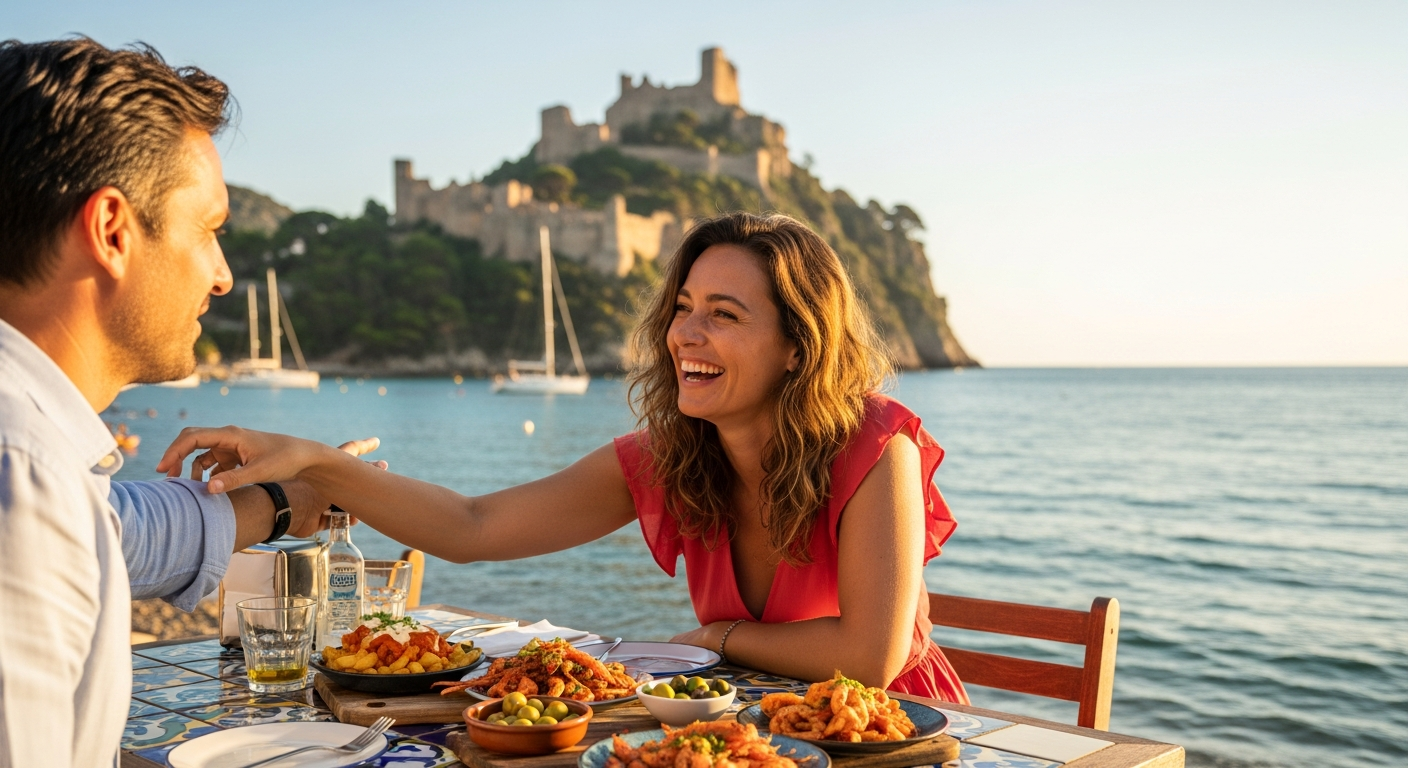
But Fuengirola is far more than a Nordic enclave. It is a thriving, well-connected Spanish city with 7 kilometres of sandy beaches, a medieval Moorish castle, one of Spain's most innovative zoological parks, excellent transport links, and a property market that offers genuine value compared to its more glamorous neighbours along the coast.
The Scandinavian Connection: How It Started, Why It Endures
The Finnish connection to Fuengirola dates back to the late 1960s and early 1970s, when a handful of Finnish families — many of them retirees seeking relief from harsh Nordic winters — discovered this then-quiet fishing town and began purchasing affordable apartments near the beach. Word spread through close-knit Finnish networks, and by the 1980s, a critical mass had formed. Finnish businesses opened to serve the growing community, a Finnish church was established, and seasonal residents began staying longer, eventually becoming permanent.
Today, estimates suggest that between 5,000 and 8,000 Finnish citizens live in or around Fuengirola at any given time, with numbers swelling significantly during the winter months. The Finnish community has its own social infrastructure that is remarkably comprehensive for a foreign population abroad: the Finnish Church of Costa del Sol holds regular services and community events, the Finnish School (Aurinkokoulu) provides education following the Finnish curriculum, and numerous Finnish-owned businesses — from restaurants and bars to health clinics and legal offices — operate throughout the town.
The Swedish and Norwegian communities, while somewhat smaller, follow a similar pattern. Sweden's Church Abroad (Svenska kyrkan utomlands) has a presence in Fuengirola, and several Swedish schools and social organisations operate in the area. Norwegian associations organise cultural events, language courses, and support services for their community members. Together, the three Scandinavian nations form a substantial Northern European population that gives Fuengirola its distinctive character.
What makes this community endure — and continue to grow — is the self-reinforcing nature of established infrastructure. New arrivals from Finland, Sweden, or Norway know they can access services in their own language, find familiar products in local shops, connect with compatriots, and navigate the challenges of relocating to Spain with support from others who have already done it. This lowers the barriers to moving abroad enormously and explains why Fuengirola remains the default destination for Scandinavians looking at the Costa del Sol.
Sohail Castle and Fuengirola's History
Fuengirola's history stretches back far beyond its modern incarnation as a beach resort. The town's most prominent landmark — the Sohail Castle (Castillo Sohail) — sits on a hilltop at the western end of the beach, overlooking the mouth of the Fuengirola river. Originally a Roman fortification, the castle was rebuilt by the Moors in the 10th century and takes its name from the Arabic Suhayl, referring to the star Canopus. The castle was contested during the Reconquista, seized by Castilian forces in the 15th century, and later played a role in the Peninsular War when it was fought over by French and British forces in 1810.
Today, the restored castle serves as a cultural venue hosting concerts, festivals, and theatrical performances throughout the summer. The annual Castillo Sohail Music Festival brings international and Spanish artists to perform within the castle walls — an atmospheric setting that draws audiences from across the Costa del Sol. For residents, the castle grounds offer panoramic views along the coast and pleasant walking paths, and the area around the castle has become one of Fuengirola's most desirable residential zones.
The town's historical layers extend beyond the castle. Archaeological remains of a Roman settlement — the Finca del Secretario — can be visited near the town centre, and the old fishing quarter around the port retains traces of the modest village that existed before tourism transformed the coastline. Understanding this history gives context to Fuengirola's identity: it is not a purpose-built resort, but a real town with deep roots that has evolved and expanded around its original core.
Seven Kilometres of Beach
Fuengirola's coastline is one of its greatest assets. The town boasts approximately 7 kilometres of sandy beaches stretching from the Sohail Castle area in the west to the Torreblanca district in the east. Unlike some Costa del Sol destinations where beaches are narrow or interrupted by rocky sections, Fuengirola's shoreline is essentially one continuous, wide, sandy stretch divided into named sections.
- Playa de Carvajal: The easternmost beach, extending towards Benalmádena. Quieter and favoured by families and local residents.
- Playa de Torreblanca: A long, wide beach popular with the Scandinavian community, given its proximity to the Torreblanca residential area where many Nordic residents live.
- Playa de Los Boliches: Fronting the Los Boliches neighbourhood, this beach has a distinctly local feel with excellent chiringuitos (beach restaurants) serving fresh fish.
- Playa de Fuengirola: The central town beach, backed by the Paseo Marítimo promenade. Wide, well-maintained, and busy in summer.
- Playa del Castillo: At the western end, near Sohail Castle. Less crowded and with views of the castle from the shoreline.
All of Fuengirola's beaches hold Blue Flag status, indicating high standards of water quality, safety, environmental management, and facilities. The seafront promenade — the Paseo Marítimo Rey de España — runs the full length of the beach and is one of the longest and best-maintained coastal walkways on the Costa del Sol. It is a hub of daily life: morning joggers, afternoon strollers, evening diners at the numerous terrace restaurants, and year-round activity that gives Fuengirola's seafront an energy many coastal towns lack outside of summer.
Bioparc Fuengirola: A Different Kind of Zoo
Bioparc Fuengirola is one of Spain's most innovative zoological parks and a genuine point of pride for the city. Unlike traditional zoos with cages and enclosures, Bioparc uses the concept of zoo-immersion, where barriers between visitors and animals are invisible and the habitats recreate natural environments as faithfully as possible. The park focuses on tropical forests — from Madagascar, Equatorial Africa, Southeast Asia, and Indo-Pacific islands — and houses over 130 species in lush, densely planted environments.
Located right in the centre of town on the site of a former traditional zoo, Bioparc has been recognised with multiple international awards for its conservation work and habitat design. For families with children, it is an outstanding local amenity. For property buyers, having a world-class zoological park within walking distance of residential areas is an unusual bonus that adds to the town's family-friendly credentials.
The Weekly Flea Market and Local Commerce
Every Tuesday, Fuengirola hosts one of the largest open-air flea markets on the Costa del Sol. The Rastro (flea market) at the Recinto Ferial fairground draws thousands of visitors and vendors selling everything from fresh produce, clothing, and leather goods to antiques, household items, and local crafts. For many Scandinavian residents, the Tuesday market is a weekly social event as much as a shopping trip — a place to meet friends, browse stalls, and enjoy the Mediterranean market culture that is so different from shopping habits back home.
Beyond the market, Fuengirola has a comprehensive commercial infrastructure. The town centre has a wide variety of shops, including several Scandinavian specialty stores carrying Finnish, Swedish, and Norwegian products — from rye bread and lingonberry jam to snus and specific cleaning products. Major Spanish supermarket chains (Mercadona, Lidl, Aldi, Carrefour) are well represented, and the nearby Miramar Shopping Centre provides additional retail options.
Property Areas and Neighbourhoods
Fuengirola's property market divides naturally into several distinct areas, each with its own character and price profile:
Los Boliches
Originally a separate fishing village that merged with Fuengirola, Los Boliches retains a charming local character with narrow streets, traditional tapas bars, and a genuine neighbourhood feel. Properties here include older apartments, some reformed townhouses, and a mix of Spanish and international residents. The area is particularly popular with Scandinavians who value walkability and an authentic atmosphere.
Torreblanca
The easternmost district, bordering Benalmádena. Torreblanca has a high concentration of Scandinavian residents and is known for its quieter, more residential character. Properties tend to be apartment complexes from the 1980s and 1990s, many with communal pools, at accessible prices. This is where many Finnish and Swedish long-term residents have established themselves.
Town Centre (Centro)
The urban core around the Plaza de la Constitución offers the liveliest atmosphere, with restaurants, shops, and services within walking distance. Properties are predominantly apartments in multi-storey buildings, with higher density but excellent convenience. Prices vary widely depending on renovation status and proximity to the beach.
Fuengirola West (Castillo Area)
The area around Sohail Castle and the western beaches tends to be quieter and slightly more upmarket. Some newer developments and villas can be found in the hillside areas behind the castle, offering sea views and more space. This area appeals to buyers seeking a balance between beach access and tranquility.
Inland Urbanisations (Mijas Costa Overlap)
Moving inland from Fuengirola towards Mijas, a series of urbanisations offer villas and townhouses at prices below beachfront areas. Developments like Torreblanca Alta, El Higueral, and areas bordering Mijas Costa provide more space, private gardens, and swimming pools. The trade-off is a greater reliance on cars and a short drive to the beach rather than a walk.
Property Prices: What to Expect in 2026
Fuengirola offers genuinely competitive prices compared to its neighbours on the Costa del Sol, particularly Marbella and Benalmádena. The market is active year-round, with steady demand from Scandinavian and other Northern European buyers ensuring liquidity and consistent price growth.
| Property Type | Price Range | Typical Areas |
|---|---|---|
| Apartments (2 bed) | €140,000 - €280,000 | Los Boliches, Torreblanca, Centro |
| Apartments (3 bed) | €200,000 - €380,000 | Centro, Castillo area, new builds |
| Townhouses (2-3 bed) | €220,000 - €400,000 | Los Boliches, inland urbanisations |
| Villas (3-4 bed) | €350,000 - €700,000 | Fuengirola West, Mijas Costa border |
| New-build apartments | €220,000 - €400,000 | Various new developments |
To put these figures in context: a two-bedroom apartment in Fuengirola's Los Boliches area with communal pool and a five-minute walk to the beach typically costs €160,000-€220,000. A comparable property in Benalmádena Costa might start at €200,000-€260,000, and in Marbella the same quality would begin at €280,000-€380,000. For villa buyers, Fuengirola's hillside and inland areas offer detached properties with pools at prices that would be impossible anywhere between Marbella and Estepona.
Scandinavian Life All Year Round
What distinguishes Fuengirola from other expat destinations is the depth and permanence of its Nordic community infrastructure. This is not a seasonal phenomenon — many Scandinavian residents live in Fuengirola full-time, and community life continues throughout the year.
For Finnish residents, the Aurinkokoulu (Sun School) provides Finnish-language education, meaning families with school-age children can maintain their children's connection to the Finnish curriculum while living abroad. The Finnish Church of Costa del Sol offers not just religious services but a community hub with events, support groups, and social gatherings. Finnish associations organise everything from choir groups and book clubs to hiking excursions and health seminars.
Swedish residents benefit from the Svenska kyrkan (Church of Sweden Abroad), Swedish associations, and Swedish-language services across the area. Norwegian residents have their own church services, social clubs, and cultural organisations. All three communities maintain active online groups and social media presence, making it easy for newcomers to connect before they even arrive.
Beyond formal organisations, the everyday reality of Scandinavian life in Fuengirola is evident in small but significant ways: you can order a Finnish pulla (cardamom bread) at a local café, buy Swedish newspapers at a kiosk, find a Norwegian-speaking dentist, or attend a Finnish sauna evening. These details matter enormously when living abroad — they provide comfort, reduce homesickness, and create a support network that makes the transition to life in Spain substantially easier.
Transport and Connectivity
Fuengirola benefits from excellent transport connections, which is one reason it has attracted such a large permanent population:
- Cercanías train (C-1): Direct train to Málaga city centre (35 minutes) and Málaga Airport (25 minutes), running every 20 minutes throughout the day. This is Fuengirola's transport trump card — reliable, affordable rail access to the airport and provincial capital.
- Málaga Airport (AGP): 27 km / 25 minutes by car. Direct flights to Helsinki, Stockholm, Oslo, Copenhagen, and most major European cities.
- Marbella: 27 km / 25 minutes by car via the AP-7
- Málaga city: 30 km / 30 minutes by car, 35 minutes by train
- AP-7 motorway: Direct access, connecting to the entire coast
The Cercanías train connection is particularly significant for Scandinavian residents. Direct flights from Málaga to Helsinki (Finnair), Stockholm (SAS, Norwegian), and Oslo (SAS, Norwegian) mean that the journey from Fuengirola apartment to Nordic airport can be accomplished in under six hours door-to-door — roughly the same as travelling from northern Finland to Helsinki or from Gothenburg to Stockholm if connections are factored in.
Healthcare, Schools, and Services
Fuengirola has a well-developed healthcare infrastructure including a public health centre, numerous private clinics (several with Scandinavian-speaking staff), dental practices, and pharmacies. The Hospital Costa del Sol in nearby Marbella and the Hospital Regional de Málaga provide full hospital services. Many Nordic residents carry European Health Insurance Cards and are registered with the Spanish public health system, while others maintain private health insurance that gives access to the area's extensive network of private clinics.
For families, education options include Spanish public and concertado schools, the aforementioned Finnish school, a Swedish school, and several international schools in the broader Costa del Sol area (including Aloha College and the English International College in Marbella). This range of educational choices is another factor that makes Fuengirola viable for families, not just retirees.
What Fuengirola Offers That Others Don't
Many towns on the Costa del Sol have beaches, sunshine, and affordable property. What makes Fuengirola unique is the combination of established community, practical infrastructure, and genuine year-round vitality. Consider what you get:
- A Nordic community of thousands, with schools, churches, shops, and services in your own language
- Direct train to the international airport every 20 minutes
- 7 km of Blue Flag beaches with a world-class promenade
- A historic castle and award-winning zoological park in the town centre
- Property prices 30-50% below Marbella for equivalent quality
- Full Spanish municipal services — hospital, schools, transport, administration
- A real, year-round town that doesn't shut down when tourists leave
For Scandinavian buyers, the equation is particularly compelling. Fuengirola removes the isolation that many expats experience in foreign countries. You can live in Spain — with all the climate, lifestyle, and cost-of-living advantages that implies — while maintaining meaningful connections to your own culture, language, and community. That dual benefit is rare, and it is the fundamental reason why Fuengirola has attracted and retained its remarkable Nordic population for over four decades.
Is Fuengirola Right for You?
Fuengirola suits buyers who want an active, well-connected town with genuine international community infrastructure. It is not the most glamorous destination on the Costa del Sol — that distinction belongs to Marbella and its satellite towns — nor is it the quietest, as the town has a distinctly urban character with busy streets and a lively atmosphere. But for Scandinavian buyers seeking a place where they can build a real life abroad, with practical support, familiar comforts, and easy access to everything the Costa del Sol offers, Fuengirola stands alone.
Whether you are a Finnish retiree seeking winter sun, a Swedish family looking for a permanent relocation, a Norwegian couple wanting a holiday home with rental potential, or an investor targeting the reliable Nordic demand that underpins Fuengirola's market, this colourful and characterful town deserves a place at the top of your list.
Frequently Asked Questions
The Scandinavian Connection: How It Started, Why It Endures?
The Finnish connection to Fuengirola dates back to the late 1960s and early 1970s, when a handful of Finnish families — many of them retirees seeking relief from harsh Nordic winters — discovered this then-quiet fishing town and began purchasing affordable apartments near the beach. Word spread through close-knit Finnish networks, and by the 1980s, a critical mass had formed. Finnish businesses opened to serve the growing community, a Finnish church was established, and seasonal residents began staying longer, eventually becoming permanent. Today, estimates suggest that between 5,000 and 8,000 Finnish citizens live in or around Fuengirola at any given time, with numbers swelling significantly during the winter months. The Finnish community has its own social infrastructure that is remarkably comprehensive for a foreign population abroad: the Finnish Church of Costa del Sol holds regular services and community events, the Finnish School (Aurinkokoulu) provides education following the Finnish curriculum, and...
Seven Kilometres of Beach?
Fuengirola's coastline is one of its greatest assets. The town boasts approximately 7 kilometres of sandy beaches stretching from the Sohail Castle area in the west to the Torreblanca district in the east. Unlike some Costa del Sol destinations where beaches are narrow or interrupted by rocky sections, Fuengirola's shoreline is essentially one continuous, wide, sandy stretch divided into named sections. Playa de Carvajal: The easternmost beach, extending towards Benalmádena. Quieter and favoured by families and local residents. Playa de Torreblanca: A long, wide beach popular with the Scandinavian community, given its proximity to the Torreblanca residential area where many Nordic residents live. Playa de Los Boliches: Fronting the Los Boliches neighbourhood, this beach has a distinctly local feel with excellent chiringuitos (beach restaurants) serving fresh fish. Playa de Fuengirola: The central town beach, backed by the Paseo Marítimo promenade. Wide, well-maintained, and busy in summer. Playa del Castillo: At...
The Weekly Flea Market and Local Commerce?
Every Tuesday, Fuengirola hosts one of the largest open-air flea markets on the Costa del Sol. The Rastro (flea market) at the Recinto Ferial fairground draws thousands of visitors and vendors selling everything from fresh produce, clothing, and leather goods to antiques, household items, and local crafts. For many Scandinavian residents, the Tuesday market is a weekly social event as much as a shopping trip — a place to meet friends, browse stalls, and enjoy the Mediterranean market culture that is so different from shopping habits back home. Beyond the market, Fuengirola has a comprehensive commercial infrastructure. The town centre has a wide variety of shops, including several Scandinavian specialty stores carrying Finnish, Swedish, and Norwegian products — from rye bread and lingonberry jam to snus and specific cleaning products. Major Spanish supermarket chains (Mercadona, Lidl, Aldi, Carrefour) are well represented, and the nearby Miramar Shopping Centre provides additional retail...
Property Prices: What to Expect in 2026?
Fuengirola offers genuinely competitive prices compared to its neighbours on the Costa del Sol, particularly Marbella and Benalmádena. The market is active year-round, with steady demand from Scandinavian and other Northern European buyers ensuring liquidity and consistent price growth. Property TypePrice RangeTypical Areas Apartments (2 bed)€140,000 - €280,000Los Boliches, Torreblanca, Centro Apartments (3 bed)€200,000 - €380,000Centro, Castillo area, new builds Townhouses (2-3 bed)€220,000 - €400,000Los Boliches, inland urbanisations Villas (3-4 bed)€350,000 - €700,000Fuengirola West, Mijas Costa border New-build apartments€220,000 - €400,000Various new developments To put these figures in context: a two-bedroom apartment in Fuengirola's Los Boliches area with communal pool and a five-minute walk to the beach typically costs €160,000-€220,000. A comparable property in Benalmádena Costa might start at €200,000-€260,000, and in Marbella the same quality would begin at €280,000-€380,000. For villa buyers, Fuengirola's hillside and inland areas offer detached properties with pools at prices that would be impossible anywhere...
Transport and Connectivity?
Fuengirola benefits from excellent transport connections, which is one reason it has attracted such a large permanent population: Cercanías train (C-1): Direct train to Málaga city centre (35 minutes) and Málaga Airport (25 minutes), running every 20 minutes throughout the day. This is Fuengirola's transport trump card — reliable, affordable rail access to the airport and provincial capital. Málaga Airport (AGP): 27 km / 25 minutes by car. Direct flights to Helsinki, Stockholm, Oslo, Copenhagen, and most major European cities. Marbella: 27 km / 25 minutes by car via the AP-7 Málaga city: 30 km / 30 minutes by car, 35 minutes by train AP-7 motorway: Direct access, connecting to the entire coast The Cercanías train connection is particularly significant for Scandinavian residents. Direct flights from Málaga to Helsinki (Finnair), Stockholm (SAS, Norwegian), and Oslo (SAS, Norwegian) mean that the journey from Fuengirola apartment to Nordic airport can be accomplished...
Why Granfield Estate?
-
⚑
Office on the coast — we live here
Our office is in La Mata, Torrevieja. We know every neighbourhood, every street and the real prices — not from a catalogue, but from daily work on the ground.
-
⚖
In-house lawyer — 10+ years of experience
NIE, bank account, property check, contract, notary — legal support at every step. First consultation free.
-
🏠
Property management
Buying to rent? Our management company handles tenant search, maintenance and all questions.
-
🌐
We speak your language
English, Spanish, Russian, German, Finnish, Swedish and more. Licence RAICV 1663, member of Asivega.
Granfield Estate · Av. Bélgica 1, C.C. Parquemar, La Mata, 03188 Torrevieja · +34 865 44 33 33
Read also

Benidorm: Investment and Rental Property
21.05.2026
Complete guide to property investment in Benidorm: 6-8% rental yields, area comparisons, updated prices and year-round rental potential.

Costa Blanca Property Guide 2026: Complete Buyer's Handbook
22.05.2026
Everything you need to know about buying property on Spain's Costa Blanca — from Dénia in the north to Torrevieja in the south, with real prices, honest area comparisons, and practical advice.

Costa del Sol Property Guide: Malaga to Gibraltar
23.05.2026
From Marbella luxury to Nerja charm — a complete guide to buying property on Spain's Costa del Sol, with prices, area comparisons, and investment insights.