


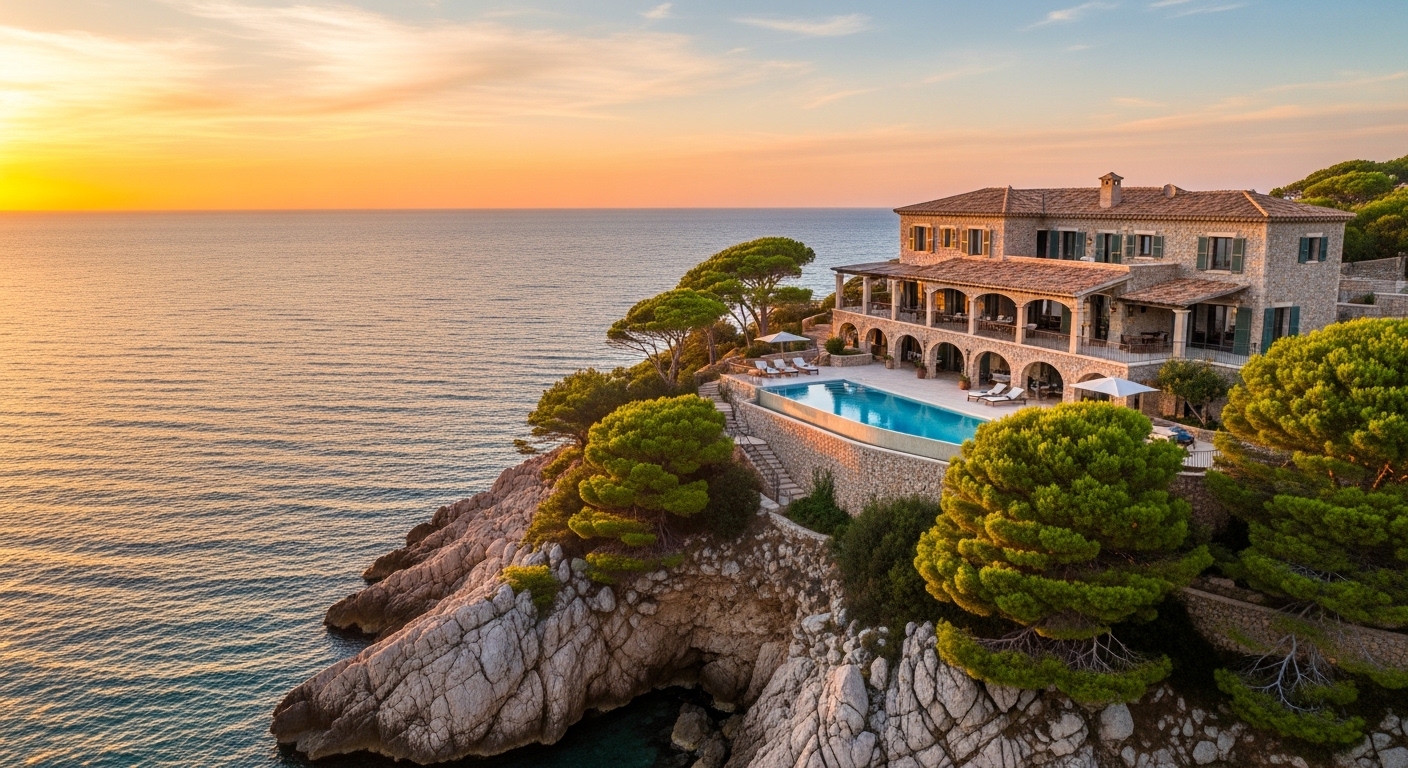
Why Costa Blanca North Commands Premium Prices
Spain's Costa Blanca stretches along the Alicante province coastline, but the northern and southern halves could almost belong to different countries. While Costa Blanca South — think Torrevieja, Orihuela Costa, and Guardamar — has built its reputation on affordable mass-market tourism and budget-friendly property, Costa Blanca North offers a dramatically different proposition: rugged coastline, protected natural areas, established gastronomy, and a mature international community that has called this stretch of Mediterranean coast home for decades.
The price difference is significant. Average property prices in Javea and Denia run 40 to 70 percent higher than in Torrevieja or the Orihuela Costa developments. But buyers here are paying for something tangible: less overdevelopment, stricter planning controls, better-preserved natural landscapes, and a year-round community that does not hollow out when charter flights stop in October. The World Health Organization once identified this microclimate as one of the healthiest on the planet, with over 300 days of sunshine, low humidity, and mild winters that rarely dip below 10 degrees Celsius.
Javea (Xabia): Three Towns in One
Javea is not a single place so much as a collection of distinct neighbourhoods, each with its own character and price profile. Understanding these differences is critical for any buyer considering the area.
The Old Town (Casco Antiguo)
Javea's historic centre sits slightly inland, clustered around the 14th-century fortified Church of San Bartolome. The old town is a maze of narrow streets lined with traditional tosca sandstone buildings, independent shops, tapas bars, and a covered market that operates every morning. Property here consists mainly of townhouses and renovated village homes, with prices ranging from €2,500 to €4,000 per square metre depending on condition and whether a roof terrace has sea views.
The old town appeals to buyers who want authentic Spanish village life without sacrificing access to the coast — the Arenal beach is a ten-minute drive or a pleasant 25-minute walk downhill. Renovation projects still appear on the market, but competition from both foreign buyers and Spanish families from Madrid and Valencia has pushed entry-level prices up considerably since 2022.
Arenal Beach Zone
The Arenal is Javea's main sandy beach — a wide, gently curving bay lined with restaurants, cafes, and a pedestrian promenade. This is the most commercial and tourist-oriented part of Javea, and property here commands the highest prices per square metre in the town. Beachfront apartments in good condition start around €300,000 for a two-bedroom unit and can reach €500,000 or more for modern builds with terraces facing the sea.
The Arenal zone is popular with buyers seeking rental income, as summer occupancy rates are excellent. However, the area is noticeably quieter from November through March, which suits some owners but disappoints those expecting year-round buzz.
The Port (Puerto de Javea)
Javea's port area is the town's most characterful neighbourhood. A working fishing port lined with seafood restaurants, it has a more local, year-round atmosphere than the Arenal. Property around the port tends to be older apartment buildings and townhouses, with prices sitting between the old town and the Arenal. The port beach is pebbly rather than sandy, and the area attracts buyers who prefer authenticity over resort-style amenities.
Montgo and Hillside Villas
The Montgo massif rises to 753 metres behind Javea and is a designated natural park. The hillsides between the town and the mountain are home to hundreds of detached villas, many built in the 1980s and 1990s for northern European buyers. This is where the classic "Costa Blanca villa with pool and sea views" really lives. Expect to pay €350,000 to €800,000 for a three- to four-bedroom villa with a pool, rising to €1 million to €1.5 million for modern or recently renovated properties with panoramic views.
Walking trails through the Montgo park are a major draw, with routes ranging from gentle strolls through pine forests to challenging summit climbs. The Cabo de San Antonio cape — the park's eastern point — overlooks the sea and is one of the most photographed spots on the entire Costa Blanca.
Denia: Culture, Gastronomy, and Gateway to the Islands
Denia sits at the northern tip of Costa Blanca, just 20 minutes from Javea but with a distinctly different feel. Where Javea is essentially an international enclave that happens to be in Spain, Denia is a proper Spanish town of around 42,000 residents with a real economy beyond tourism. It is a functioning port, the seat of local government, and — crucially for food lovers — one of Spain's designated Creative Cities of Gastronomy by UNESCO.
The Castle and Old Quarter
Denia's hilltop castle dates back to the 11th century and dominates the town skyline. The old quarter wraps around its base, with pedestrianised streets, independent boutiques, and some of the town's best restaurants tucked into medieval buildings. Property in the old quarter is limited — mostly apartments and a handful of townhouses — but turnover is low and demand is high. Expect €2,200 to €3,500 per square metre for renovated units.
Las Marinas Beach
North of the port, Las Marinas is a long, sandy beach that stretches for several kilometres toward Oliva. This is Denia's main family beach zone, with a mix of apartment blocks, small villa developments, and some newer construction. Two-bedroom apartments near the beach start around €180,000 to €250,000, with larger units and penthouses reaching €350,000 to €400,000. The area has good infrastructure including supermarkets, medical facilities, and international schools within easy reach.
Las Rotas
South of the port, Las Rotas is Denia's premium residential coastline — a series of rocky coves with crystal-clear water, backed by low-rise villas and pine forests. Las Rotas feels almost exclusive, with limited development and strict building regulations that preserve its natural character. Villas here start around €500,000 and can exceed €1.5 million for frontline properties. Las Rotas is particularly popular with Spanish buyers from Valencia and Madrid as well as established French residents.
Quique Dacosta and the Gastronomic Scene
Denia's culinary credentials are anchored by Quique Dacosta, whose three-Michelin-star restaurant has been a fixture of global best-restaurant lists for over a decade. But the food culture runs deeper than fine dining. The red prawn of Denia (gamba roja de Denia) is considered one of Spain's finest seafood products, and the daily fish auction at the port is a genuine spectacle. Dozens of excellent mid-range restaurants serve rice dishes, fresh fish, and locally sourced produce. For many buyers, Denia's food scene is as powerful a draw as the climate or the coastline.
Ferry to Ibiza and the Balearic Islands
Denia's port operates year-round ferry services to Ibiza, Mallorca, and Formentera, with the fastest crossing to Ibiza taking around two hours. This connection is a genuine lifestyle asset — weekend trips to the Balearics become routine for many Denia residents. During summer, multiple daily departures make it easy to combine a Costa Blanca base with island hopping. This is a unique advantage that no other Costa Blanca town can match.
The Expat Communities
Costa Blanca North has some of Spain's longest-established expat communities. The British have been present since the 1960s, with social clubs, English-language newspapers, churches, and cricket teams forming a well-developed support network. German and Dutch communities are equally substantial, with their own social infrastructure, shops stocking northern European products, and multilingual medical practices.
What distinguishes Costa Blanca North expats from their southern counterparts is a tendency toward longer-term integration. Many residents here speak functional Spanish, participate in local cultural life, and have lived in the area for 15 to 30 years or more. The communities are also generally older and more affluent than those on the southern coast, which shapes the services and amenities available — expect wine clubs and hiking groups rather than karaoke bars and English breakfasts.
Post-Brexit, British buyer numbers have dipped slightly, but German, Dutch, Belgian, and Scandinavian buyers have stepped in. French buyers are also increasingly active in Denia, drawn by proximity (the French border is around five hours by car) and the gastronomic culture.
Moraira: The Luxury Neighbour
No discussion of Costa Blanca North property is complete without mentioning Moraira, which sits between Javea and Calpe. Moraira occupies the top tier of the local market, with villa prices regularly exceeding €1 million and prime sea-view properties reaching €2 million to €3 million. The town itself is small, immaculate, and largely residential, with a picturesque harbour and a handful of upscale restaurants. Moraira appeals to buyers who want privacy, space, and an extremely quiet environment. It is less suitable for those seeking a vibrant town centre or year-round social life.
Costa Blanca North vs. South: An Honest Comparison
| Factor | Costa Blanca North (Javea / Denia) | Costa Blanca South (Torrevieja / Orihuela Costa) |
|---|---|---|
| 2-bed apartment (avg.) | €220,000 - €350,000 | €120,000 - €200,000 |
| 3-bed villa with pool | €400,000 - €900,000 | €200,000 - €450,000 |
| Landscape | Mountains, rocky coves, pine forests | Flat terrain, long sandy beaches, salt lakes |
| Development density | Low to medium, strict planning | High density, large urbanisations |
| Year-round community | Strong, established expat and Spanish mix | Seasonal, quieter in winter |
| Gastronomy | Michelin-star dining, local food culture | International restaurants, budget-friendly |
| Rental yield | 3 - 5% (higher property values) | 5 - 7% (lower entry price) |
| Airport access | Alicante 1h 15min / Valencia 1h 15min | Alicante 30 - 45 min |
| Healthcare | Hospital in Denia, private clinics | Torrevieja University Hospital |
| Expat profile | Older, affluent, long-term residents | Mixed, many retirees, younger budget buyers |
Neither option is objectively superior — it depends entirely on budget, lifestyle preferences, and whether the buyer values affordability or a more upscale, integrated experience. Buyers who want the most property for their money and are happy with a lively expat-focused environment will do well in the south. Those seeking natural beauty, gastronomy, year-round community, and a more "Spanish" daily experience will gravitate north.
Sports and Outdoor Activities
Golf
While Costa Blanca North has fewer courses than the south, quality options exist. Club de Golf Javea is an attractive 9-hole course with sea views, while La Sella Golf Resort near Denia offers a well-regarded 27-hole course designed by Jose Maria Olazabal. Serious golfers can also reach courses in Altea, Benidorm, and the Orihuela Costa golf belt within an hour.
Water Sports
The coastline between Denia and Javea is outstanding for water sports. Sailing, kayaking, paddleboarding, and scuba diving are all well served, with multiple rental and instruction centres operating from both towns. The rocky coves of Les Rotes and Cabo de San Antonio are particularly prized for snorkelling and diving, with posidonia meadows and underwater caves. Wind conditions suit sailing and windsurfing, especially in spring and autumn.
Hiking and Cycling
Montgo Natural Park is the centrepiece of local hiking, with trails ranging from easy coastal paths to the demanding summit route. Beyond Montgo, the Vall de Laguar — about 30 minutes inland — offers the famous Barranc de l'Infern route through a spectacular gorge. Road cycling is enormously popular, with quiet inland roads passing through cherry orchards, almond groves, and medieval villages. Mountain biking trails criss-cross the hills between the coast and the Jalon Valley.
The Microclimate Advantage
The Javea-Denia microclimate deserves special attention because it genuinely influences quality of life and, by extension, property values. The Montgo massif acts as a natural barrier against cold northerly winds, while the south-facing orientation of the coastline maximises sun exposure. Average annual temperature sits around 18 degrees Celsius, with summer highs moderated by sea breezes and winter lows rarely requiring more than a light jacket.
Rainfall is concentrated in short, intense episodes in autumn — the so-called gota fria — with the rest of the year being overwhelmingly dry and sunny. Humidity levels are lower than in many coastal areas, which is particularly beneficial for residents with respiratory conditions or arthritis. The WHO's recognition of this climate is not just marketing — it reflects measurable health benefits that have drawn retirees and health-conscious buyers to the area for decades.
Practical Considerations for Buyers
Access to Costa Blanca North is split between two airports. Alicante-Elche (ALC) is around 75 minutes south, while Valencia (VLC) is approximately 75 minutes north. Both airports serve a wide network of European destinations, and having two options provides flexibility and often better fares. The AP-7 motorway — now toll-free — runs the length of the coast and connects Denia and Javea to both airports efficiently.
Healthcare infrastructure is solid. The Marina Salud hospital in Denia serves the northern comarca, and multiple private clinics offer multilingual care. International schools in the area include the Javea International School (British curriculum) and several Spanish colegios that welcome foreign students.
Property purchase costs in the Valencia Community (which includes Alicante province) include a transfer tax of 10 percent on resale properties and VAT of 10 percent plus stamp duty of 1.5 percent on new builds. Add notary, registry, and legal fees, and total acquisition costs typically run 12 to 14 percent on top of the purchase price. Non-resident buyers should budget for annual wealth tax (Impuesto sobre el Patrimonio) if total Spanish assets exceed the threshold, and rental income must be declared quarterly if the property is let.
The Javea and Denia property markets have shown consistent appreciation over the past five years, with annual price growth between 5 and 8 percent in most segments. Limited new construction, restricted building land, and sustained international demand suggest that the northern Costa Blanca will continue to outperform the Spanish average, though no market is immune to broader economic cycles. Buyers looking for long-term value in a beautiful, well-established, and genuinely liveable part of Mediterranean Spain will find Costa Blanca North difficult to beat.
Frequently Asked Questions
Javea (Xabia): Three Towns in One?
Javea is not a single place so much as a collection of distinct neighbourhoods, each with its own character and price profile. Understanding these differences is critical for any buyer considering the area. The Old Town (Casco Antiguo)
Javea's historic centre sits slightly inland, clustered around the 14th-century fortified Church of San Bartolome. The old town is a maze of narrow streets lined with traditional tosca sandstone buildings, independent shops, tapas bars, and a covered market that operates every morning. Property here consists mainly of townhouses and renovated village homes, with prices ranging from €2,500 to €4,000 per square metre depending on condition and whether a roof terrace has sea views.
Denia: Culture, Gastronomy, and Gateway to the Islands?
Denia sits at the northern tip of Costa Blanca, just 20 minutes from Javea but with a distinctly different feel. Where Javea is essentially an international enclave that happens to be in Spain, Denia is a proper Spanish town of around 42,000 residents with a real economy beyond tourism. It is a functioning port, the seat of local government, and — crucially for food lovers — one of Spain's designated Creative Cities of Gastronomy by UNESCO. The Castle and Old Quarter Denia's hilltop castle dates back to the 11th century and dominates the town skyline. The old quarter wraps around its base, with pedestrianised streets, independent boutiques, and some of the town's best restaurants tucked into medieval buildings. Property in the old quarter is limited — mostly apartments and a handful of townhouses — but turnover is low and demand is high. Expect €2,200 to €3,500 per square metre for...
The Expat Communities?
Costa Blanca North has some of Spain's longest-established expat communities. The British have been present since the 1960s, with social clubs, English-language newspapers, churches, and cricket teams forming a well-developed support network. German and Dutch communities are equally substantial, with their own social infrastructure, shops stocking northern European products, and multilingual medical practices. What distinguishes Costa Blanca North expats from their southern counterparts is a tendency toward longer-term integration. Many residents here speak functional Spanish, participate in local cultural life, and have lived in the area for 15 to 30 years or more. The communities are also generally older and more affluent than those on the southern coast, which shapes the services and amenities available — expect wine clubs and hiking groups rather than karaoke bars and English breakfasts.
Moraira: The Luxury Neighbour?
No discussion of Costa Blanca North property is complete without mentioning Moraira, which sits between Javea and Calpe. Moraira occupies the top tier of the local market, with villa prices regularly exceeding €1 million and prime sea-view properties reaching €2 million to €3 million. The town itself is small, immaculate, and largely residential, with a picturesque harbour and a handful of upscale restaurants. Moraira appeals to buyers who want privacy, space, and an extremely quiet environment. It is less suitable for those seeking a vibrant town centre or year-round social life.
Costa Blanca North vs. South: An Honest Comparison?
Factor Costa Blanca North (Javea / Denia) Costa Blanca South (Torrevieja / Orihuela Costa) 2-bed apartment (avg.) €220,000 - €350,000 €120,000 - €200,000 3-bed villa with pool €400,000 - €900,000 €200,000 - €450,000 Landscape Mountains, rocky coves, pine forests Flat terrain, long sandy beaches, salt lakes Development density Low to medium, strict planning High density, large urbanisations Year-round community Strong, established expat and Spanish mix Seasonal, quieter in winter Gastronomy Michelin-star dining, local food culture International restaurants, budget-friendly Rental yield 3 - 5% (higher property values) 5 - 7% (lower entry price) Airport access Alicante 1h 15min / Valencia 1h 15min Alicante 30 - 45 min Healthcare Hospital in Denia, private clinics Torrevieja University Hospital Expat profile Older, affluent, long-term residents Mixed, many retirees, younger budget buyers Neither option is objectively superior — it depends entirely on budget, lifestyle preferences, and whether the buyer values affordability or a more upscale,...
Why Granfield Estate?
-
⚑
Office on the coast — we live here
Our office is in La Mata, Torrevieja. We know every neighbourhood, every street and the real prices — not from a catalogue, but from daily work on the ground.
-
⚖
In-house lawyer — 10+ years of experience
NIE, bank account, property check, contract, notary — legal support at every step. First consultation free.
-
🏠
Property management
Buying to rent? Our management company handles tenant search, maintenance and all questions.
-
🌐
We speak your language
English, Spanish, Russian, German, Finnish, Swedish and more. Licence RAICV 1663, member of Asivega.
Granfield Estate · Av. Bélgica 1, C.C. Parquemar, La Mata, 03188 Torrevieja · +34 865 44 33 33
Read also

Benidorm: Investment and Rental Property
21.05.2026
Complete guide to property investment in Benidorm: 6-8% rental yields, area comparisons, updated prices and year-round rental potential.

Costa Blanca Property Guide 2026: Complete Buyer's Handbook
22.05.2026
Everything you need to know about buying property on Spain's Costa Blanca — from Dénia in the north to Torrevieja in the south, with real prices, honest area comparisons, and practical advice.

Costa del Sol Property Guide: Malaga to Gibraltar
23.05.2026
From Marbella luxury to Nerja charm — a complete guide to buying property on Spain's Costa del Sol, with prices, area comparisons, and investment insights.