


Luxury Property in Spain: The Complete €500K+ Buying Guide for 2026
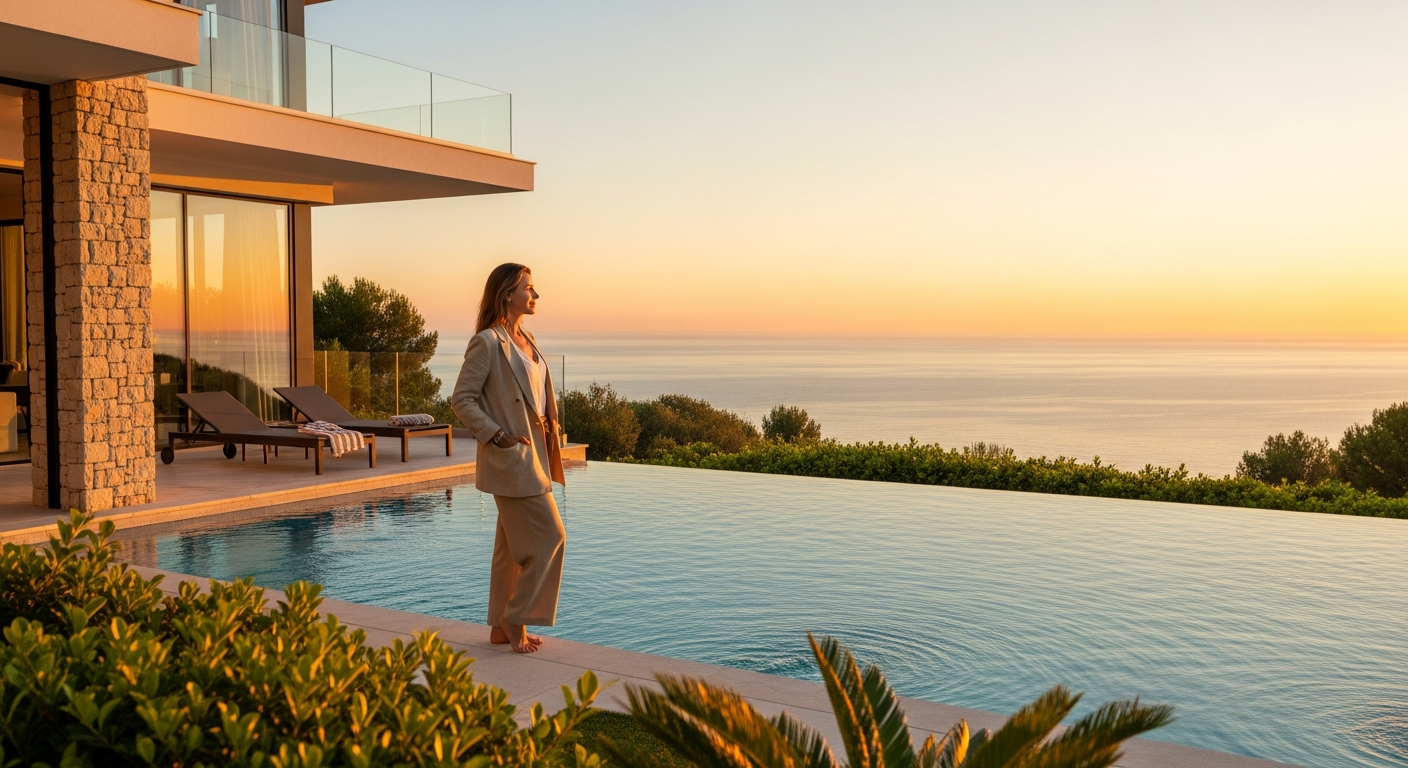
Where Luxury Begins in Spain
Luxury is a relative concept in Spanish real estate, and that relativity is precisely what makes the market so attractive to international buyers. In Marbella or Mallorca, the word luxury does not apply below €1 million, and serious properties start at €2-3 million. But travel an hour up the coast to Jávea, or inland to a traditional finca in the Guadalest valley, and €500,000 buys a genuinely premium home with features that would cost three times as much in northern Europe or North America.
This price geography is the defining characteristic of Spanish luxury real estate in 2026. The country offers a spectrum that runs from accessible luxury — architect-designed villas with pools and sea views for €500K-800K in emerging areas — to ultra-prime trophy properties commanding €10 million and above in established enclaves. Understanding where you sit on this spectrum, and where the value lies, is the first step toward a successful purchase.
The luxury market in Spain has shown remarkable resilience. While mid-range property transactions slowed during 2024-2025, the premium segment above €500,000 grew by approximately 12% year-on-year. International buyers now account for over 60% of luxury transactions on the costas and islands. This demand is driven by a combination of factors: lifestyle, climate, favourable tax structures in certain regions, and — compared with comparable Mediterranean markets in France or Italy — genuine value for money.
Top Luxury Locations: Where the Money Goes
Marbella and the Golden Mile
Marbella remains Spain's flagship luxury destination. The Golden Mile — the stretch of coastline between Marbella town and Puerto Banús — is where old-money estates sit alongside new-build contemporary villas. Prices on the Golden Mile start around €2 million for a renovated apartment and reach €15-30 million for frontline beach villas. The Sierra Blanca area behind the Golden Mile has emerged as a prime address for ultra-modern villas, typically €3-8 million, with panoramic views from elevated plots.
La Zagaleta, a private estate in the hills above Marbella, is Spain's most exclusive gated community. Entry-level properties start at approximately €4 million, with exceptional estates reaching €30 million. The estate offers two golf courses, equestrian facilities, a helipad, and security that rivals a diplomatic compound. Buyers undergo a vetting process before being permitted to purchase.
For those with smaller budgets, Nueva Andalucía — the "golf valley" behind Puerto Banús — offers luxury apartments from €400,000 and villas from €800,000. East of Marbella, areas like Elviria and Los Monteros provide beachside villas from €1.5 million with more space and less traffic than the Golden Mile.
Mallorca: Puerto Andratx, Son Vida, and the Southwest
Mallorca has transformed over the past two decades from a package-holiday island to one of Europe's most desirable luxury destinations. Puerto Andratx on the southwest coast is the epicentre, with contemporary villas commanding €3-15 million for sea views and direct water access. The harbour village itself offers high-end apartments from €800,000.
Son Vida, the hilltop enclave above Palma, combines proximity to the capital with golf-course living and panoramic views. Villas start around €2 million. Deià on the northwest coast — favoured by artists and writers since Robert Graves settled there — is a different luxury altogether: traditional stone fincas with mountain views, from €1.5 million, though supply is extremely limited.
Mallorca's northeast, around Pollença and Alcúdia, offers better value: renovated fincas with pools and land for €700K-1.5 million. The island's interior — the "real Mallorca" — provides traditional estates with olive groves and mountain backdrops from €500,000.
Jávea and the Costa Blanca North
Jávea is where the luxury market meets genuine value. This stretch of coastline between Dénia and Moraira is dramatically beautiful — rocky coves, the Montgó mountain, and crystal water — without the mass-tourism infrastructure of the southern Costa Blanca. Modern architect-designed villas with sea views and infinity pools sell for €600K-1.5 million. On the Portichol headland or Cap de la Nau, premium frontline properties reach €2-4 million.
Moraira, fifteen minutes south, is smaller and more exclusive. Luxury villas in the El Portet and Benimeit areas command €800K-2 million. Altea, with its white-domed church and cobblestone old town, attracts a more culturally minded buyer, with renovated townhouses from €300,000 and hilltop villas from €600,000.
Ibiza
Ibiza's luxury market has been supercharged by the global lifestyle brand the island has become. San José on the southwest coast is the premium area, with clifftop villas offering sunset views from €2-10 million. The area around Cala Jondal — home to Blue Marlin beach club — commands particularly high premiums. Near Santa Gertrudis in the interior, renovated fincas with land sell for €1.5-5 million.
Ibiza is expensive relative to its size and infrastructure. Building plots are scarce, renovation permissions are tightly controlled, and seasonal demand drives prices upward consistently. However, the rental returns during the summer season are among the highest in Europe, partially offsetting the elevated entry cost.
Sotogrande
Sotogrande, near Gibraltar on the western Costa del Sol, is Spain's largest privately-owned residential development. It offers a lifestyle centred on polo, golf (the Real Club Valderrama is here), and sailing. Frontline marina apartments start around €500,000. Villas on the Kings and Queens area — named after its streets — run from €1.5 million to €8 million. The atmosphere is more understated than Marbella: families, equestrians, and discreet wealth rather than flashy nightlife.
Barcelona Pedralbes and Madrid Salamanca
Spain's two great cities have their own luxury property markets, quite distinct from the coastal scene. Pedralbes in Barcelona — leafy, quiet, with modernist architecture — is where the city's old money lives. Apartments in period buildings start around €800,000; detached houses with gardens command €2-6 million. The Eixample district offers spectacular modernista apartments of 200-400 square metres from €1-3 million.
Madrid's Barrio de Salamanca is the capital's most prestigious neighbourhood. Grand apartments on Calle Serrano, Velázquez, or Jorge Juan sell for €6,000-12,000 per square metre. A 200-square-metre apartment in a classic Salamanca building costs €1.2-2.4 million. La Moraleja and Puerta de Hierro, gated communities in Madrid's northern suburbs, offer detached villas with gardens and pools from €1.5 million.
What €500,000 to €1 Million Buys by Area
The gap between what half a million euros purchases in different Spanish locations is staggering. Understanding this geography of value is essential before you begin searching.
Costa Blanca North (Jávea, Moraira, Altea): €500K-700K
A modern three- or four-bedroom villa with a private pool, landscaped garden of 500-800 square metres, open-plan living with floor-to-ceiling glass, sea views (partial or full depending on elevation), covered parking, and outdoor kitchen or barbecue area. Build quality at this range is high, with underfloor heating, electric shutters, and quality finishes standard. Plots in elevated positions with panoramic views. Homes of 180-250 square metres on plots of 600-1,000 square metres.
Costa del Sol (East Marbella, Estepona, Benahavís): €500K-700K
A penthouse apartment or townhouse in a gated community with communal pools, spa, and gardens. Alternatively, a semi-detached villa with a small private pool on a golf course. Three bedrooms, 150-200 square metres, with high-end communal facilities. In Estepona or Casares, a detached villa with a pool and sea views is achievable. Benahavís offers more space — larger plots, mountain views — at a lower per-square-metre cost than Marbella itself.
Mallorca (Interior and Northeast): €500K-800K
A renovated traditional finca with three or four bedrooms, a pool, and land of 5,000-15,000 square metres. Stone construction, exposed beams, mature gardens. In Pollença or Artà, a village townhouse with a courtyard and pool, or a modern villa in a rural setting. In Palma, a quality apartment of 120-150 square metres in a good neighbourhood like Santa Catalina or Son Espanyolet.
Ibiza: €500K-800K
At this range, Ibiza is more challenging. Options include apartments of 80-120 square metres in Ibiza town or Santa Eulalia, or a small finca requiring renovation in the interior. Genuine luxury on Ibiza typically starts above €1 million. However, a well-located apartment with a roof terrace and sea views in Marina Botafoch or Jesús can be found at the top of this range.
Costa Blanca North: €700K-1M
This is the sweet spot for luxury on the northern Costa Blanca. Expect a newly built or recently completed villa of 250-350 square metres on a plot of 800-1,200 square metres. Four or five bedrooms, an infinity pool, modern minimalist architecture, floor-to-ceiling glazing with sea views, home automation, garage for two cars, wine cellar, and premium landscaping. Frontline positions on prestigious headlands become accessible at the top of this range.
Marbella: €700K-1M
A high-quality apartment of 150-200 square metres in a luxury development with concierge, spa, and communal pools, typically in Nueva Andalucía or the eastern beach areas. A villa in this range is possible but will be older, requiring renovation, or located further from the coast. Ground-floor apartments with private gardens and pools in developments like Puente Romano or Los Monteros start around €900,000.
What €1 Million and Above Buys
Above the million-euro threshold, Spanish luxury real estate competes directly with the world's best residential markets — and frequently wins on value.
For €1-2 million on the Costa Blanca, you enter the realm of truly exceptional homes: architect-designed contemporary villas with infinity pools engineered to merge visually with the Mediterranean, walls of glass that disappear into the floor, master suites with private terraces and outdoor showers, guest houses, home cinemas, and mature tropical landscaping. Plots of 1,500-3,000 square metres provide genuine privacy.
At €2-5 million, the market opens to frontline seafront estates in Marbella and Mallorca, with direct beach access, staff quarters, multiple outdoor entertaining areas, professional kitchens, and grounds managed by full-time gardeners. In Ibiza, this range accesses the clifftop properties with sunset views that define the island's luxury image.
Above €5 million, you are competing for trophy properties: La Zagaleta estates, Andratx sea-cliff villas, historic fincas on Mallorca with 50 hectares of olive groves, or Pedralbes mansions with mature gardens in the heart of Barcelona. At this level, properties are often sold off-market, and access to the right networks — rather than browsing property portals — becomes critical.
Golden Visa Abolished: What It Means for Luxury Buyers
Spain's Golden Visa programme, introduced in 2013, granted residency to non-EU nationals investing at least €500,000 in Spanish real estate, and for over a decade it was one of the most visible drivers of the luxury market. That chapter is now closed: the programme was abolished in full on 3 April 2025 under Ley Orgánica 1/2025. No new applications are accepted, and buying property in Spain — at €500,000 or any other amount — no longer grants a residency permit. Existing holders retain their rights and can continue renewing their investor residency (residencia de inversor).
Residency Alternatives for Property Buyers
If residency is part of your plan, the purchase itself can no longer deliver it — but established routes remain. The non-lucrative visa suits buyers with sufficient passive income who want to live in Spain without working locally. The digital nomad visa serves remote workers and entrepreneurs whose income comes from outside Spain. Owning a home in Spain does not qualify you for either visa by itself, but in practice it strengthens the application: it demonstrates genuine ties to the country and settles the accommodation question. Requirements evolve, so verify the current rules with a specialist immigration lawyer before structuring your move around them.
Why the €500,000+ Market Remains Strong
The end of the Golden Visa did not derail Spain's luxury market. Most premium buyers never needed it: EU nationals require no visa at all, and lifestyle-driven buyers from the UK, Switzerland, the US and Scandinavia purchase for climate, quality of life and long-term value rather than for residency papers. Transactions above €500,000 have remained robust since the abolition, supported by favourable regional tax regimes and pricing that still undercuts comparable properties on the French Riviera or the Italian coast. One practical change is worth noting: with no visa threshold to hit, the €500,000 price point now reflects what a property is actually worth — not an immigration target.
Wealth Tax Implications by Region
Spain's wealth tax (Impuesto sobre el Patrimonio) is a significant consideration for luxury property buyers, and the regional variation creates genuine tax planning opportunities.
The national framework provides a €700,000 exemption per person (€300,000 additional for a primary residence). Rates range from 0.2% to 3.5% on net assets above the threshold. However, Spain's autonomous communities have the power to modify or effectively eliminate this tax.
Key Regional Differences in 2026
Madrid has traditionally offered a 100% wealth tax rebate, effectively zeroing the tax for residents. This is a major reason why ultra-high-net-worth individuals base themselves in the capital. However, Spain's national Solidarity Tax on Large Fortunes (Impuesto Temporal de Solidaridad) was introduced to counterbalance this, applying to net assets above €3 million regardless of regional rebates.
Andalucía (covering Marbella, Sotogrande, Costa del Sol) has reduced its wealth tax rates significantly in recent years. The Balearic Islands (Mallorca, Ibiza) maintain moderate rates. The Valencian Community (Jávea, Costa Blanca) applies the national scale without significant modification. Catalonia (Barcelona) maintains some of the highest wealth tax rates in Spain.
For non-residents, wealth tax applies only to Spanish-located assets, and you cannot benefit from regional rebates — you pay the national scale. This means a non-resident with a €2 million villa and no mortgage would pay approximately €6,000-8,000 annually in wealth tax. Structuring ownership — for example, holding through a company in certain circumstances — can affect the calculation, but this requires specialist advice and has been subject to increasing anti-avoidance legislation.
Luxury Property Management and Security
Owning a luxury property that you do not occupy year-round creates management challenges that lower-value properties simply do not face. A €2 million villa with tropical gardens, an infinity pool with automated chemical dosing, home automation systems, and multiple climate zones requires professional oversight.
Full-Service Property Management
Professional luxury property management on the costas typically costs €300-800 per month for a villa, depending on size and complexity. This should include weekly inspections with photographic reports, pool and garden maintenance coordination, climate system management (keeping the house at a base temperature to prevent damp and protect furnishings), mail collection and bill payment, emergency response, and pre-arrival preparation. Some firms offer a concierge tier that adds restaurant bookings, car hire, airport transfers, provisioning, and household staff coordination.
Security
Luxury properties in Spain face a measurably higher burglary risk than average. Coastal villas known to be unoccupied for months are targeted. Effective security for a premium property includes perimeter detection (infrared beams, motion sensors, vibration detectors on walls), CCTV with remote monitoring and cloud recording, alarm systems connected to a central monitoring station with armed response, smart access control (biometric or code-based, with remote management), and automated lighting and blinds to simulate occupancy.
Installation of a comprehensive security system for a luxury villa costs €8,000-25,000, with monthly monitoring fees of €50-150. In gated communities like La Zagaleta or Sotogrande, community security provides a first layer, but individual property systems remain advisable.
Architect-Designed vs Developer Builds
The Spanish luxury market offers two distinct paths to a premium home: commissioning an architect to design a bespoke property on your own plot, or purchasing from a developer who has already built or is building to their own specifications.
Commissioning an Architect
Spain has a deep tradition of residential architecture, and some of Europe's most exciting contemporary architects work on the costas and islands. A fully bespoke project — from plot purchase through design, permitting, and construction — typically takes 2-4 years and costs 15-30% more than buying an equivalent developer property. However, you get exactly what you want: your orientation, your room sizes, your materials, your integration with the landscape.
Architect fees in Spain are typically 8-12% of construction cost, covering preliminary design, detailed plans, building licence applications, structural engineering coordination, and site supervision. A high-end residential build on the Costa Blanca costs €1,800-2,500 per square metre for construction alone. In Marbella, expect €2,500-4,000. On Ibiza, where labour and materials carry a premium, €3,000-5,000 is common.
The critical risk in a bespoke project is the building licence (licencia de obras mayor). Processing times vary enormously between municipalities — from three months in efficient town halls to 12-18 months in bureaucratically challenged ones. Jávea, for example, has historically been slow. Marbella has improved significantly. Always verify expected timelines with a local architect before purchasing a plot.
Developer Builds
The quality of speculative luxury development in Spain has risen dramatically. Leading developers like Otero Group, González & Jacobson, Karl Lagerfeld Villas (yes, the fashion house), and Dolce & Gabbana's partnership with Sierra Blanca Estates deliver properties that rival bespoke commissions for design quality, with the advantage of fixed prices, guaranteed timelines, and show homes you can visit before committing.
Off-plan luxury purchases typically require a 30-40% deposit during construction, with the balance at completion. Under Spanish law (Ley 57/1968 and its successors), these deposits must be insured by a bank guarantee or equivalent instrument. Verify this guarantee exists before paying a single euro.
Smart Home Technology in the Spanish Luxury Market
The integration of technology into luxury homes has moved from novelty to expectation. Spanish premium properties in 2026 increasingly come with — or are designed to accommodate — sophisticated home automation.
Standard Technology in New Luxury Builds
Most new luxury properties above €1 million now include centralised control systems (KNX, Crestron, or Control4) managing lighting scenes, climate, and blinds. Integrated audio/video distribution throughout the house. Motorised exterior blinds and pergolas with weather sensors. Smart door locks and video entry. Pool automation (chemical dosing, temperature, cover control). Irrigation systems with weather-adjusted scheduling. Pre-wired infrastructure for future upgrades.
Advanced Installations
At the premium end, technology budgets of €50,000-150,000 are common for full home automation. This can include whole-house energy management linking solar panels, battery storage, EV charging, and grid interaction. Automated wine cellars with temperature and humidity logging. Home cinema rooms with acoustic treatment and 4K laser projection. Invisible speakers integrated into walls and ceilings. Lighting design by specialists with tunable white temperature throughout the day. Landscape lighting controlled by astronomical clocks. Remote monitoring of every system via smartphone, allowing you to check your property from anywhere in the world.
Retrofitting Older Properties
Retrofitting technology into an existing luxury property is entirely feasible but costs 30-50% more than new-build integration due to the need for concealed wiring and adaptation. Wireless systems (Lutron RadioRA, Philips Hue for lighting) reduce the disruption. Budget €20,000-60,000 for a comprehensive retrofit of a 300-square-metre villa.
Rental Potential for Luxury Properties
The high-end tourist rental market in Spain is robust and growing. Affluent travellers increasingly prefer private villas over hotels, and the post-pandemic shift toward space, privacy, and self-contained accommodation has accelerated this trend.
What Luxury Tourists Pay
Peak-season (July-August) weekly rental rates for premium villas: Costa Blanca (Jávea, Moraira) four-bedroom villa with pool and sea views — €3,000-6,000 per week. Marbella five-bedroom villa with pool — €5,000-15,000 per week. Mallorca (Andratx, Deià) four-bedroom villa — €5,000-12,000 per week. Ibiza five-bedroom villa with sea views — €8,000-25,000 per week.
The rental season for luxury properties extends well beyond the peak. Easter, half-term weeks, and the September-October "second summer" command 60-80% of peak rates. In Marbella and Ibiza, Christmas and New Year weeks now rival summer rates. A well-located, well-presented luxury villa can achieve 20-28 weeks of rental per year.
Gross Yield Expectations
Gross rental yields on luxury property are typically 3-6% — lower than mid-range properties but offset by stronger capital appreciation. A €1 million villa in Jávea generating €50,000 in gross annual rental income achieves 5% gross. After management fees (15-25% of rental income), maintenance, insurance, and taxes, net yields of 2-4% are realistic. The property is simultaneously appreciating at 3-7% annually in established luxury areas, making the total return attractive.
Licensing Requirements
Tourist rental licensing varies by region and is increasingly regulated. The Valencian Community requires a Licencia Turística, which involves meeting specific quality standards and registering with the tourism authority. The Balearic Islands have introduced strict zoning — in many areas, new tourist rental licences for apartments are no longer available, though villa licences remain obtainable. Andalucía requires registration through the Junta's tourism registry. In all cases, your property manager or lawyer should handle this process before you begin renting.
Legal Considerations for Luxury Buyers
Coastal Law (Ley de Costas)
Spain's Coastal Law protects a strip of shoreline — the dominio público marítimo-terrestre — that cannot be privately owned. Adjacent to this is a protection zone (servidumbre de protección) of 20-100 metres where construction is restricted. Properties within the concession zone can be used but not permanently owned; their concessions expire and may not be renewed.
For luxury buyers, this is critical on frontline coastal properties. A €3 million beachfront villa that falls within the dominio público is not worth €3 million — it sits on borrowed time. Your lawyer must verify the exact boundaries of the coastal demarcation (deslinde) for any property near the shoreline. Updated demarcation surveys can shift boundaries, and properties that were considered safe ten years ago may now face restrictions.
Listed Buildings and Heritage Properties
Historic fincas, rural estates, and properties in protected old towns may carry heritage designations (Bien de Interés Cultural or lesser classifications). These restrict modifications: you may not be able to change the exterior, replace traditional materials, or install certain modern elements. Renovation plans require approval from the heritage authority, which adds months to timelines and restricts your architect's freedom. The upside is that heritage properties often access grant funding for restoration and carry a prestige that modern builds cannot replicate.
Gated Communities and Estatutos
Gated communities operate under their own governing documents (estatutos) that function as private law within the community. These can restrict rental activity, regulate architectural modifications, require approval for landscaping changes, and impose aesthetic standards. Before purchasing in a gated community, read the estatutos completely. In exclusive developments, restrictions can be surprisingly detailed — specifying permitted fence heights, garden plant species, exterior paint colours, and even vehicle types allowed to park outside.
Interior Design Trends in Spanish Luxury
Spanish luxury interior design in 2026 occupies a distinctive space: Mediterranean warmth meets contemporary minimalism, with an increasing emphasis on sustainability and artisan craftsmanship.
The New Mediterranean Style
The dominant trend is a refined take on Mediterranean living — neutral palettes of warm whites, natural stones, and terracotta tones, combined with clean-lined contemporary furniture. Natural materials are paramount: locally sourced limestone floors, solid oak or walnut joinery, handmade ceramic tiles, and linen textiles. The look is calm, tactile, and rooted in the landscape.
Outdoor-indoor living drives spatial design. Disappearing glass walls that open living rooms entirely to covered terraces. Outdoor kitchens designed to the same specification as interior ones — with built-in grills, pizza ovens, refrigeration, and professional-grade ventilation. Heated infinity pools with automated covers that function as extensions of the terrace when closed.
Sustainability in Luxury
High-end buyers increasingly demand sustainable features — not as a compromise but as a premium attribute. Solar panel installations with battery storage that provide energy independence. Geothermal heating and cooling systems. Rainwater harvesting and greywater recycling for irrigation. Passive house principles adapted to Mediterranean climate — high-performance insulation, strategic orientation, natural ventilation reducing air conditioning dependency by 60-70%. FSC-certified timber. Zero-VOC paints and finishes. These features add 10-20% to construction costs but reduce operating expenses dramatically and increasingly influence resale value.
Kitchen and Bathroom Specification
Luxury kitchens in Spanish high-end properties in 2026 feature brands like Bulthaup, SieMatic, or Dica (a premium Spanish manufacturer gaining international recognition). Appliances are typically Gaggenau, Miele, or Sub-Zero. Natural stone worktops — Calacatta marble, quartzite, or Dekton — are standard. Wine storage and tasting areas are increasingly integrated into the kitchen design rather than relegated to a basement.
Bathrooms in premium Spanish homes have evolved into spa-like retreats: freestanding stone baths, walk-in rainfall showers with body jets, heated towel walls (not just rails), and vanity units in natural stone or solid wood. Hammam-inspired steam rooms and ice plunge pools are the latest addition to the luxury bathroom repertoire.
The Buying Process for Luxury Property
The mechanics of buying luxury property in Spain follow the same legal framework as any property purchase, but the stakes are higher and the nuances matter more.
Engage an independent lawyer who specialises in high-value transactions. They should be comfortable with corporate structures, international tax implications, and the specific due diligence requirements of premium properties. Expect to pay €5,000-15,000 in legal fees for a transaction above €1 million — more for complex structures.
For off-market properties, engage a buyer's agent (property search consultant). These professionals charge 2-5% of the purchase price but access properties that never appear on portals, negotiate from a position of market knowledge, and manage the entire process. In markets like Marbella and Mallorca, a significant proportion of luxury transactions — some estimate 30-40% — happen off-market.
Due diligence for luxury properties extends beyond standard checks. Verify building licence compliance for every structure, including guest houses, pool houses, and boundary walls. Commission an independent technical survey — not just a valuation — covering structural integrity, installations, and energy performance. For properties with land, verify exact boundaries with a topographical survey. For coastal properties, confirm coastal law compliance with a specialist lawyer.
Completion costs for luxury transactions typically total 10-13% above the purchase price: transfer tax (ITP) at 6-10% depending on the region, notary and Land Registry fees, legal fees, and any applicable wealth tax implications. For new-build purchases from a developer, VAT (IVA) at 10% applies instead of ITP, plus 1.5% stamp duty (AJD).
Final Thoughts: The Case for Spanish Luxury in 2026
Spain's luxury property market offers something increasingly rare: genuine value within a mature, legally secure framework, in a climate and culture that consistently ranks among the most desirable in the world. Whether your budget is €500,000 or €5 million, the market has depth, variety, and sophistication.
The combination of competitive pricing relative to France and Italy, improving infrastructure, and a growing ecosystem of professional services for international buyers makes Spain arguably the strongest luxury property market in the western Mediterranean. The key is approaching the purchase with the same rigour and professional support you would apply to any significant investment — because that is exactly what it is.
Frequently Asked Questions
Top Luxury Locations: Where the Money Goes?
Marbella and the Golden Mile Marbella remains Spain's flagship luxury destination. The Golden Mile — the stretch of coastline between Marbella town and Puerto Banús — is where old-money estates sit alongside new-build contemporary villas. Prices on the Golden Mile start around €2 million for a renovated apartment and reach €15-30 million for frontline beach villas. The Sierra Blanca area behind the Golden Mile has emerged as a prime address for ultra-modern villas, typically €3-8 million, with panoramic views from elevated plots. La Zagaleta, a private estate in the hills above Marbella, is Spain's most exclusive gated community. Entry-level properties start at approximately €4 million, with exceptional estates reaching €30 million. The estate offers two golf courses, equestrian facilities, a helipad, and security that rivals a diplomatic compound. Buyers undergo a vetting process before being permitted to purchase.
What €1 Million and Above Buys?
Above the million-euro threshold, Spanish luxury real estate competes directly with the world's best residential markets — and frequently wins on value. For €1-2 million on the Costa Blanca, you enter the realm of truly exceptional homes: architect-designed contemporary villas with infinity pools engineered to merge visually with the Mediterranean, walls of glass that disappear into the floor, master suites with private terraces and outdoor showers, guest houses, home cinemas, and mature tropical landscaping. Plots of 1,500-3,000 square metres provide genuine privacy.
Wealth Tax Implications by Region?
Spain's wealth tax (Impuesto sobre el Patrimonio) is a significant consideration for luxury property buyers, and the regional variation creates genuine tax planning opportunities. The national framework provides a €700,000 exemption per person (€300,000 additional for a primary residence). Rates range from 0.2% to 3.5% on net assets above the threshold. However, Spain's autonomous communities have the power to modify or effectively eliminate this tax.
Architect-Designed vs Developer Builds?
The Spanish luxury market offers two distinct paths to a premium home: commissioning an architect to design a bespoke property on your own plot, or purchasing from a developer who has already built or is building to their own specifications. Commissioning an Architect Spain has a deep tradition of residential architecture, and some of Europe's most exciting contemporary architects work on the costas and islands. A fully bespoke project — from plot purchase through design, permitting, and construction — typically takes 2-4 years and costs 15-30% more than buying an equivalent developer property. However, you get exactly what you want: your orientation, your room sizes, your materials, your integration with the landscape.
Rental Potential for Luxury Properties?
The high-end tourist rental market in Spain is robust and growing. Affluent travellers increasingly prefer private villas over hotels, and the post-pandemic shift toward space, privacy, and self-contained accommodation has accelerated this trend. What Luxury Tourists Pay Peak-season (July-August) weekly rental rates for premium villas: Costa Blanca (Jávea, Moraira) four-bedroom villa with pool and sea views — €3,000-6,000 per week. Marbella five-bedroom villa with pool — €5,000-15,000 per week. Mallorca (Andratx, Deià) four-bedroom villa — €5,000-12,000 per week. Ibiza five-bedroom villa with sea views — €8,000-25,000 per week.
Why Granfield Estate?
-
⚑
We live on the coast
Our team lives and works on the Costa Blanca. We know every neighbourhood, every street and the real prices — not from a catalogue, but from daily work on the ground.
-
⚖
In-house lawyer — 10+ years of experience
NIE, bank account, property check, contract, notary — legal support at every step. First consultation free.
-
🏠
Property management
Buying to rent? Our management company handles tenant search, maintenance and all questions.
-
🌐
We speak your language
English, Spanish, Russian, German, Finnish, Swedish and more. Licence RAICV 1663, member of Asivega.
Read also

Rental Investment in Guardamar del Segura: Why the Short-Term Rental Ban Is Actually an Advantage
30.03.2026
Guardamar del Segura is one of the few Costa Blanca towns where the municipality does not issue short-term rental licences. For investors this means stable income without seasonal gaps, and for those buying to live — peace and permanent neighbours instead of noisy tourists.

Apartments and Penthouses in Los Alcázares: Investment Guide
16.04.2026
Los Alcázares is one of the most promising property investment destinations on the Mar Menor coast. Apartments from €90,000, penthouses with terraces from €200,000, seasonal rental yields of 6-9%. We break down property types, real running costs and the best areas.

Rent vs Buy in Spain: Which Makes More Sense in 2026?
13.06.2026
A data-driven analysis of price-to-rent ratios, purchase costs versus accumulated rent, Spanish rental regulations, and tax implications to help you decide whether to rent or buy in Spain.