


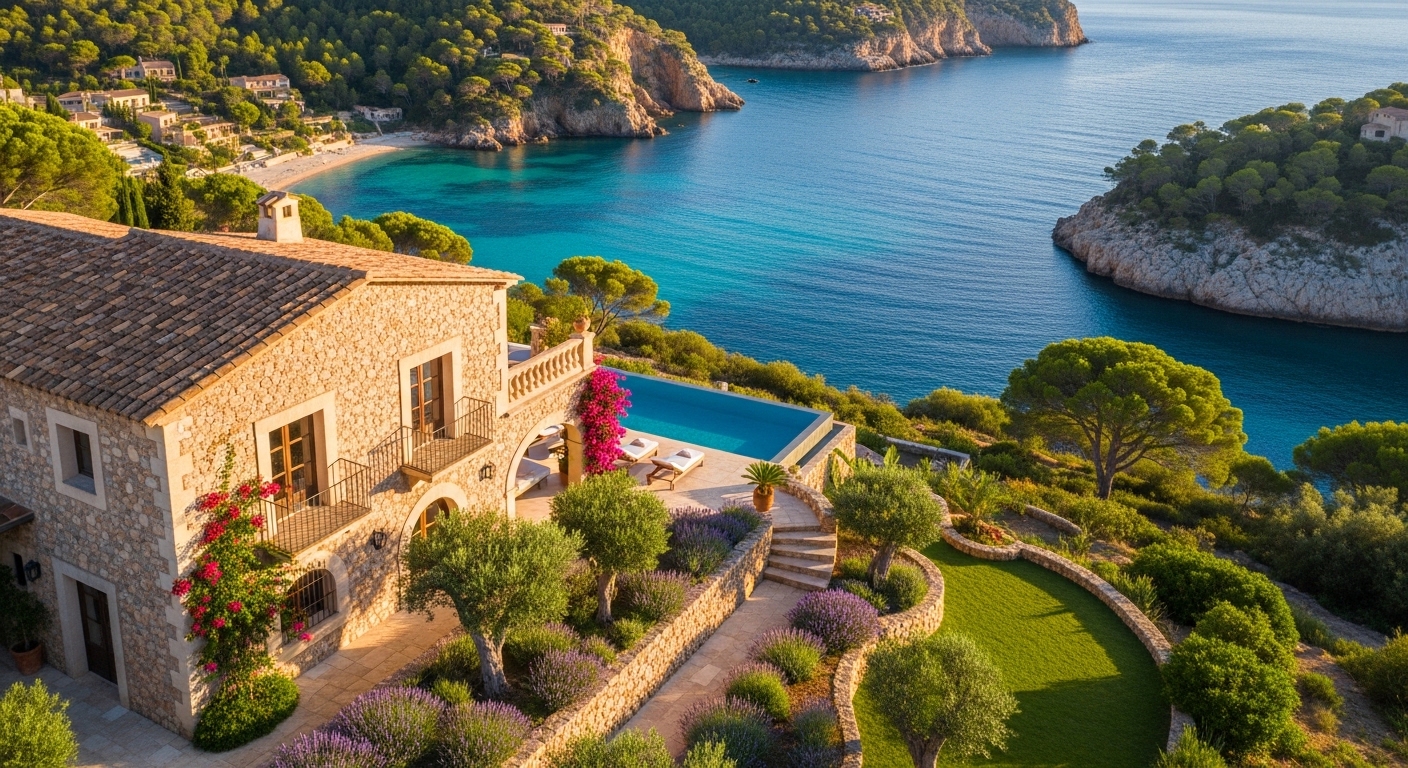
Mallorca: The Premium Island
Mallorca is the largest of Spain's Balearic Islands and arguably the most beautiful place in the western Mediterranean. From Palma's Gothic cathedral to the Tramuntana mountains (UNESCO World Heritage), from hidden coves to world-class cycling routes — it delivers a lifestyle that justifies the premium prices.
But Mallorca is not mainland Spain. Higher taxes, strict rental licence limits, and a fierce debate about overtourism mean you need to understand the rules before buying. This guide covers the reality.
Key Areas
Palma de Mallorca — The Capital
A genuine city of 420,000 people with everything: museums, Michelin restaurants, designer shopping, international schools, and a thriving nightlife. Palma has been called "the new Barcelona" — cosmopolitan, walkable, and buzzing year-round.
- Santa Catalina: The trendy neighbourhood — ex-fishing district now packed with restaurants and boutiques. €4,000–6,000/m².
- Old Town (Casco Antiguo): Historic palaces and townhouses. Stunning but expensive to renovate. €4,500–7,000/m².
- Paseo Marítimo: Waterfront apartments with yacht marina views. €5,000–8,000/m².
- Son Espanyolet/Santa Catalina border: More affordable alternative. €3,000–4,500/m².
Southwest Coast (Calvià)
Santa Ponsa, Paguera, Port Andratx, Camp de Mar. The classic resort belt — well-established, well-maintained, and popular with Germans, Brits, and Scandinavians. Port Andratx is the premium end; Santa Ponsa is more accessible.
Prices: Apartments €250,000–500,000. Villas €500,000–3,000,000+. Port Andratx is one of the most expensive postcodes in Spain.
Sóller and the Tramuntana
The Tramuntana mountain range is UNESCO-listed for its dry-stone terraces and cultural landscape. Sóller sits in a valley of orange groves, connected to Palma by a charming vintage train. Deià next door is a famous artists' colony. Valldemossa is where Chopin spent his winter.
Prices: Sóller apartments from €300,000. Deià fincas from €800,000. Valldemossa townhouses from €400,000.
North (Pollença and Alcúdia)
The most family-friendly part of Mallorca. Pollença has a beautiful old town; Puerto Pollença is quieter than the south coast. Alcúdia has a walled medieval town and a long sandy beach. Growing cycling tourism hub.
Prices: Apartments €200,000–400,000. Villas €400,000–1,500,000.
East Coast
Manacor (home of Rafael Nadal), Porto Cristo (Drach caves), Cala d'Or, Cala Ratjada. Less developed than the west, more affordable, and with some of the island's most beautiful coves (calas).
Prices: Apartments €180,000–350,000. Villas €350,000–800,000.
Balearic Tax Differences
Buying in the Balearics costs more in taxes than mainland Spain:
| Tax | Mainland Spain | Balearic Islands |
|---|---|---|
| Transfer Tax (ITP) — resale | 6-10% | 8-13% (progressive) |
| ITP on €200,000 property | ~€16,000 | ~€16,000 |
| ITP on €500,000 property | ~€50,000 | ~€55,000 |
| ITP on €1,000,000 property | ~€100,000 | ~€120,000 |
| Wealth Tax | Varies by region | Applies, 0.28-3.45% |
The progressive ITP scale means higher-value properties pay proportionally more. Factor this into your budget — it's a meaningful difference at €500K+.
Rental Restrictions — The Big Issue
The Balearic government has cracked down on tourist rentals (alquiler turístico). Key points:
- Apartments in multi-unit buildings: Effectively banned from tourist rental in most areas. You cannot legally rent a flat on Airbnb in Palma.
- Villas and single-family homes: Tourist licences exist but are capped. No new licences are being issued in many zones.
- Fines: Illegal tourist rental can result in fines of €20,000–40,000. Enforcement is active.
- Long-term rental: No restrictions — and demand is extremely high due to housing shortage.
If you're buying for rental income, confirm the licence situation before purchasing. A property advertised as "rental investment" without a valid tourist licence is a red flag.
The German Connection
Germans are the largest foreign community in Mallorca — roughly 20,000 permanent residents plus hundreds of thousands of annual visitors. German-language newspapers (Mallorca Zeitung), schools (Deutsche Schule, Eurocampus), doctors, lawyers, and shops create a complete parallel infrastructure. The southwest coast from Palma to Andratx is sometimes jokingly called "the 17th Bundesland."
For German buyers, this means unparalleled support — you can handle the entire purchase process in German. For non-Germans, it means competing with deep-pocketed buyers in the most desirable areas.
Scandinavian and Nordic Community
A growing Scandinavian presence, especially in Palma, Santa Ponsa, and the north. The Scandinavian School of Mallorca serves Swedish, Norwegian, Danish, and Finnish families. Several Nordic restaurants and shops have opened in Palma in recent years.
Investment Outlook
- Capital appreciation: Mallorca prices have risen 30-50% since 2015 and show little sign of correcting. Supply is constrained (it's an island), demand keeps growing.
- Long-term rental: 4-5% gross yields, but with very low vacancy rates. Extreme demand from workers in tourism and hospitality sectors.
- Tourist rental: High yields where licenced (8-12% gross in peak areas) — but licences are scarce and expensive.
- Risk: Political pressure on foreign ownership and second homes is increasing. Watch for potential regulatory changes.
Practical Considerations
- Flights: Palma airport (PMI) is Spain's 3rd busiest. Direct flights from virtually everywhere in Europe, year-round.
- Car: Essential outside Palma. Roads are excellent but parking in Palma is expensive.
- Healthcare: Hospital Universitario Son Espases is large and well-equipped. Multiple private clinics cater to international patients.
- Year-round living: Unlike many islands, Mallorca doesn't shut down in winter. Palma functions as a full city 12 months a year.
Frequently Asked Questions
Key Areas?
Palma de Mallorca — The Capital
A genuine city of 420,000 people with everything: museums, Michelin restaurants, designer shopping, international schools, and a thriving nightlife. Palma has been called "the new Barcelona" — cosmopolitan, walkable, and buzzing year-round. Santa Catalina: The trendy neighbourhood — ex-fishing district now packed with restaurants and boutiques. €4,000–6,000/m². Old Town (Casco Antiguo): Historic palaces and townhouses. Stunning but expensive to renovate. €4,500–7,000/m². Paseo Marítimo: Waterfront apartments with yacht marina views. €5,000–8,000/m². Son Espanyolet/Santa Catalina border: More affordable alternative. €3,000–4,500/m².
Southwest Coast (Calvià)
Santa Ponsa, Paguera, Port Andratx, Camp de Mar. The classic resort belt — well-established, well-maintained, and popular with Germans, Brits, and Scandinavians. Port Andratx is the premium end; Santa Ponsa is more accessible.
Balearic Tax Differences?
Buying in the Balearics costs more in taxes than mainland Spain: TaxMainland SpainBalearic Islands Transfer Tax (ITP) — resale6-10%8-13% (progressive) ITP on €200,000 property~€16,000~€16,000 ITP on €500,000 property~€50,000~€55,000 ITP on €1,000,000 property~€100,000~€120,000 Wealth TaxVaries by regionApplies, 0.28-3.45%
The progressive ITP scale means higher-value properties pay proportionally more. Factor this into your budget — it's a meaningful difference at €500K+.
Rental Restrictions — The Big Issue?
The Balearic government has cracked down on tourist rentals (alquiler turístico). Key points: Apartments in multi-unit buildings: Effectively banned from tourist rental in most areas. You cannot legally rent a flat on Airbnb in Palma. Villas and single-family homes: Tourist licences exist but are capped. No new licences are being issued in many zones. Fines: Illegal tourist rental can result in fines of €20,000–40,000. Enforcement is active. Long-term rental: No restrictions — and demand is extremely high due to housing shortage.
If you're buying for rental income, confirm the licence situation before purchasing. A property advertised as "rental investment" without a valid tourist licence is a red flag.
The German Connection?
Germans are the largest foreign community in Mallorca — roughly 20,000 permanent residents plus hundreds of thousands of annual visitors. German-language newspapers (Mallorca Zeitung), schools (Deutsche Schule, Eurocampus), doctors, lawyers, and shops create a complete parallel infrastructure. The southwest coast from Palma to Andratx is sometimes jokingly called "the 17th Bundesland." For German buyers, this means unparalleled support — you can handle the entire purchase process in German. For non-Germans, it means competing with deep-pocketed buyers in the most desirable areas.
Scandinavian and Nordic Community?
A growing Scandinavian presence, especially in Palma, Santa Ponsa, and the north. The Scandinavian School of Mallorca serves Swedish, Norwegian, Danish, and Finnish families. Several Nordic restaurants and shops have opened in Palma in recent years.
Why Granfield Estate?
-
⚑
We live on the coast
Our team lives and works on the Costa Blanca. We know every neighbourhood, every street and the real prices — not from a catalogue, but from daily work on the ground.
-
⚖
In-house lawyer — 10+ years of experience
NIE, bank account, property check, contract, notary — legal support at every step. First consultation free.
-
🏠
Property management
Buying to rent? Our management company handles tenant search, maintenance and all questions.
-
🌐
We speak your language
English, Spanish, Russian, German, Finnish, Swedish and more. Licence RAICV 1663, member of Asivega.
Read also

Benidorm: Investment and Rental Property
21.05.2026
Complete guide to property investment in Benidorm: 6-8% rental yields, area comparisons, updated prices and year-round rental potential.

Costa Blanca Property Guide 2026: Complete Buyer's Handbook
22.05.2026
Everything you need to know about buying property on Spain's Costa Blanca — from Dénia in the north to Torrevieja in the south, with real prices, honest area comparisons, and practical advice.

Costa del Sol Property Guide: Malaga to Gibraltar
23.05.2026
From Marbella luxury to Nerja charm — a complete guide to buying property on Spain's Costa del Sol, with prices, area comparisons, and investment insights.