


Property Investment on Costa Blanca: Returns, Strategy and Complete Guide 2026
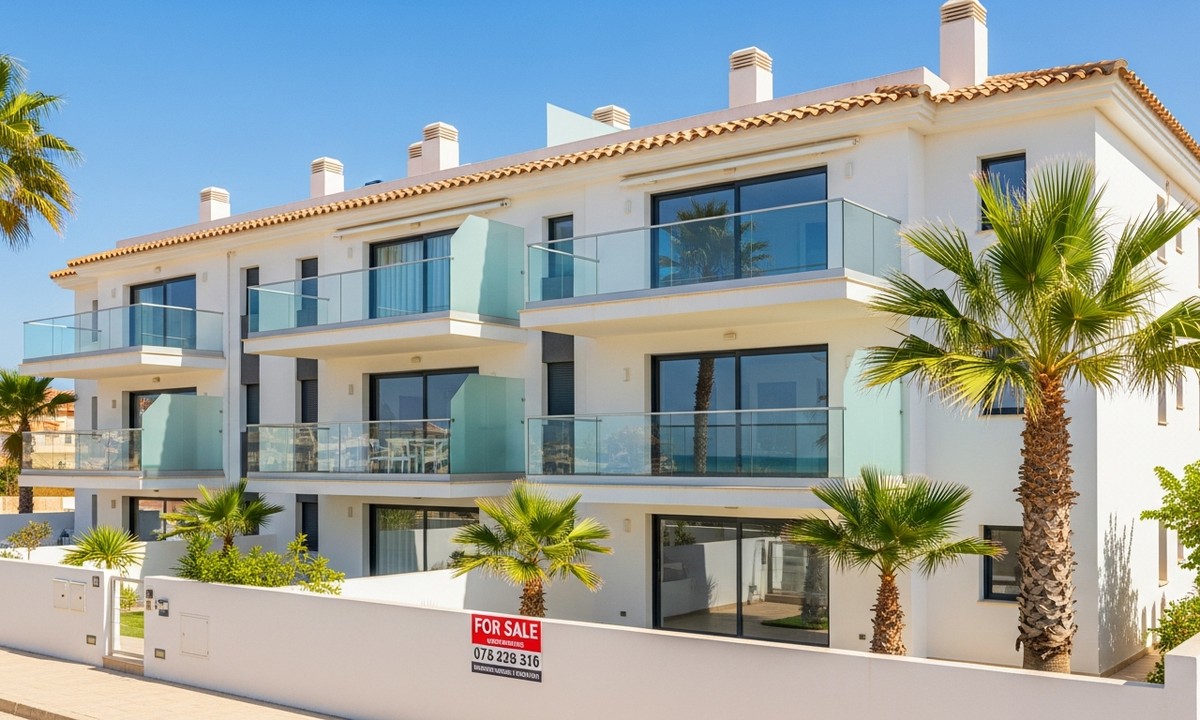
Costa Blanca has earned its reputation as one of Europe's most reliable property investment markets. In 2026, with rental demand surging post-pandemic, favourable mortgage rates following ECB cuts, and property prices still well below Northern European levels, the region presents a compelling case for investors seeking both rental income and long-term capital growth.
This guide is designed for European investors — whether you're a Scandinavian looking for a holiday home that pays for itself, a British expat seeking rental yields, or a German investor diversifying into Southern European real estate. We'll cover the numbers, the strategy, and the practical steps to make an informed investment decision.
1. Why Costa Blanca Is Europe's Hottest Property Investment Market in 2026
Several factors converge to make Costa Blanca particularly attractive for property investment right now:
- Tourism growth: Spain received over 90 million international tourists in 2025, with the Alicante province seeing record arrivals. More tourists means stronger short-term rental demand.
- Price gap: Average property prices on Costa Blanca remain 40-60% below equivalent locations in France, Italy, or Portugal's Algarve, offering significantly better value per square metre.
- Infrastructure: Alicante-Elche airport (ALC) serves over 150 direct routes across Europe, making the region accessible for both owners and rental guests.
- Climate: 300+ days of sunshine and mild winters (average January temperature 12°C) support year-round rental demand, not just summer peaks.
- Digital nomad appeal: Spain's digital nomad visa and growing co-working infrastructure attract long-term renters outside the traditional tourist season.
For a deeper look at why Spain attracts buyers, see our article on five reasons to buy property in Spain.
2. Types of Investment Properties
Not all investment properties are created equal. Your choice depends on your budget, risk tolerance, and desired level of involvement.
Studios and One-Bedroom Apartments
The workhorses of the rental investment market. Studios in Torrevieja priced at €60,000-€90,000 can generate gross yields of 7-8% through short-term holiday rental. Low purchase price means lower risk and faster payback. Read more in our guide to studios in Torrevieja.
Two-Bedroom Apartments
The most liquid segment of the market. Two-bedroom apartments (€100,000-€180,000) appeal to couples and small families — the largest rental demographic. They offer a balance of yield (5-7%) and capital appreciation potential. These are the easiest to resell if your investment strategy changes.
Villas and Detached Houses
Premium rental properties commanding €1,000-€2,500 per week in high season. Higher purchase prices (€250,000-€500,000+) mean lower percentage yields (3-5%) but higher absolute income. Villas with private pools are particularly sought after. Explore options in our villas and houses guide.
New-Build vs Resale
New-build properties on Costa Blanca typically cost 50–70% more than comparable resale properties — and there are good reasons for that premium. You get modern layouts, full energy efficiency (class A or B), developer guarantees, and a product that attracts a fundamentally different tenant profile: wealthier, more demanding, and willing to pay higher rents for quality.
In terms of pure rental yield percentages, new-builds and resale properties perform roughly the same — around 5–7% gross. The difference lies in who you work with. New-build tenants tend to be professionals, senior expats, and families with higher purchasing power. They take better care of the property, stay longer, and cause fewer issues. You operate in a premium segment of the market, which means less hassle and more predictable income.
Resale properties have a lower entry point — making them accessible to first-time investors — but may require renovation (€5,000–€15,000+) to reach a competitive rental standard. From our experience at Granfield Estate, many clients start with resale to learn the market, then move to new-build for their second or third investment.
3. Rental Yields by Area
Rental returns vary significantly across Costa Blanca. Here are realistic 2026 figures based on market data:
| Area | Avg. Purchase Price (2-bed) | Monthly Rent (Long-term) | Weekly Rate (High Season) | Gross Yield |
|---|---|---|---|---|
| Torrevieja centre | €95,000-€130,000 | €550-€700 | €450-€650 | 6-8% |
| Orihuela Costa | €130,000-€200,000 | €600-€850 | €550-€900 | 5-7% |
| Guardamar del Segura | €110,000-€170,000 | €500-€700 | €500-€750 | 5-6% |
| Benidorm | €140,000-€220,000 | €650-€900 | €600-€1,000 | 5-7% |
| Alicante city | €150,000-€250,000 | €700-€1,000 | €550-€850 | 4-6% |
| La Mata | €85,000-€120,000 | €450-€600 | €400-€600 | 6-8% |
Important: These are gross yields before costs. Net yields after expenses (community fees, IBI tax, insurance, maintenance, management) are typically 1.5-2.5 percentage points lower.
For detailed rental profitability analysis, see our article on rental profitability in Spain. For price analysis by area, check price per square metre on Costa Blanca.

4. Short-Term vs Long-Term Rental
This is arguably the most important strategic decision for any property investor on Costa Blanca.
Short-Term Rental (Holiday Lets)
Pros:
- Higher gross income — 30-50% more than long-term rental
- Personal use — block weeks for your own holidays
- Flexibility — adjust pricing seasonally
- Furnished premium — holiday renters accept higher rates for quality furnishing
Cons:
- Tourist licence required (Licencia Turística) — not available in all areas
- Higher management costs (cleaning, key handover, guest communication)
- Seasonal income — peak season (June-September) generates 60-70% of annual income
- Wear and tear — higher turnover means more maintenance
- Platform fees — Airbnb/Booking.com take 3-15%
Tourist Licence Requirements: The Valencian Community requires a tourist licence (número de registro) for short-term rentals. Requirements include a certificate of habitability, insurance, and registration with the Turisme de la Comunitat Valenciana. Processing takes 2-4 months. Properties in some areas face restrictions or moratoriums on new licences.
Long-Term Rental (12+ Months)
Pros:
- Stable, predictable income year-round
- Lower management burden — one tenant, fewer turnovers
- No tourist licence needed
- Lower wear and tear
- Tenant pays utilities
Cons:
- Lower gross yield compared to short-term
- Spanish tenant protection laws favour tenants — eviction can take 6-12 months
- Limited personal use of the property
- Rent increases capped by government regulation (currently limited to 2-3% annually)
Note on Guardamar del Segura: Short-term holiday rental is effectively banned in Guardamar. Only medium-term (1-11 months) and long-term rental is permitted. Factor this into your investment strategy if considering this area.
5. Property Prices and Capital Appreciation
Costa Blanca property prices have shown consistent growth since 2015, with acceleration in 2023-2026:
- Average price per m² (Costa Blanca South): €1,400-€1,800 (resale), €2,200-€3,000 (new-build)
- Annual price growth (2023-2026): 6-9% per year
- Comparison: Algarve (Portugal) €3,000-€4,500/m², French Riviera €4,500-€8,000/m², Italian Riviera €3,000-€5,000/m²
Capital appreciation on Costa Blanca has averaged 7-8% annually over the past three years. While past performance doesn't guarantee future returns, structural factors — limited land for new development, growing demand from Northern European buyers, and Spain's economic recovery — support continued price growth, albeit potentially at a more moderate 4-6% rate.
For current pricing data, see our detailed price per square metre analysis.
6. Costs of Ownership
Understanding the full cost of ownership is critical for accurate yield calculations. Here's what to budget for annually:
| Cost Item | Typical Annual Amount | Notes |
|---|---|---|
| IBI (property tax) | €200-€600 | Based on cadastral value, varies by municipality |
| Community fees | €600-€1,800 | Higher for complexes with pools, lifts, gardens |
| Home insurance | €150-€350 | Building + contents |
| Maintenance/repairs | €500-€1,500 | Budget 1% of property value annually |
| Basura (waste tax) | €100-€200 | Municipal waste collection |
| Non-resident tax (IRNR) | €200-€500 | Imputed income tax if not rented (see Section 7) |
| Accounting/tax filing | €150-€300 | Annual tax return preparation |
Total annual holding costs: €1,900-€5,250, depending on property type and location. For a typical €150,000 two-bedroom apartment, budget approximately €2,500-€3,500 per year.
Don't forget the one-time buying costs covered in our guide to taxes when buying property in Spain.
7. Tax Implications for Non-Resident Property Owners
Tax is where many investors make costly mistakes. Here's what you need to know:
Rental Income Tax (IRNR — Impuesto sobre la Renta de No Residentes)
- EU/EEA residents: 19% on net rental income (after deductible expenses)
- Non-EU residents: 24% on gross rental income (no expense deductions)
This is a significant difference. EU residents can deduct mortgage interest, community fees, IBI, insurance, repairs, depreciation (3% of construction value), and management fees. Non-EU residents cannot deduct anything — the 24% applies to the full rental amount.
Imputed Income Tax (Non-Rented Periods)
Even when your property is not rented, Spain taxes non-residents on "imputed income" — typically 1.1% of the cadastral value, taxed at 19% (EU) or 24% (non-EU). For a property with a cadastral value of €80,000, this works out to approximately €167 (EU) or €211 (non-EU) per year.
Capital Gains Tax
When you sell, capital gains are taxed at 19% (on gains up to €6,000), rising progressively to 28% (on gains over €300,000). Non-residents must also deal with a 3% retention — the buyer withholds 3% of the purchase price and pays it directly to the tax authorities as a guarantee against capital gains tax.
Wealth Tax (Impuesto sobre el Patrimonio)
Applies to net assets in Spain exceeding €700,000. Rates range from 0.2% to 3.5%. Most individual property investors are below this threshold, but it's worth considering if you build a portfolio.
Double Taxation Treaties
Spain has tax treaties with most European countries to prevent double taxation. You'll typically receive credit for Spanish taxes paid against your home country tax liability. Consult a cross-border tax specialist — this is not an area for DIY.
8. Property Management
Unless you live on Costa Blanca full-time, you'll need a property management solution.
Self-Management (Realistic for Long-Term Rental Only)
If you have a reliable long-term tenant, self-management is feasible with 2-3 visits per year and a local contact for emergencies. Annual cost: minimal beyond your travel expenses.
Professional Management Company
For short-term rental, professional management is essentially mandatory. Typical fee structures:
- Full management (short-term): 20-25% of rental income — includes marketing, guest communication, check-in/out, cleaning coordination, maintenance, linen
- Full management (long-term): 8-12% of rental income — tenant finding, rent collection, maintenance coordination
- Maintenance only: €100-€200/month — property checks, garden/pool maintenance, emergency response
What to look for in a management company: local presence (office in the area), experience with non-resident owners, transparent reporting, registered and insured, good reviews from other foreign investors.

9. Best Property Types for Investment in 2026
Studios: Highest Percentage Yield
A well-located studio in Torrevieja (€60,000-€85,000) can generate €4,500-€6,000 in annual rental income, producing gross yields of 7-9%. The low entry point makes this accessible for first-time investors. However, the resale market for studios is narrower. For more details, see our studios guide.
Two-Bedroom Apartments: Most Liquid
The sweet spot for most investors. Purchase at €100,000-€160,000, rent for €550-€800/month long-term or €500-€800/week in high season. Strong resale demand from both investors and end-users. Browse affordable properties in Torrevieja for current options.
New-Build Apartments: Premium Tenants
Modern energy-efficient apartments with communal pools attract premium tenants willing to pay 15-25% more in rent. Higher purchase price (€180,000-€300,000) but lower maintenance costs and stronger appreciation. First-line and sea-view new-builds are particularly strong performers.
Townhouses: Family Market
Townhouses with private solarium and communal pool (€120,000-€200,000) appeal to families for medium and long-term rental. Strong demand in areas like Orihuela Costa. See our Orihuela Costa areas guide for the best locations.
10. Bank Repossession Opportunities
Bank-owned properties (repossessions) remain a topic that excites many investors considering Costa Blanca. The idea of buying 15–30% below market value sounds compelling — and in theory, it is. But our experience working with clients who actively pursue these opportunities tells a very different story.
What They Are
When mortgage holders default, Spanish banks take possession of the property and sell it through real estate subsidiaries (Haya Real Estate, Servihabitat, Altamira, Aliseda) or partner agencies. Prices can indeed be 15–30% below market — but there's always a reason for the discount.
The Reality: What Our Clients Experience
At Granfield Estate, we regularly work with investors who come to us specifically interested in bank repossession properties. Here is what we consistently see:
- Enormous time investment. The process of finding, viewing, negotiating, and completing a bank property purchase routinely takes 4–8 months — sometimes longer. Bank bureaucracy moves at its own pace, and there is very little you can do to speed it up.
- Unpredictable outcomes. You can spend weeks researching a property, only for the bank to reject your offer, change the terms, or sell to another buyer without notice. Our clients report that roughly 1 in 3 serious attempts actually results in a completed purchase.
- Hidden costs. Properties are sold "as seen" — no warranties on condition. Unpaid community fees, outstanding taxes, and even sitting tenants (occupas) can turn a seeming bargain into an expensive headache. One of our clients discovered €12,000 in unpaid community fees only after completion.
- Limited negotiation room. Despite the "below market" pricing, banks have set minimum prices and rarely negotiate. The discount is already baked into the asking price.
- Condition issues. Many repossessed properties have been empty for months or years, leading to deterioration: plumbing issues, damp, damaged fixtures. Renovation budgets of €10,000–€25,000 are common.
This doesn't mean bank repossessions are never worth pursuing — some of our clients have found excellent deals. But it's important to go in with realistic expectations about the time, effort, and uncertainty involved.
How Granfield Estate Helps Investors
Whether you're considering a bank repossession or any other type of investment property on Costa Blanca, our team is built to support you through every stage:
- Experienced real estate agents who know the local market inside out. Our agents have years of hands-on experience searching for the right investment properties — they know which urbanisations perform well for rental, which streets to avoid, and where the genuine value lies.
- In-house management company that handles short-term and long-term rental from day one. Once you purchase, our property management team takes over: marketing, guest management, maintenance, and monthly reporting — so your investment generates income from the start.
- Dedicated lawyer with over 10 years of experience in Spanish property transactions. From due diligence and contract review to NIE processing and notary completion, our legal team protects your interests at every step. This is especially critical for bank repossession purchases, where legal checks are more complex.
Ready to explore investment opportunities on Costa Blanca? Write to us to book a free, no-obligation consultation with one of our investment specialists. We'll review your goals, budget, and timeline — and give you an honest assessment of what's achievable.
For more on bank properties specifically, read our detailed bank repossession guide for Torrevieja.
11. Case Studies: Real Investment Calculations
Case Study 1: Studio in Torrevieja — Maximum Yield
| Item | Amount |
|---|---|
| Purchase price | €75,000 |
| Buying costs (taxes, notary, legal — ~12%) | €9,000 |
| Furnishing and preparation | €4,000 |
| Total investment | €88,000 |
Annual income (short-term rental):
- High season (Jun-Sep): 16 weeks x €380/week = €6,080
- Shoulder season (Apr-May, Oct-Nov): 8 weeks x €250/week = €2,000
- Low season (Dec-Mar): 4 weeks x €200/week = €800
- Gross rental income: €8,880
Annual expenses:
- Management (22%): €1,954
- Community fees: €720
- IBI + basura: €350
- Insurance: €180
- Maintenance: €500
- Platform fees (avg 8%): €710
- IRNR tax (19% EU on net): ~€470
- Total expenses: €4,884
Net annual income: €3,996
Net yield on total investment: 4.5%
Plus estimated capital appreciation: 5-7%
Total estimated return: 9.5-11.5%
Case Study 2: Two-Bedroom Apartment in Orihuela Costa — Balanced Strategy
| Item | Amount |
|---|---|
| Purchase price | €165,000 |
| Buying costs (~12%) | €19,800 |
| Furnishing and preparation | €8,000 |
| Total investment | €192,800 |
Strategy: Mixed rental (personal use 4 weeks + short-term 20 weeks + long-term winter let)
- Short-term high season (12 weeks x €700/week): €8,400
- Short-term shoulder (8 weeks x €480/week): €3,840
- Long-term winter (Nov-Mar, 5 months x €600/month): €3,000
- Gross rental income: €15,240
Annual expenses:
- Management (20%): €3,048
- Community fees: €1,440
- IBI + basura: €550
- Insurance: €280
- Maintenance: €1,200
- Platform fees (avg 8% on short-term): €979
- IRNR tax (19% EU on net): ~€750
- Total expenses: €8,247
Net annual income: €6,993
Net yield on total investment: 3.6%
Plus 4 weeks personal holiday use (value ~€2,800)
Plus estimated capital appreciation: 5-7%
Total estimated return: 8.6-10.6% (including personal use value)
For financing options, explore our guides on mortgages in Spain for non-residents and current EURIBOR interest rates.
12. Frequently Asked Questions
Do I need a Spanish bank account to buy property?
Yes. You'll also need a NIE (Número de Identificación de Extranjero) — a tax identification number for foreigners. Both can be arranged before or during your first visit with the help of a lawyer or gestor.
Can I get a mortgage as a non-resident?
Yes. Spanish banks offer mortgages to non-residents, typically up to 60-70% of the purchase price (compared to 80% for residents). Current variable rates are around Euribor + 1.5-2.5%, with fixed rates at 3-4%. See our mortgage guide for details.
What are the total buying costs on top of the property price?
Budget 10-13% of the purchase price for transfer tax (ITP — 10% in Valencia region), notary fees (€600-€1,000), land registry (€400-€700), and legal fees (1-1.5%). New-build properties are subject to IVA (10%) instead of ITP, plus 1.5% stamp duty. Full breakdown in our buying taxes guide.
Is it better to buy as a company or as an individual?
For most individual investors buying one or two properties, purchasing as a private individual is simpler and often more tax-efficient. Company structures may be advantageous for larger portfolios (3+ properties) or when the investor's home country offers favourable corporate tax rates. Always consult a cross-border tax advisor.
How long does the buying process take?
From offer to completion: 4-8 weeks for resale properties, 12-24 months for off-plan new-builds. The process involves reservation (€3,000-€6,000), private purchase contract (10% deposit), and completion at the notary. Having a good lawyer accelerates everything.
What happens if I want to sell in a few years?
Spain has no minimum holding period requirement. However, capital gains tax applies on sale (19-28%), and selling within the first 2-3 years is unlikely to be profitable after transaction costs on both sides. Most successful investors plan a minimum 5-7 year hold.
Key Takeaways for Investors
Costa Blanca property investment in 2026 offers a rare combination: affordable entry prices by European standards, strong rental demand driven by mass tourism and growing expat communities, and capital appreciation supported by structural supply constraints.
The most successful investors share a few common traits: they research the specific micro-market (not just "Costa Blanca" but which street, which urbanisation), they budget conservatively for costs and vacancy, they engage professional management rather than trying to DIY from abroad, and they think in terms of 5-10 year holds rather than quick flips.
Whether you start with a €75,000 studio in Torrevieja or a €200,000 apartment in Orihuela Costa, the fundamentals of the Costa Blanca property market support a compelling investment case. The key is to do your homework, work with reliable local professionals, and make decisions based on numbers — not emotion.
If you're ready to explore specific investment properties, browse our guide to property in Torrevieja or see the best neighbourhoods for investment.
Why Granfield Estate?
-
⚑
We live on the coast
Our team lives and works on the Costa Blanca. We know every neighbourhood, every street and the real prices — not from a catalogue, but from daily work on the ground.
-
⚖
In-house lawyer — 10+ years of experience
NIE, bank account, property check, contract, notary — legal support at every step. First consultation free.
-
🏠
Property management
Buying to rent? Our management company handles tenant search, maintenance and all questions.
-
🌐
We speak your language
English, Spanish, Russian, German, Finnish, Swedish and more. Licence RAICV 1663, member of Asivega.
Read also

5 Places in Torrevieja I'd Never Buy Property
28.10.2024
Torrevieja is a city of contrasts: great residential complexes sit alongside areas with questionable construction quality. An experienced estate agent honestly names five places where he would never buy property himself, and explains why. Essential reading before you start your search.

5 Reasons Why People Buy Property in Spain
08.03.2026
A seaside retreat, rental income, a smart investment, a path to residency — every buyer has their own motivation. We break down five key reasons people choose the Costa Blanca coast and what they actually gain. Real advantages, honestly presented.

5 Reasons Why Property in Torrevieja Won't Get Cheaper
09.03.2026
Many buyers wait for prices to drop — and lose precious time. Population growth, a shortage of new developments, limited supply near the sea and several more factors explain why prices in Torrevieja will keep rising. Those who put off buying five years ago can no longer afford a two-bedroom flat.