


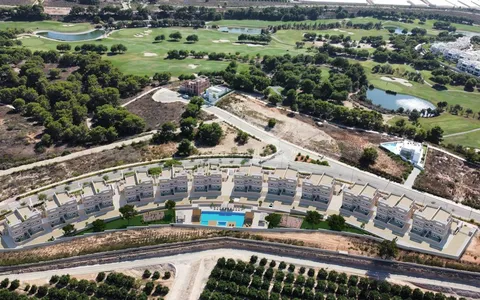

Orihuela Costa Areas: Where to Buy Property in 2026
08.03.2026
Complete guide to 7 Orihuela Costa areas: from prestigious Cabo Roig to peaceful Aguamarina. Prices, beaches, pros and cons of each neighbourhood.


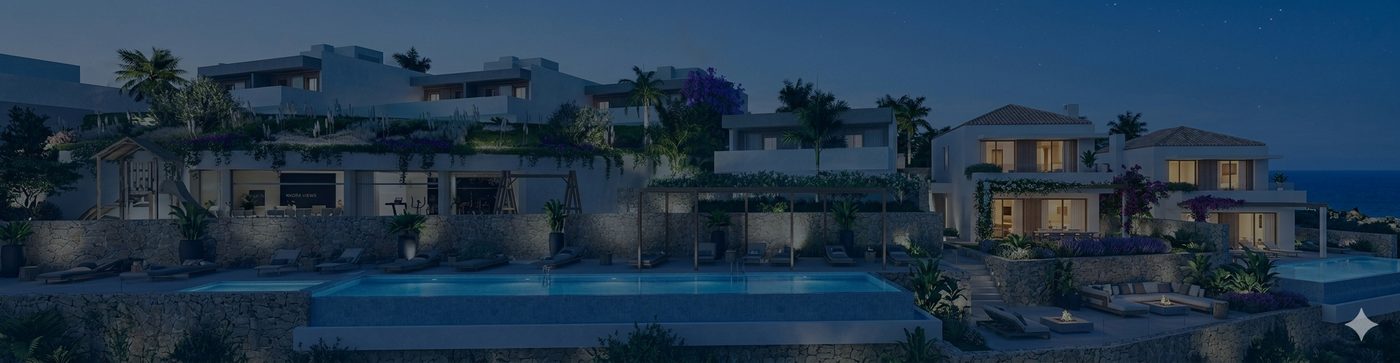
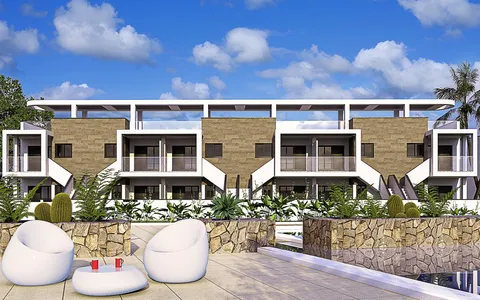
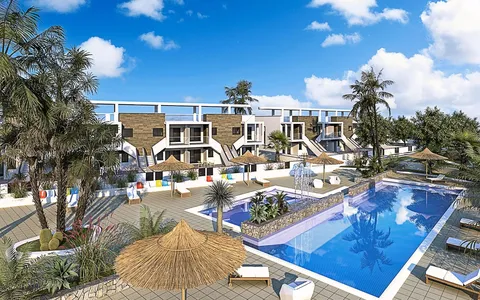
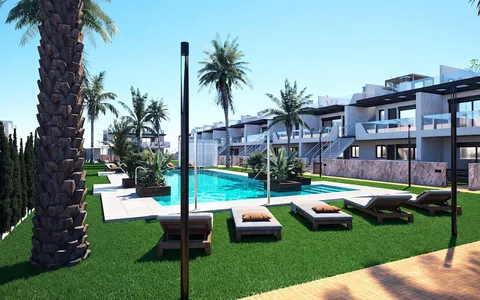
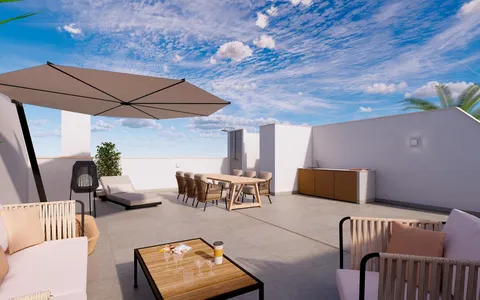
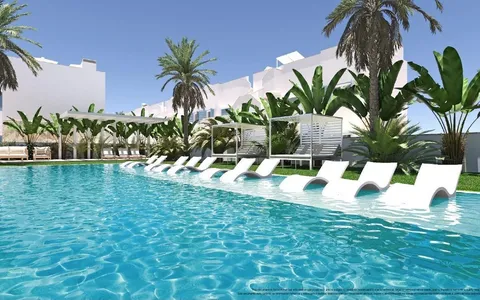
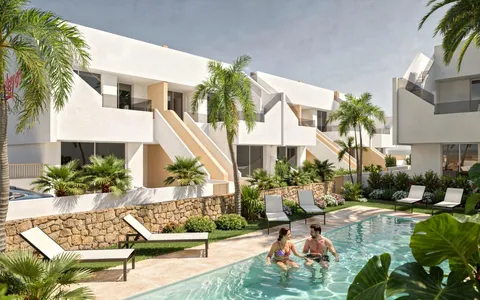
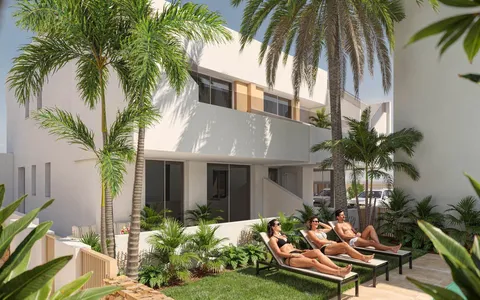
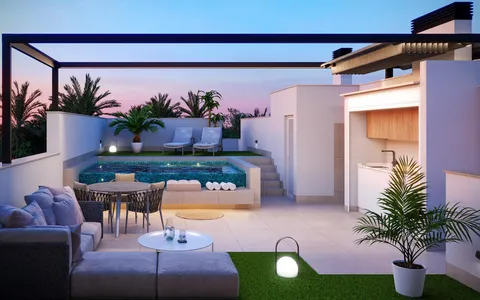
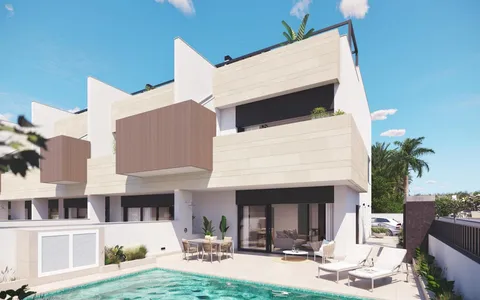
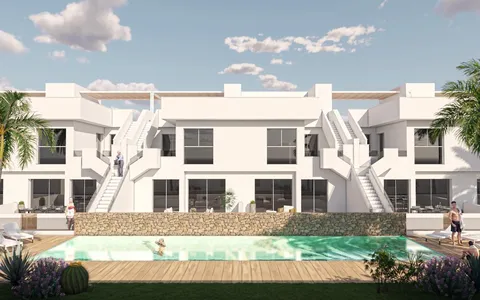
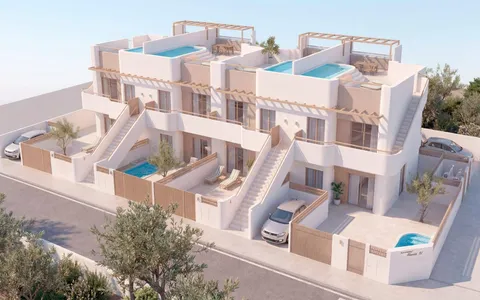
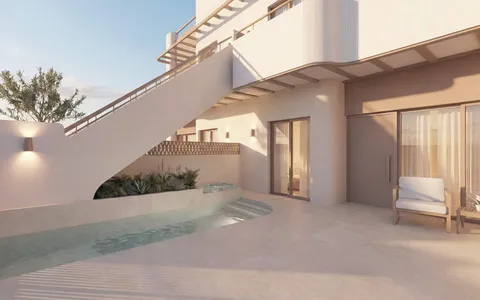
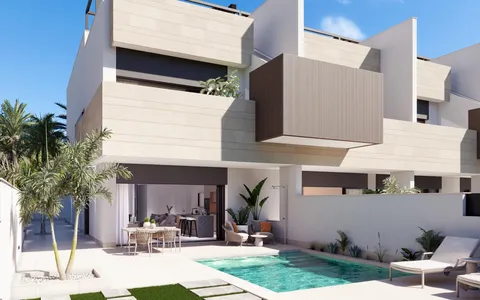
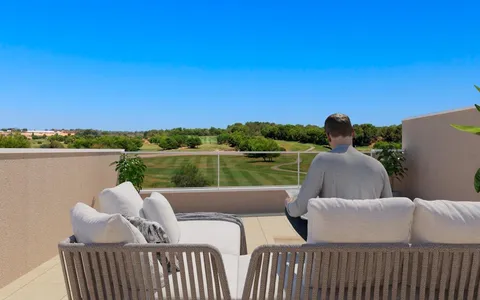
Pilar de la Horadada has bungalows for sale in 2026, making it the most popular property type in the area. Prices range from 175,900 EUR for compact two-bedroom resale units to 495,000 EUR for premium new-build bungalows with private pools near the coastline. The majority of listings fall in the 200,000 to 350,000 EUR bracket.
The term "bungalow" on the Spanish coast covers several formats: ground-floor attached homes with shared gardens, semi-detached villas with private terraces, and corner units in small residential complexes with communal pools. In Pilar de la Horadada, new developments typically offer 2-3 bedroom bungalows with rooftop solariums, covered parking, and modern finishes — specifically designed for the southern European climate.
Demand is driven largely by Scandinavian and British buyers seeking permanent or semi-permanent residences. Unlike holiday apartment markets, bungalow buyers in this area tend to stay longer, which contributes to stable property values and well-maintained communities. The town benefits from genuine year-round living — supermarkets, healthcare, and services operate throughout the year, not just in tourist season.
Active new construction in the coastal strip between Torre de la Horadada and Mil Palmeras continues to expand the supply, though demand consistently matches new inventory. Resale bungalows in established urbanisations offer immediate availability and often include furniture, making them attractive for buyers who want to move in quickly.
Torre de la Horadada is the primary coastal hub, centred around the Blue Flag beach and a small marina. Bungalow developments here sit within 500-800 metres of the sea, with prices in the upper range of the market (300,000 — 495,000 EUR for new builds). The area has its own restaurants, supermarkets, and a seafront promenade — many residents live here year-round without needing to visit the town centre.
Mil Palmeras, located south of Torre de la Horadada, offers a quieter alternative with wide sandy beaches and a growing number of modern residential complexes. Bungalows here are typically 10-15% less expensive than equivalent properties in Torre de la Horadada, making it popular with budget-conscious buyers who still want beachside living. The area is especially favoured by Scandinavian residents.
Punta Prima and Lo Romero border the town to the north, closer to the Orihuela Costa boundary. These areas feature golf-adjacent bungalow developments and tend to attract buyers interested in a more suburban lifestyle. Prices start from around 175,000 EUR for resale properties, offering some of the best value in the municipality.
Pilar de la Horadada centre is a traditional Spanish town with a weekly market, town hall square, and local shops. Bungalows here are predominantly resale, often on larger plots with mature gardens. While further from the beach (3-5 km), the centre provides a fully Spanish living experience with lower prices and authentic neighbourhood atmosphere.
The bungalow market in Pilar de la Horadada spans from 175,900 to 495,000 EUR, with clear segmentation by location and condition. Entry-level resale bungalows (175,000 — 230,000 EUR) are typically 2-bedroom units in established urbanisations near Lo Romero or inland Pilar. These often need cosmetic updates but offer large communal areas and low community fees.
Mid-range new builds (250,000 — 350,000 EUR) represent the bulk of the market. These are modern 2-3 bedroom bungalows in developments near Torre de la Horadada and Mil Palmeras, featuring open-plan kitchens, private gardens of 20-40 sqm, communal pools, and rooftop solariums. Price per square metre in this segment averages 2,500 — 3,200 EUR/sqm.
Premium bungalows (350,000 — 495,000 EUR) offer larger living areas (100+ sqm), private pools or jacuzzis, high-end finishes, and front-line or second-line positions to the beach. Corner units and end-of-row bungalows command a 10-15% premium over mid-terrace equivalents.
Compared to neighbouring markets, Pilar de la Horadada bungalows are 15-20% more affordable than equivalent properties in Orihuela Costa (Villamartin, La Zenia) and roughly on par with Torrevieja south. The price gap with Murcia-side towns like San Pedro del Pinatar is narrower — around 5-10% — but Pilar offers better beach quality and a more established international community.
Bungalows in Pilar de la Horadada are designed for the Mediterranean outdoor lifestyle. Most units include a private garden or terrace ranging from 15 to 50 sqm, suitable for outdoor dining, sun loungers, or a small plunge pool. Ground-floor living eliminates stairs, which is a key factor for retirees who make up a significant portion of the buyer demographic.
Communal swimming pools are standard in virtually all bungalow developments, maintained through community fees that typically range from 50 to 120 EUR per month depending on the complex size and amenities. Larger developments may include children's pools, landscaped gardens, padel courts, and gym facilities. Gated access and 24-hour security are common in newer complexes.
New-build bungalows feature open-plan living areas with large sliding doors that connect indoor and outdoor spaces, fitted kitchens with integrated appliances, air conditioning pre-installation, and modern bathrooms. Rooftop solariums — a flat terrace on top of the building — are a distinctive feature of Spanish coastal bungalows, providing additional outdoor space with panoramic views and space for a future jacuzzi.
Construction quality in recent developments has improved significantly, with thermal insulation, double-glazed windows, and energy-efficient systems becoming standard. Many new bungalows achieve B or C energy ratings. Underground or covered parking is typically included in the price, along with a private storage room.
Bungalows in Pilar de la Horadada generate rental income primarily through medium-term and long-term lets. Monthly rents for furnished 2-bedroom bungalows range from 700 to 1,100 EUR for annual contracts, while medium-term winter lets (October to May) command 900 to 1,400 EUR per month, driven by northern European retirees escaping cold winters.
The rental market benefits from Pilar de la Horadada's year-round livability. Unlike pure holiday destinations, tenants here tend to stay for extended periods — 6 months to several years — which reduces vacancy rates and management costs. Gross rental yields for long-term lets typically fall between 4.5% and 6%, depending on purchase price and location relative to the coast.
Short-term holiday rentals operate in summer (June to September), with weekly rates of 500 to 900 EUR for bungalows near the beach. However, owners should note that local regulations in the Valencian Community require a tourist licence for short-term lets, and community rules in some developments may restrict or prohibit holiday rentals.
The most profitable rental strategy combines winter season medium-term lets (5-6 months at premium rates) with summer short-term lets (3-4 months), reserving 2-3 months for personal use. This approach can generate annual gross income of 10,000 to 16,000 EUR, though it requires active management or a local property management company.
Purchasing a bungalow in Pilar de la Horadada follows the standard Spanish property buying process. The first step is obtaining an NIE (Numero de Identificacion de Extranjero) — a tax identification number required for all property transactions in Spain. This can be arranged through a Spanish consulate in your home country or locally at the National Police office, typically taking 1-3 weeks.
Once you identify a property, you sign a reservation contract with a deposit of 3,000 — 6,000 EUR to take it off the market, followed by a private purchase contract (contrato de arras) with a deposit of 10% of the purchase price. For new builds, payment schedules are staged — typically 30% on signing, further instalments during construction, and the balance at completion. Budget an additional 12-14% of the purchase price for taxes and fees: ITP (10% for resale) or IVA (10% for new build) plus AJD (1.5%), notary fees, registry fees, and legal costs.
When evaluating bungalows, pay attention to the community statutes — these govern what modifications you can make, whether rental is permitted, and pet policies. Request the last 12 months of community meeting minutes and fee statements. Check that the property has a valid Certificado de Habitabilidad (habitation certificate) and an up-to-date energy performance certificate.
Working with an independent lawyer (not one recommended by the seller or developer) is strongly advised. They will verify the property title at the Land Registry, confirm no outstanding debts or liens, check building permits, and ensure the contract protects your interests. For new builds, verify that the developer has a bank guarantee covering your stage payments — this is a legal requirement in Spain.
Pilar de la Horadada sits at the southernmost tip of Alicante province, where Costa Blanca meets the Region of Murcia. This position gives residents access to two international airports — Alicante-Elche (50 min) and Murcia-Corvera (30 min) — along with over 300 sunny days per year and mild winters that rarely dip below 10 degrees Celsius.
Bungalows dominate the local market because they match the lifestyle buyers are looking for: single-level living with private outdoor space, communal pools, and walkable distances to Blue Flag beaches like Torre de la Horadada and Playa de las Higuericas. New-build developments in the coastal strip offer modern energy-efficient designs, while resale bungalows closer to the town centre provide larger plots at lower prices per square metre.
Compared to neighbouring Torrevieja or Orihuela Costa, Pilar de la Horadada retains a more authentic Spanish character — the town centre has traditional markets, local restaurants, and a relaxed pace of life that appeals to permanent residents rather than short-stay tourists. At the same time, coastal areas like Mil Palmeras and Punta Prima offer a fully international community with all modern amenities.
08.03.2026
Complete guide to 7 Orihuela Costa areas: from prestigious Cabo Roig to peaceful Aguamarina. Prices, beaches, pros and cons of each neighbourhood.

08.03.2026
Torrevieja's neighbourhoods are worlds apart — pick the wrong one and you could overpay by 30% or end up somewhere that empties out in winter. Where is the best beach, the quietest living, or the highest rental demand year-round? An honest breakdown of six areas from agents who live and work here.

08.03.2026
A seaside retreat, rental income, a smart investment, a path to residency — every buyer has their own motivation. We break down five key reasons people choose the Costa Blanca coast and what they actually gain. Real advantages, honestly presented.