


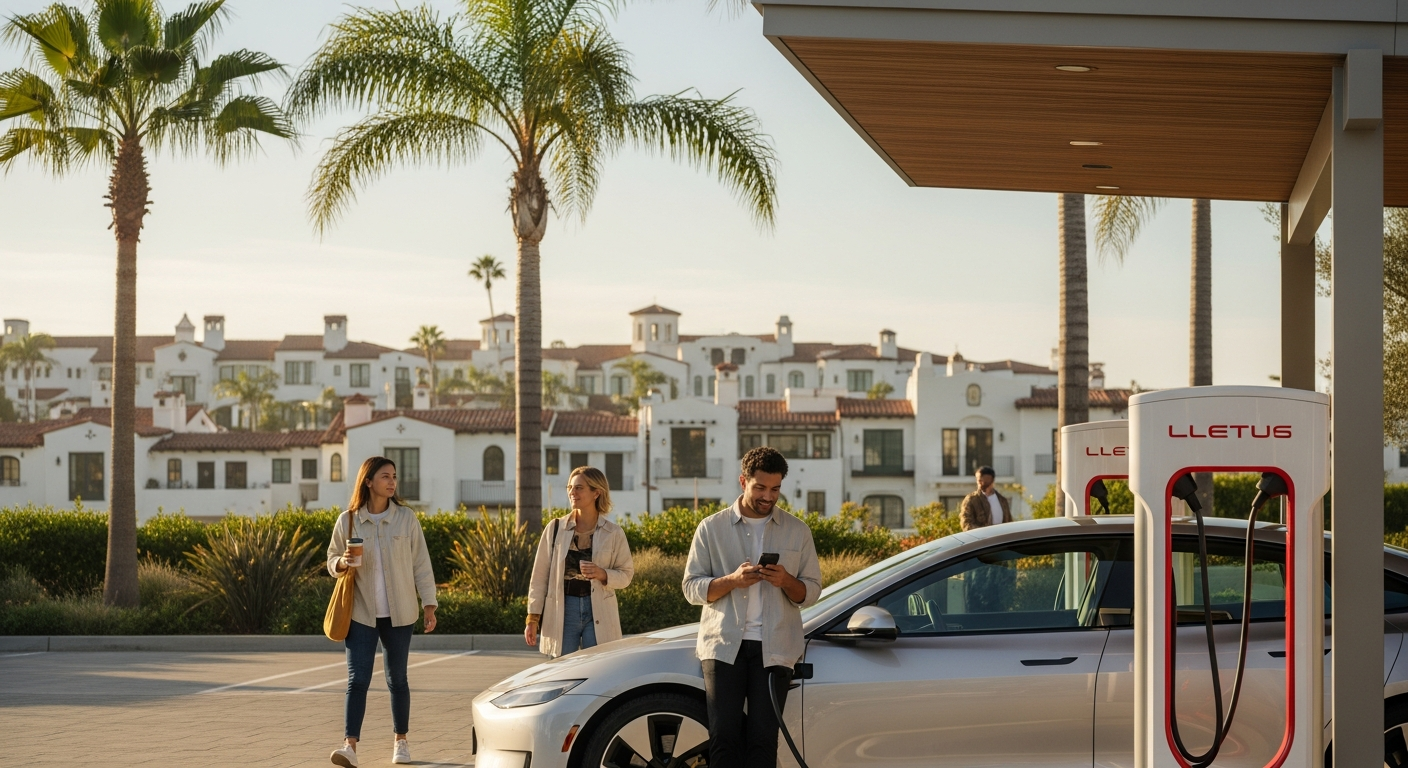
Why Electric Cars Make Sense in Spain
Spain is one of the best countries in Europe to own an electric vehicle. The combination of abundant sunshine for solar energy, a rapidly expanding charging network, generous government subsidies, and lower electricity costs than many northern European countries creates an environment where the economics of EV ownership are compelling. In 2025, fully electric vehicle registrations in Spain grew by over 35% year-on-year, and 2026 is on track to accelerate that trend further as more affordable models enter the market and charging infrastructure reaches even smaller towns.
If you are an expat living in Spain — or planning to move — this guide covers everything you need to know about buying, charging, running, and maintaining an electric car. We will look at the real numbers: what it costs to charge at home versus a public station, how much you save compared to petrol, what government subsidies are available, and the practicalities of installing a chargepoint in a Spanish community garage. We also cover importing an EV from another EU country, the ITV inspection process for electric vehicles, and the increasingly popular combination of rooftop solar panels and an EV.
The EV Market in Spain: 2026 Overview
Spain's electric vehicle market has matured significantly. The total number of fully electric cars on Spanish roads passed 350,000 in early 2026, with plug-in hybrids adding another 250,000+. Market share for battery electric vehicles (BEVs) reached approximately 12% of new car sales in 2025, up from 5.6% in 2023. Spain still lags behind Norway (90%+), the Netherlands (35%+), and Germany (18%+), but the trajectory is clear.
The most popular electric cars in Spain in 2025–2026 include the Tesla Model Y (the best-selling EV by a significant margin), the MG4 (popular for its price-to-range ratio), the Citroën ë-C3 (the new affordable entry point), the Dacia Spring (still the cheapest EV available), the Tesla Model 3, the BYD Atto 3, and the CUPRA Born. Prices for new BEVs start at around €18,000 for the Dacia Spring and Citroën ë-C3, while the mainstream market sits at €28,000–€45,000 for vehicles like the Tesla Model 3, MG4 Extended Range, and Hyundai Ioniq 5.
The used EV market is also developing rapidly. First-generation Nissan Leafs (2018–2019 models with 40 kWh batteries) are available from €12,000–€16,000. Tesla Model 3 Standard Range Plus (2020–2021) can be found for €22,000–€28,000. These are excellent value, as battery degradation in the Spanish climate has proven to be less severe than early predictions suggested — most batteries retain 90%+ capacity after five years.
MOVES III Subsidies: Up to €7,000 Off Your EV
The Spanish government's MOVES III programme (Plan de Incentivos al Vehículo Eléctrico) remains the most important financial incentive for EV buyers. Originally launched in 2021 and extended multiple times, the programme has been renewed for 2026 with an expanded budget.
How much can you get?
The subsidy amounts depend on the type of vehicle and whether you scrap an old car:
- Battery electric vehicles (BEVs): €4,500 base subsidy. If you scrap a vehicle older than seven years, this increases to €7,000.
- Plug-in hybrids (PHEVs) with 30+ km electric range: €2,500 base, up to €5,000 with scrapping.
- Electric motorcycles and quadricycles: €1,100–€1,300 base, up to €1,500–€1,800 with scrapping.
- Charging infrastructure: Up to €1,300 for installing a home or community chargepoint (70% of the cost, capped at the maximum amount).
Eligibility requirements
To receive the MOVES III subsidy, you must meet these conditions:
- The vehicle must be new (not second-hand) and purchased from an authorised dealer in Spain.
- The purchase price (before VAT) must not exceed €45,000 for cars (€53,000 for fuel-cell vehicles or vehicles with 8+ seats).
- You must keep the vehicle for at least two years and not sell or export it during that period.
- The application is made through your Comunidad Autónoma (autonomous community), not the central government. Each region has its own portal — Andalucía, Comunitat Valenciana, Cataluña, Comunidad de Madrid, etc.
- Both individuals (autónomos, employees, retirees) and companies can apply. NIE holders are eligible.
How to apply
The process typically works as follows: you buy the car, then submit the application to your autonomous community with the purchase invoice, vehicle registration document (permiso de circulación), proof of scrapping (if applicable), and your NIE or DNI. Processing times vary — some regions pay within two to three months, others take six months or more. The subsidy is paid directly to your bank account. Some dealers will advance the discount at the point of sale and handle the paperwork themselves — always ask.
Additional regional incentives
Several autonomous communities offer additional incentives on top of MOVES III. The Comunitat Valenciana has its own Pla MOVES València with additional top-ups. Barcelona offers reduced parking charges and access to low-emission zones. Madrid exempts EVs from the Impuesto de Vehículos de Tracción Mecánica (road tax) entirely. Check your local autonomous community website for current programmes.
Charging Infrastructure: Where and How to Charge
Spain's public charging network has grown dramatically. By early 2026, there are over 35,000 public charging points across the country, up from approximately 22,000 in 2024. The density is highest along the Mediterranean coast, in and around Madrid, Barcelona, and the Basque Country, with more rural inland areas still catching up.
Major charging networks
Iberdrola (BP Pulse from 2026): The largest public charging network in Spain with over 5,000 points. Iberdrola has been the most aggressive investor in Spanish charging infrastructure. Pricing varies by location and power level: AC charging (up to 22 kW) typically costs €0.30–€0.40/kWh, while DC fast charging (50–150 kW) runs €0.45–€0.60/kWh. The Iberdrola app or RFID card is required.
Endesa X: Spain's second-largest network with over 3,500 points, concentrated in southern and eastern Spain. Pricing is competitive: AC at €0.28–€0.39/kWh, DC at €0.44–€0.55/kWh. Endesa X has partnered with many supermarkets and shopping centres for destination charging.
Tesla Superchargers: Now open to non-Tesla vehicles at most Spanish locations (via the Tesla app), with over 80 Supercharger stations across Spain. Pricing for non-Tesla vehicles: approximately €0.50–€0.64/kWh. For Tesla owners with an active subscription: €0.36–€0.44/kWh. Superchargers offer 150–250 kW speeds, making them the fastest widely available option.
Repsol (Waylet): Repsol is converting many of its petrol stations to include EV charging, creating a familiar refuelling experience. Over 2,000 charging points, with pricing at €0.35–€0.55/kWh depending on speed.
Wenea: A growing network focused on destination charging at restaurants, hotels, and leisure venues. Typically free or low-cost while you spend time at the venue — an excellent model for tourists and day-trippers.
Zunder: A newer player focusing on ultra-fast charging hubs (150–400 kW) along major motorways, particularly the A-7 Mediterranean corridor and the A-4 Madrid–Andalucía route. Pricing: €0.49–€0.59/kWh but with much faster charging speeds.
Finding charging stations
The best apps for finding charging stations in Spain are: Electromaps (the most comprehensive Spanish charging database, with real-time availability and user reviews), Google Maps (now shows EV chargers with availability status), A Better Route Planner (ABRP — the best tool for planning long-distance EV journeys, it factors in your specific car model, battery level, weather, and elevation), and your car's built-in navigation (Tesla, BMW, Mercedes, and VW have integrated charging station finders).
Charging speeds explained
Understanding the different charging levels is essential:
- Slow AC (3.7–7.4 kW): Typical home wallbox or street charger. Adds 20–40 km of range per hour. Suitable for overnight home charging.
- Fast AC (11–22 kW): Found at shopping centres, car parks, and some public stations. Adds 60–120 km per hour. Good for a two-hour shopping trip.
- DC fast charging (50–100 kW): Highway stations and dedicated charging hubs. Adds 200–350 km per hour. A typical 20%–80% charge takes 30–45 minutes.
- Ultra-fast DC (150–350 kW): Tesla Superchargers, Ionity, Zunder. Adds 300–600 km per hour. A 20%–80% charge can take as little as 15–25 minutes in compatible vehicles.
Home Charging: The Most Economical Option
Around 80% of EV charging happens at home, and this is where the real savings are. If you have a private garage or driveway, installing a home wallbox is straightforward and highly recommended.
Home wallbox costs
A typical home wallbox installation in Spain costs €800–€1,800 including equipment and installation. Popular brands include Wallbox (a Barcelona-based company — their Pulsar Plus is the most common unit in Spain), Fronius, ABB, and Schneider. The wallbox itself costs €400–€900, with installation labour adding €300–€700 depending on the complexity of the electrical work. Remember that MOVES III offers up to €1,300 in subsidies for chargepoint installation, potentially covering 70% of the total cost.
Most home installations are 7.4 kW (single-phase, 32A) which is sufficient for overnight charging — it will fully charge a 60 kWh battery in approximately eight hours. If your property has three-phase supply (common in newer builds and villas), you can install an 11 kW or 22 kW charger for faster home charging.
Electricity costs: EV vs petrol
This is where the numbers get interesting. Let us compare the annual fuel cost for a typical car doing 15,000 km per year:
Petrol car (consumption 7 litres/100 km, petrol price €1.55/litre in 2026): 15,000 km × 7 L/100 km = 1,050 litres × €1.55 = €1,627.50 per year.
Electric car (consumption 16 kWh/100 km, home charging at regulated tariff): The key to cheap home charging in Spain is the PVPC regulated tariff with time-of-use pricing. Charging between 00:00 and 08:00 (the "valle" or off-peak period), electricity costs approximately €0.08–€0.12/kWh including taxes and access charges. At an average of €0.10/kWh: 15,000 km × 16 kWh/100 km = 2,400 kWh × €0.10 = €240 per year.
That is an annual saving of approximately €1,387 — or €115 per month. Over five years, that is nearly €7,000 saved on fuel alone. Even if you do half your charging at public stations (at an average of €0.45/kWh), the annual cost rises to only about €660 — still saving over €950 per year compared to petrol.
Optimising your electricity tariff
The PVPC (Precio Voluntario al Pequeño Consumidor) regulated tariff is ideal for EV owners because it has three time-of-use periods:
- Valle (off-peak): 00:00–08:00 — cheapest rates, ideal for EV charging. Set your car or wallbox to start charging at midnight.
- Llano (mid-peak): 08:00–10:00, 14:00–18:00, 22:00–00:00 — moderate rates.
- Punta (peak): 10:00–14:00, 18:00–22:00 — most expensive, avoid charging during these hours.
Alternatively, many electricity companies offer specific EV tariffs. Iberdrola's "Plan Vehículo Eléctrico" and Endesa's "Tarifa Tempo Happy" offer even lower overnight rates (sometimes as low as €0.03–€0.06/kWh during super-off-peak hours) in exchange for slightly higher daytime rates. If you charge exclusively at night, these plans can reduce your annual charging cost to under €150.
Importing an EV from Another EU Country
Many expats consider importing an electric car from their home country. The process is the same as for any vehicle within the EU, but there are a few EV-specific considerations.
The standard import process
When you import a car from another EU country to Spain, you must:
- Obtain the original registration documents from the country of origin.
- Get a certificate of conformity (COC) from the manufacturer or a technical inspection (homologación) if the COC is not available.
- Pay the Impuesto de Matriculación (registration tax). For electric vehicles, this is 0% — one of the significant advantages. Petrol and diesel cars are taxed at 4.75%–14.75% based on CO2 emissions.
- Pay the Impuesto de Vehículos de Tracción Mecánica (annual road tax) to your local ayuntamiento. Many municipalities offer a 50–75% discount for electric vehicles. In Madrid, EVs are 100% exempt.
- Register the vehicle at the DGT (Dirección General de Tráfico) and obtain Spanish number plates.
- Pass the ITV (technical inspection).
EV-specific considerations
Electric vehicles benefit from 0% registration tax, which saves thousands of euros compared to importing a combustion engine car. A Tesla Model 3 valued at €35,000 would incur €0 in registration tax as an EV, versus approximately €2,625–€5,162 as a petrol car. This alone makes importing an EV from Germany, the Netherlands, or any other EU country financially attractive.
Ensure the charging socket is compatible. Most EVs sold in Europe use the Type 2 (AC) and CCS2 (DC) connectors, which are the standard in Spain. If you are importing from the UK (post-Brexit, with potential customs implications) or a non-EU country, check that the vehicle meets EU homologation standards.
Expect the full import and registration process to take four to eight weeks, depending on your region's DGT office workload. Using a gestoría (administrative agency) costs €300–€600 but saves significant time and bureaucratic frustration.
ITV for Electric Vehicles
The ITV (Inspección Técnica de Vehículos) is Spain's equivalent of the MOT (UK), TUV (Germany), or APK (Netherlands). Electric vehicles must pass the ITV like any other car, but the inspection has some differences.
ITV schedule for EVs
The schedule is the same as for any passenger car: first ITV at four years from the date of first registration, then every two years until the vehicle is 10 years old, then annually. A new car bought in 2026 will need its first ITV in 2030.
What the ITV checks on an EV
The standard checks apply: brakes, lights, tyres, suspension, steering, bodywork, emissions (not applicable for BEVs — no exhaust test), and documentation. EV-specific checks include the high-voltage system integrity, charging socket condition, battery management system (no warning lights), and the orange high-voltage cabling condition. In practice, EVs have a higher ITV pass rate than combustion vehicles because there are fewer components to fail — no exhaust system, no catalytic converter, no engine oil leaks.
ITV cost
The ITV costs €30–€55 depending on the autonomous community. Book online via the ITV station's website or app. The process typically takes 20–30 minutes.
Best EVs for the Spanish Climate
Spain's climate presents both advantages and challenges for electric vehicles. The heat is the main consideration — summer temperatures regularly exceed 35°C in central and southern Spain, and 40°C+ heat waves are increasingly common.
Heat and battery range
High ambient temperatures actually improve battery chemistry performance slightly (lithium-ion batteries are most efficient at 20–30°C), but air conditioning use is the real range killer. Running AC at full blast in 40°C heat can reduce range by 15–25% compared to mild-weather driving. A car rated at 400 km WLTP range might deliver 300–340 km in peak summer with AC running constantly.
Cars with efficient thermal management
The best EVs for hot climates are those with efficient heat pump systems and good thermal management:
- Tesla Model Y / Model 3 (2024+ Highland refresh): Excellent thermal management, heat pump standard, and the cabin pre-conditioning via the app means you can cool the car while it is still plugged in (using grid power, not battery). Range in Spanish summer: approximately 85% of WLTP rating.
- Hyundai Ioniq 5 / Kia EV6: The 800V architecture means faster charging (10%–80% in 18 minutes at a 350 kW charger), and the heat pump is standard. The Ioniq 5's flat floor and spacious interior make it excellent for family road trips on Spanish motorways.
- BYD Atto 3 / BYD Seal: BYD's Blade Battery (LFP chemistry) is inherently more heat-resistant than NMC batteries. LFP batteries suffer less degradation in hot climates, making BYD vehicles an excellent long-term choice for Spain.
- MG4: The best-value EV for Spanish conditions. The 64 kWh Extended Range version offers 450 km WLTP range, a heat pump, and prices from €28,000 (before subsidies). In summer, expect 350–380 km of real-world range.
- Citroën ë-C3: At under €24,000 (before subsidies), it is the most affordable EV with a usable range (320 km WLTP). Ideal for urban use and short commutes in hot climates where you do not need maximum range.
Cabin pre-conditioning: your best friend in Spain
Almost all modern EVs allow you to pre-condition the cabin via a smartphone app while the car is plugged in. In Spanish summers, this is not a luxury — it is essential. Starting your journey with a cool cabin and a full battery (rather than using battery power to cool down a 60°C interior) preserves range and comfort. Set a departure time in the app and the car will be ready, cool, and at optimal battery temperature when you leave.
Charging at Your Community: Rules and Installation
If you live in an apartment building or a community (comunidad de propietarios) with shared garage space — as millions of Spanish residents do — installing a chargepoint involves navigating community rules. The good news: Spanish law is firmly on the EV owner's side.
Your legal right to install
Under the Ley de Propiedad Horizontal (reformed by Real Decreto-ley 29/2021), any owner or tenant in a community of property owners has the right to install an EV charging point in their designated parking space. You do not need the community's approval — you only need to notify the community president in writing. The community cannot block the installation.
This is a significant legal protection. The law was specifically designed to remove the obstacle of community vetoes, which were previously blocking EV adoption in multi-unit buildings. Your notification must include a description of the installation and confirmation that a qualified electrician will perform the work.
Individual vs collective installation
There are two approaches:
- Individual installation: You install a wallbox on your own parking space, connected to your own electricity meter. You pay for the equipment, installation, and electricity. This is the simplest and most common approach. Cost: €1,200–€2,500 depending on the distance from your meter to your parking space. The main challenge is running the cable from your apartment's electrical panel to the garage — in some buildings, this can require a long cable run.
- Collective installation (pre-installation): The community installs a shared electrical backbone in the garage, and individual owners connect their wallboxes to it. This is more cost-efficient per unit and future-proofs the building, but requires a community vote (simple majority) and shared cost allocation. Some communities are proactively doing this to increase property values.
Practical tips
Hire an electrician who specialises in EV charger installations (instalador autorizado). They will assess your building's electrical capacity and recommend the right solution. Get multiple quotes. Ensure the installation includes a dedicated circuit breaker and residual current device (RCD). Keep all documentation for the MOVES III subsidy application. If your community has a conserje or administrador de fincas, inform them early to smooth the process.
Solar Panels + EV: The Perfect Spanish Combo
Spain has more sunshine hours than almost any country in Europe — over 2,500 hours per year in most of the country, and over 3,000 in Andalucía, Murcia, and the Canary Islands. Combining rooftop solar panels with an EV creates what is arguably the most cost-effective personal transport system available anywhere.
The economics
A typical residential solar installation in Spain (5–8 kWp, suitable for a family home) costs €5,000–€9,000 after subsidies. It generates approximately 7,500–12,000 kWh per year. Your EV needs approximately 2,400 kWh per year (at 15,000 km). If you charge your EV during daylight hours using solar power, your driving fuel cost is effectively zero — you are driving on sunshine.
Even if you can only charge during the day on weekends and work from home a few days per week, you might cover 50–70% of your charging needs with solar power. The remaining 30–50% charged at night using the PVPC valle rate (€0.08–€0.12/kWh) would cost approximately €75–€150 per year. Your total annual "fuel" cost: under €150, compared to €1,627 for petrol.
Battery storage: the next step
A home battery system (like the Tesla Powerwall, BYD HVS, or Huawei Luna) stores excess solar energy generated during the day for use at night — including overnight EV charging. A 10 kWh home battery costs €5,000–€8,000 installed. While the payback period is longer (8–12 years), it maximises solar self-consumption and can make your home and car virtually energy-independent. Some modern EVs can also function as a home battery via vehicle-to-home (V2H) technology, though this is still in early adoption in Spain.
Net metering and surplus compensation
Spain's autoconsumo regulations allow you to feed excess solar energy back to the grid and receive compensation. Under the current system, you receive a credit on your electricity bill (typically €0.05–€0.08/kWh for surplus energy). While this is less than you pay for grid electricity, it means no solar energy is wasted. Combined with an EV that absorbs much of your solar production, the system becomes highly efficient.
Tax Benefits Summary for EV Owners
Electric vehicle owners in Spain enjoy multiple tax advantages:
- Impuesto de Matriculación (registration tax): 0% for vehicles with CO2 emissions of 0 g/km. Combustion cars pay 4.75%–14.75%.
- Impuesto de Vehículos de Tracción Mecánica (road tax): 50–100% reduction depending on municipality. In Madrid: 100% exemption. In Barcelona: 75% discount.
- Free or discounted parking: Many cities offer free or reduced-rate parking for EVs with the "0 emisiones" DGT label, including regulated street parking (zona azul/verde).
- Low-emission zone access: EVs with the "0 emisiones" label have unrestricted access to all low-emission zones (ZBE — Zonas de Bajas Emisiones), which are mandatory in all Spanish cities with over 50,000 inhabitants.
- Company car benefit: If your employer provides an EV as a company car, the taxable benefit-in-kind is calculated at a lower rate than for combustion vehicles.
Practical Tips for EV Owners in Spain
- DGT label: Register your EV with the DGT to obtain the "0 emisiones" blue label. This is essential for accessing ZBE zones, parking benefits, and identifying your vehicle as electric. Apply through the DGT website or at a Correos office.
- Long-distance trips: Use A Better Route Planner (ABRP) to plan your route. The A-7 Mediterranean coast route (Barcelona to Málaga) now has fast chargers every 50–80 km. The Madrid radial motorways (A-1 to A-6) are well-covered. Rural Castilla-La Mancha and Extremadura still have gaps — plan ahead.
- Summer driving: Pre-condition your car while plugged in, park in shade or underground whenever possible, and use window shades. Tyre pressure increases in heat — check regularly. Light-coloured cars stay significantly cooler in direct Spanish sun.
- Insurance: EV insurance in Spain is competitively priced. Mapfre, Línea Directa, and Mutua Madrileña all offer EV-specific policies. Expect to pay €350–€600/year for comprehensive cover (todo riesgo) on a mid-range EV, roughly comparable to a combustion car of similar value.
- Maintenance: EVs have dramatically lower maintenance costs. No oil changes, no timing belts, no exhaust repairs, regenerative braking reduces brake pad wear by 50–70%. Budget approximately €200–€400/year for maintenance (tyres, brake fluid, cabin filter, wiper blades) versus €600–€1,000 for a combustion car.
Total Cost of Ownership: The Full Picture
Let us compare the five-year total cost of ownership for a typical mid-range EV versus a comparable petrol car in Spain:
Electric (e.g., MG4 Extended Range, €30,000 before subsidies):
- Purchase price after MOVES III: €25,500 (with scrapping bonus: €23,000)
- Fuel (electricity): €240/year × 5 = €1,200
- Road tax (75% discount): €25/year × 5 = €125
- Maintenance: €300/year × 5 = €1,500
- Insurance: €450/year × 5 = €2,250
- Five-year total: €30,575 (or €28,075 with scrapping)
Petrol (e.g., comparable hatchback, €25,000):
- Purchase price: €25,000 (plus ~€1,500 registration tax)
- Fuel (petrol): €1,627/year × 5 = €8,137
- Road tax: €100/year × 5 = €500
- Maintenance: €750/year × 5 = €3,750
- Insurance: €450/year × 5 = €2,250
- Five-year total: €41,137
The electric car saves approximately €10,500–€13,000 over five years, even though it costs more upfront. Add solar panels and the savings increase further. The economic case for electric cars in Spain in 2026 is now overwhelming for most drivers.
Frequently Asked Questions
The EV Market in Spain: 2026 Overview?
Spain's electric vehicle market has matured significantly. The total number of fully electric cars on Spanish roads passed 350,000 in early 2026, with plug-in hybrids adding another 250,000+. Market share for battery electric vehicles (BEVs) reached approximately 12% of new car sales in 2025, up from 5.6% in 2023. Spain still lags behind Norway (90%+), the Netherlands (35%+), and Germany (18%+), but the trajectory is clear. The most popular electric cars in Spain in 2025–2026 include the Tesla Model Y (the best-selling EV by a significant margin), the MG4 (popular for its price-to-range ratio), the Citroën ë-C3 (the new affordable entry point), the Dacia Spring (still the cheapest EV available), the Tesla Model 3, the BYD Atto 3, and the CUPRA Born. Prices for new BEVs start at around €18,000 for the Dacia Spring and Citroën ë-C3, while the mainstream market sits at €28,000–€45,000 for vehicles like the Tesla Model...
Charging Infrastructure: Where and How to Charge?
Spain's public charging network has grown dramatically. By early 2026, there are over 35,000 public charging points across the country, up from approximately 22,000 in 2024. The density is highest along the Mediterranean coast, in and around Madrid, Barcelona, and the Basque Country, with more rural inland areas still catching up. Major charging networks Iberdrola (BP Pulse from 2026): The largest public charging network in Spain with over 5,000 points. Iberdrola has been the most aggressive investor in Spanish charging infrastructure. Pricing varies by location and power level: AC charging (up to 22 kW) typically costs €0.30–€0.40/kWh, while DC fast charging (50–150 kW) runs €0.45–€0.60/kWh. The Iberdrola app or RFID card is required.
Importing an EV from Another EU Country?
Many expats consider importing an electric car from their home country. The process is the same as for any vehicle within the EU, but there are a few EV-specific considerations. The standard import process When you import a car from another EU country to Spain, you must:
Best EVs for the Spanish Climate?
Spain's climate presents both advantages and challenges for electric vehicles. The heat is the main consideration — summer temperatures regularly exceed 35°C in central and southern Spain, and 40°C+ heat waves are increasingly common. Heat and battery range High ambient temperatures actually improve battery chemistry performance slightly (lithium-ion batteries are most efficient at 20–30°C), but air conditioning use is the real range killer. Running AC at full blast in 40°C heat can reduce range by 15–25% compared to mild-weather driving. A car rated at 400 km WLTP range might deliver 300–340 km in peak summer with AC running constantly.
Solar Panels + EV: The Perfect Spanish Combo?
Spain has more sunshine hours than almost any country in Europe — over 2,500 hours per year in most of the country, and over 3,000 in Andalucía, Murcia, and the Canary Islands. Combining rooftop solar panels with an EV creates what is arguably the most cost-effective personal transport system available anywhere. The economics A typical residential solar installation in Spain (5–8 kWp, suitable for a family home) costs €5,000–€9,000 after subsidies. It generates approximately 7,500–12,000 kWh per year. Your EV needs approximately 2,400 kWh per year (at 15,000 km). If you charge your EV during daylight hours using solar power, your driving fuel cost is effectively zero — you are driving on sunshine.
Why Granfield Estate?
-
⚑
We live on the coast
Our team lives and works on the Costa Blanca. We know every neighbourhood, every street and the real prices — not from a catalogue, but from daily work on the ground.
-
⚖
In-house lawyer — 10+ years of experience
NIE, bank account, property check, contract, notary — legal support at every step. First consultation free.
-
🏠
Property management
Buying to rent? Our management company handles tenant search, maintenance and all questions.
-
🌐
We speak your language
English, Spanish, Russian, German, Finnish, Swedish and more. Licence RAICV 1663, member of Asivega.
Read also

Cost of Living in Spain 2026: Monthly Budget Breakdown
10.06.2026
What it really costs to live in Spain in 2026. Complete monthly budget breakdown for a couple: from €1,500 to €2,500 per month, comfortable but not luxury.

Healthcare in Spain for Foreigners: Complete Guide
12.06.2026
Spain has one of Europe's best healthcare systems. How to access public and private healthcare as a foreigner — EHIC, SIP card, convenio especial, and private insurance explained.

10 Best Beaches on Costa Blanca (and Property Nearby)
17.06.2026
From the golden dunes of Guardamar to the hidden cove of Granadella — the 10 best beaches on Costa Blanca, with Blue Flag status, crowd levels, facilities, and property prices within walking distance.