


Why Northern Spain Deserves Your Attention
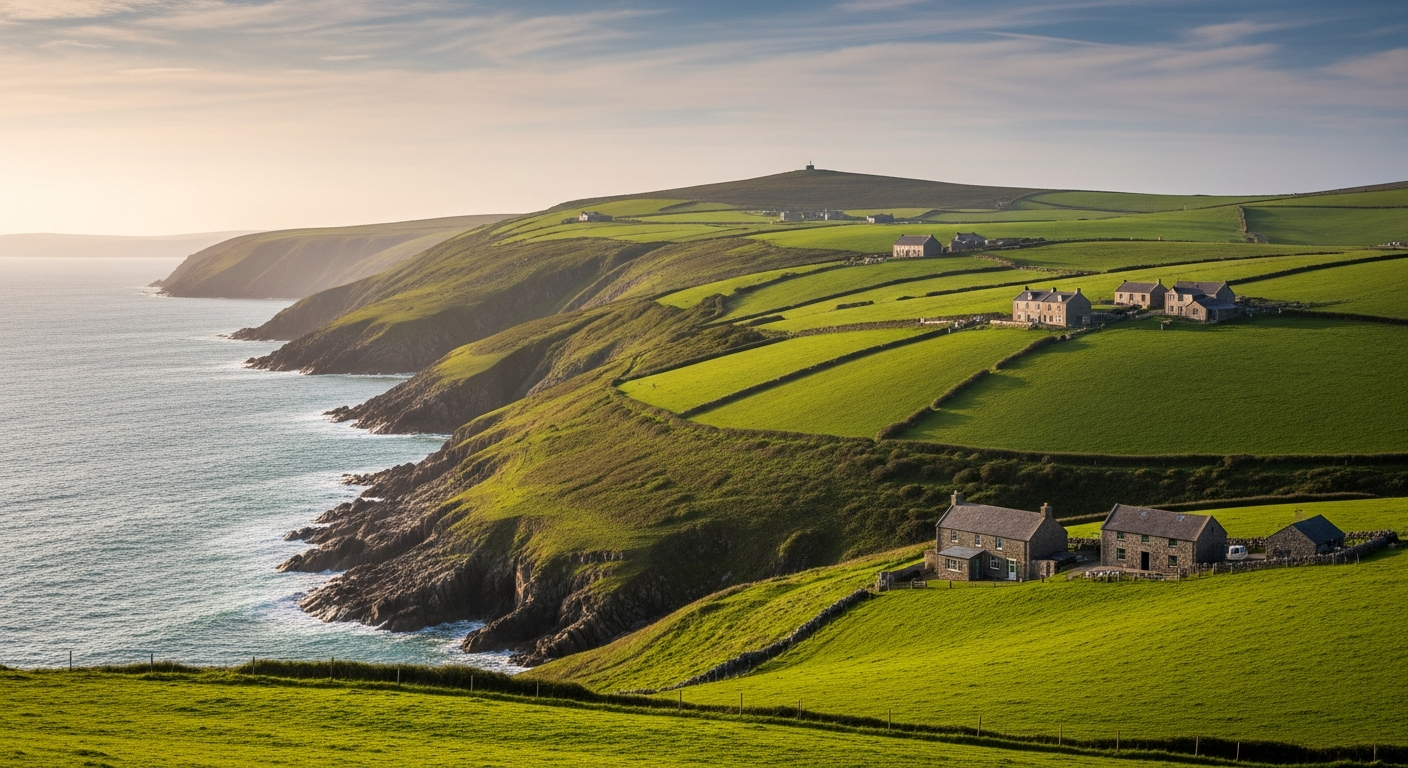
When most foreign buyers think of Spanish property, their minds jump straight to the Costa del Sol, Costa Blanca, or the Balearic Islands. Sun-drenched terraces, infinity pools, and year-round blue skies dominate the brochures. But there is an entirely different Spain stretching along the Atlantic coast from the Basque Country to Galicia — a region locals call España Verde, or Green Spain — and it is one of Europe's best-kept secrets for quality of life and property value.
Northern Spain offers dramatic cliff-lined coastlines, world-renowned cuisine, vibrant cultural cities, and property prices that are often 50–70% lower than on the Mediterranean. The trade-off? More rain, cooler summers, and fewer charter flights from northern Europe. For many buyers, especially those who dislike extreme heat or overcrowded resort towns, that is not a trade-off at all — it is precisely the appeal.
In this guide we profile the five best cities on Spain's Atlantic coast for property buyers, compare them side by side, and explain what makes the north such a compelling alternative to the south.
1. San Sebastián / Donostia (Basque Country)
Average property price: €4,000–7,000/m²
San Sebastián — Donostia in the Basque language — is regularly voted one of the most beautiful cities in Europe. Set around the shell-shaped La Concha beach, framed by green hills and the Cantabrian Sea, the city combines Belle Époque architecture with a culinary scene that rivals any on the continent. The Old Town (Parte Vieja) is packed with pintxos bars, where small, inventive bites are served on slices of bread, and the city boasts more Michelin stars per capita than almost anywhere on Earth.
Property here is the most expensive on the Atlantic coast, and for good reason. Demand is driven by wealthy domestic buyers from Madrid and Bilbao, international food lovers, and a steady stream of remote workers who have discovered that the city's quality of life is extraordinary. A two-bedroom apartment in the centre typically costs €350,000–500,000, while seafront properties in the Antiguo or Gros neighbourhoods can exceed €700,000.
Best for: Gastronomy enthusiasts, surfers (Zurriola beach is a well-known break), buyers who want a cosmopolitan small city with international cachet.
Keep in mind: This is the priciest market on the northern coast. Rental yields are moderate because purchase prices are high, though holiday-let demand is very strong in summer.
2. Santander (Cantabria)
Average property price: €2,000–3,500/m²
Santander occupies a spectacular position on a wide bay, with the golden sands of El Sardinero beach stretching along the northern edge of the city. The Magdalena Peninsula — once a royal summer retreat — divides the bay from the open sea and is now a public park that gives the city an almost resort-like feel without the tourist-town drawbacks.
One of Santander's unique advantages for British and Irish buyers is its ferry connection to the UK. Brittany Ferries operates a regular service from Santander to Plymouth and Portsmouth, making it possible to drive to your Spanish property without flying. This is a significant draw for people relocating with pets, transporting furniture, or simply preferring to avoid airports.
The city centre offers a mix of traditional and modern apartments. The Sardinero seafront area commands premium prices (closer to €3,500/m²), while inland neighbourhoods and the wider Cantabria region offer excellent value. The surrounding countryside — think green valleys, medieval villages, and the Picos de Europa mountains less than an hour away — is stunning.
Best for: UK buyers wanting easy car access, families, lovers of beaches combined with mountain scenery.
Keep in mind: The city is smaller and quieter than San Sebastián. Winter weather can be grey and wet, though temperatures rarely drop below 8°C.
3. Gijón (Asturias)
Average property price: €1,500–2,500/m²
Gijón is Asturias' largest city and its gateway to the sea. Once an industrial port centred on steel and coal, Gijón has reinvented itself over the past two decades as a cultural and surfing hub. The Cimadevilla old quarter sits on a headland jutting into the Bay of Biscay, and the long urban beach of San Lorenzo curves in a graceful arc from the old town eastward.
The surf scene is a defining feature. Consistent Atlantic swells hit the coast from autumn through spring, and Gijón has become a magnet for a younger, active community of Spanish and international surfers. The city's industrial heritage has left behind characterful converted spaces — former warehouses turned into galleries, cafés, and co-working spaces — giving Gijón an edgy, creative atmosphere that is absent from most Spanish coastal cities.
Property prices are remarkably affordable by European coastal-city standards. A renovated two-bedroom apartment near the beach can be found for €150,000–200,000. Unrenovated flats in good locations dip below €100,000, presenting opportunities for buyers willing to invest in refurbishment.
Best for: Surfers, budget-conscious buyers, those who appreciate a city with grit and character rather than postcard polish.
Keep in mind: Asturias is the wettest region in Spain. Gijón gets approximately 170 rainy days per year. The industrial past means some neighbourhoods are less attractive — local knowledge matters when choosing where to buy.
4. Oviedo (Asturias)
Average property price: €1,200–2,000/m²
Just 30 kilometres inland from Gijón, Oviedo is the cultural and administrative capital of Asturias. It is a graceful, compact city known for its pre-Romanesque churches (UNESCO World Heritage), elegant pedestrian streets, and a thriving food market. Oviedo sits on the Camino de Santiago pilgrimage route — the Camino Primitivo, considered the original and most challenging path — which brings a steady flow of international visitors and gives the city a lively, outward-looking character.
Because it is not directly on the coast, Oviedo offers the lowest property prices of the five cities in this guide. The historic centre is beautifully maintained, and a spacious three-bedroom apartment in a good neighbourhood can cost as little as €120,000–180,000. The trade-off for being inland is minimal: the beaches of Gijón and the spectacular coves of the Asturian coast are 30–40 minutes by car or a quick train ride.
Oviedo is also a university city (the University of Oviedo was founded in 1608), which keeps the population young, supports a lively nightlife and cultural scene, and ensures good public services. For buyers who prioritise culture, walkability, and value, Oviedo is hard to beat in northern Spain.
Best for: Culture lovers, budget buyers, those who want a classic Spanish city experience without tourist crowds.
Keep in mind: No direct beach access. The city is quieter in summer when students leave. International flight connections are via Asturias Airport (OVD), which has limited routes compared to Bilbao or Santiago.
5. A Coruña & Vigo (Galicia)
Average property price: €1,500–2,500/m²
Galicia, in Spain's northwest corner, is a land apart. Its Celtic heritage is visible in the music (gaitas — Galician bagpipes), the granite architecture, the misty green landscapes, and a coastline that feels more like Ireland or Brittany than anything you would expect in Spain. The Rías Baixas — a series of dramatic coastal inlets on the western coast — produce some of Europe's finest white wines (Albariño) and an astonishing abundance of seafood: percebes (goose barnacles), pulpo a feira (Galician-style octopus), oysters, mussels, and scallops.
A Coruña is a vibrant Atlantic port city with a beautiful glass-fronted waterfront (the galerías that earned it the nickname "City of Glass"), a long urban beach at Riazor-Orzán, and the world's oldest working lighthouse, the Tower of Hercules (a UNESCO site). Property prices are moderate, with central apartments averaging €1,800–2,500/m².
Vigo, further south on the Rías Baixas, is Galicia's largest city and a major fishing port. It has a rougher, more energetic character than A Coruña, with excellent seafood restaurants along the Rúa de las Ostras (Oyster Street), the stunning Cíes Islands offshore (often called "the Galician Caribbean" for their white sand and turquoise water), and a growing tech sector. Prices in Vigo are slightly lower, averaging €1,500–2,200/m².
Best for: Seafood lovers, wine enthusiasts, buyers drawn to Celtic culture and wild Atlantic scenery, those seeking value in a relatively undiscovered market.
Keep in mind: Galicia is the rainiest part of Spain. The Galician language (Galego) is co-official with Spanish, and signage and bureaucracy are often bilingual. Santiago de Compostela Airport (SCQ) has good European connections, especially with Ryanair.
Green Spain: Understanding the Climate
The single biggest difference between northern and southern Spain is the weather. The Atlantic coast receives between 1,000 and 2,000 mm of rainfall per year — comparable to parts of the UK, Ireland, or the Pacific Northwest — whereas the Mediterranean coast typically gets 300–500 mm. Summers in the north are warm (22–26°C) rather than scorching (35–42°C), and winters are mild (8–14°C) but damp.
This climate is responsible for the lush, intensely green landscapes that give the region its name. Rivers run year-round, forests are thick and deciduous, and the countryside can feel more like Normandy or Wales than the Spain of popular imagination. For buyers from northern Europe, this can actually be an advantage — the adjustment is far less dramatic, and the risk of struggling with extreme summer heat (increasingly a concern on the Mediterranean with climate change) is virtually eliminated.
North vs. Mediterranean: Why Choose the Atlantic Coast?
There are several compelling reasons to look north rather than south when buying property in Spain:
- Authenticity. Northern Spanish cities have not been reshaped by mass tourism. You will live among locals, shop at traditional markets, and experience a Spain that feels genuine rather than curated for foreign visitors.
- Lower prices. With the exception of San Sebastián, property on the Atlantic coast costs 40–70% less per square metre than equivalent locations on the Costa del Sol, Costa Blanca, or in Barcelona.
- Fewer tourists. The north attracts culturally curious travellers rather than package-holiday crowds. This means better quality of daily life, less pressure on infrastructure, and more stable property markets that are not inflated by speculative holiday-let investment.
- Superior gastronomy. Northern Spain is widely regarded as the country's culinary heartland. From Basque pintxos to Galician seafood, the food culture is exceptional and deeply embedded in daily life.
- Outdoor lifestyle. Surfing, hiking the Camino de Santiago, mountain biking in the Picos de Europa, sailing on the Rías — the Atlantic coast offers a different (and arguably richer) set of outdoor activities than the south.
- Climate resilience. As southern Spain faces increasing heatwaves, drought, and water shortages, the green north with its abundant rainfall is becoming an increasingly attractive long-term bet.
Comparison Table: 5 Atlantic Coast Cities at a Glance
| City | Region | Price (€/m²) | Summer Temp | Rainy Days/Year | Pros | Cons |
|---|---|---|---|---|---|---|
| San Sebastián | Basque Country | 4,000–7,000 | 22–26°C | ~160 | World-class dining, La Concha beach, cosmopolitan | Expensive, competitive market |
| Santander | Cantabria | 2,000–3,500 | 21–25°C | ~150 | Sardinero beach, UK ferry, Picos de Europa nearby | Smaller city, limited nightlife |
| Gijón | Asturias | 1,500–2,500 | 20–24°C | ~170 | Affordable, surf culture, creative atmosphere | Very rainy, some rough neighbourhoods |
| Oviedo | Asturias | 1,200–2,000 | 20–25°C | ~155 | Cheapest prices, UNESCO heritage, walkable centre | Inland (no beach), limited flights |
| A Coruña / Vigo | Galicia | 1,500–2,500 | 20–25°C | ~165 | Seafood, Celtic charm, Rías Baixas wines, value | Rainiest region, remote from rest of Spain |
Transport Connections
Getting to and around northern Spain has improved significantly in recent years, though it still requires more planning than flying to Málaga or Alicante:
- Airports: Bilbao (BIO) is the best-connected airport in the north, with direct flights to most major European cities. Santiago de Compostela (SCQ) and Asturias (OVD) have a growing number of low-cost routes, particularly with Ryanair, Vueling, and EasyJet. San Sebastián's own airport (EAS) has limited services; most visitors fly into Bilbao (100 km away) or Biarritz across the French border.
- Ferries: Brittany Ferries connects Santander and Bilbao with Plymouth and Portsmouth in the UK. The crossing takes 24–32 hours but allows you to bring your car, which is invaluable for rural property owners.
- Rail: Spain's high-speed AVE network does not yet extend across the entire northern coast, but RENFE operates regular long-distance trains connecting Madrid with the major northern cities. The narrow-gauge FEVE railway runs a scenic (if slow) coastal route from Bilbao to Ferrol, passing through Santander, Gijón, and Oviedo.
- Roads: The A-8 motorway runs the length of the northern coast from the French border to Galicia. Drive times between the five cities range from 1.5 to 5 hours, and the journey is spectacularly scenic.
Expat Communities: Smaller but Growing
Northern Spain does not have the large, established expat populations found on the Costa del Sol or Costa Blanca. There are no English pubs on every corner, no international schools on every block, and no estate agents who work exclusively with foreign buyers. For some people, that is the whole point.
However, small but genuine international communities do exist and are growing steadily:
- San Sebastián has the most established foreign presence, with a mix of French cross-border workers, international gastronomy professionals, language teachers, and digital nomads. Several international schools operate in the greater Basque Country.
- Santander attracts a small British community, partly thanks to the ferry connection and partly due to the University of Cantabria's international programmes.
- Gijón and Oviedo have growing communities of remote workers and young Europeans attracted by low costs and high quality of life. Asturias has an active Facebook group and regular meetups for English-speaking residents.
- Galicia draws a niche but passionate community, particularly from the UK and Ireland, who are attracted by the Celtic cultural affinity, the landscape, and the value for money. The Camino de Santiago also brings a steady stream of people who walk the pilgrimage, fall in love with the region, and decide to stay.
In all of these places, you will need at least basic Spanish (and ideally some Basque, Asturian, or Galician phrases) to navigate daily life comfortably. This is not a drawback — it is part of the deeper cultural immersion that makes living in northern Spain so rewarding.
Final Thoughts
Northern Spain's Atlantic coast offers something genuinely different from the Mediterranean property market. The prices are lower, the landscapes are greener, the food is arguably better, and the experience of living there is rooted in authentic Spanish culture rather than international resort life. The climate will not suit everyone — if you need guaranteed sunshine, look south — but for buyers who value character, value, and a slower pace of life in a stunningly beautiful setting, Green Spain is one of Europe's most compelling destinations.
Whether you choose the gastronomic glamour of San Sebastián, the beachy charm of Santander, the creative energy of Gijón, the cultural richness of Oviedo, or the wild Celtic beauty of Galicia, you will find a corner of Spain that feels refreshingly undiscovered — and where your property budget stretches considerably further than it would on the Mediterranean.
Frequently Asked Questions
1. San Sebastián / Donostia (Basque Country)?
Average property price: €4,000–7,000/m² San Sebastián — Donostia in the Basque language — is regularly voted one of the most beautiful cities in Europe. Set around the shell-shaped La Concha beach, framed by green hills and the Cantabrian Sea, the city combines Belle Époque architecture with a culinary scene that rivals any on the continent. The Old Town (Parte Vieja) is packed with pintxos bars, where small, inventive bites are served on slices of bread, and the city boasts more Michelin stars per capita than almost anywhere on Earth. Property here is the most expensive on the Atlantic coast, and for good reason. Demand is driven by wealthy domestic buyers from Madrid and Bilbao, international food lovers, and a steady stream of remote workers who have discovered that the city's quality of life is extraordinary. A two-bedroom apartment in the centre typically costs €350,000–500,000, while seafront properties in the Antiguo...
3. Gijón (Asturias)?
Average property price: €1,500–2,500/m²
Gijón is Asturias' largest city and its gateway to the sea. Once an industrial port centred on steel and coal, Gijón has reinvented itself over the past two decades as a cultural and surfing hub. The Cimadevilla old quarter sits on a headland jutting into the Bay of Biscay, and the long urban beach of San Lorenzo curves in a graceful arc from the old town eastward. The surf scene is a defining feature. Consistent Atlantic swells hit the coast from autumn through spring, and Gijón has become a magnet for a younger, active community of Spanish and international surfers. The city's industrial heritage has left behind characterful converted spaces — former warehouses turned into galleries, cafés, and co-working spaces — giving Gijón an edgy, creative atmosphere that is absent from most Spanish coastal cities.
5. A Coruña & Vigo (Galicia)?
Average property price: €1,500–2,500/m²
Galicia, in Spain's northwest corner, is a land apart. Its Celtic heritage is visible in the music (gaitas — Galician bagpipes), the granite architecture, the misty green landscapes, and a coastline that feels more like Ireland or Brittany than anything you would expect in Spain. The Rías Baixas — a series of dramatic coastal inlets on the western coast — produce some of Europe's finest white wines (Albariño) and an astonishing abundance of seafood: percebes (goose barnacles), pulpo a feira (Galician-style octopus), oysters, mussels, and scallops. A Coruña is a vibrant Atlantic port city with a beautiful glass-fronted waterfront (the galerías that earned it the nickname "City of Glass"), a long urban beach at Riazor-Orzán, and the world's oldest working lighthouse, the Tower of Hercules (a UNESCO site). Property prices are moderate, with central apartments averaging €1,800–2,500/m².
North vs. Mediterranean: Why Choose the Atlantic Coast?
There are several compelling reasons to look north rather than south when buying property in Spain: Authenticity. Northern Spanish cities have not been reshaped by mass tourism. You will live among locals, shop at traditional markets, and experience a Spain that feels genuine rather than curated for foreign visitors. Lower prices. With the exception of San Sebastián, property on the Atlantic coast costs 40–70% less per square metre than equivalent locations on the Costa del Sol, Costa Blanca, or in Barcelona. Fewer tourists. The north attracts culturally curious travellers rather than package-holiday crowds. This means better quality of daily life, less pressure on infrastructure, and more stable property markets that are not inflated by speculative holiday-let investment. Superior gastronomy. Northern Spain is widely regarded as the country's culinary heartland. From Basque pintxos to Galician seafood, the food culture is exceptional and deeply embedded in daily life. Outdoor lifestyle. Surfing, hiking...
Transport Connections?
Getting to and around northern Spain has improved significantly in recent years, though it still requires more planning than flying to Málaga or Alicante: Airports: Bilbao (BIO) is the best-connected airport in the north, with direct flights to most major European cities. Santiago de Compostela (SCQ) and Asturias (OVD) have a growing number of low-cost routes, particularly with Ryanair, Vueling, and EasyJet. San Sebastián's own airport (EAS) has limited services; most visitors fly into Bilbao (100 km away) or Biarritz across the French border. Ferries: Brittany Ferries connects Santander and Bilbao with Plymouth and Portsmouth in the UK. The crossing takes 24–32 hours but allows you to bring your car, which is invaluable for rural property owners. Rail: Spain's high-speed AVE network does not yet extend across the entire northern coast, but RENFE operates regular long-distance trains connecting Madrid with the major northern cities. The narrow-gauge FEVE railway runs a...
Why Granfield Estate?
-
⚑
Office on the coast — we live here
Our office is in La Mata, Torrevieja. We know every neighbourhood, every street and the real prices — not from a catalogue, but from daily work on the ground.
-
⚖
In-house lawyer — 10+ years of experience
NIE, bank account, property check, contract, notary — legal support at every step. First consultation free.
-
🏠
Property management
Buying to rent? Our management company handles tenant search, maintenance and all questions.
-
🌐
We speak your language
English, Spanish, Russian, German, Finnish, Swedish and more. Licence RAICV 1663, member of Asivega.
Granfield Estate · Av. Bélgica 1, C.C. Parquemar, La Mata, 03188 Torrevieja · +34 865 44 33 33
Read also

Benidorm: Investment and Rental Property
21.05.2026
Complete guide to property investment in Benidorm: 6-8% rental yields, area comparisons, updated prices and year-round rental potential.

Costa Blanca Property Guide 2026: Complete Buyer's Handbook
22.05.2026
Everything you need to know about buying property on Spain's Costa Blanca — from Dénia in the north to Torrevieja in the south, with real prices, honest area comparisons, and practical advice.

Costa del Sol Property Guide: Malaga to Gibraltar
23.05.2026
From Marbella luxury to Nerja charm — a complete guide to buying property on Spain's Costa del Sol, with prices, area comparisons, and investment insights.