


Spain vs Italy: The Complete Property Comparison for Foreign Buyers in 2026
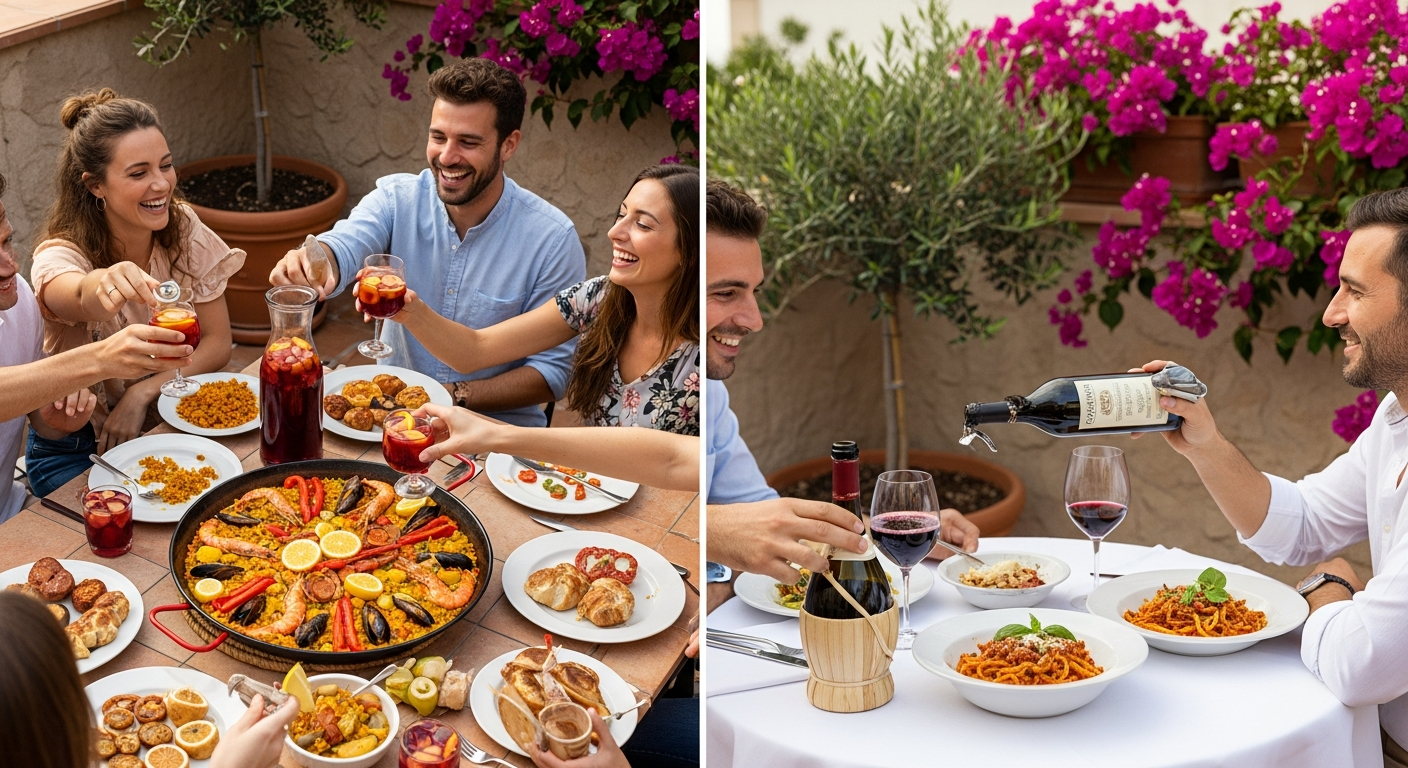
Two Mediterranean Dreams — One Decision
Spain and Italy are the two most popular Mediterranean destinations for foreign property buyers. Both promise sunshine, excellent food, beautiful coastlines, and a slower pace of life. Both deliver on that promise — but they deliver it in fundamentally different ways, at different price points, with different bureaucratic hurdles, and with different implications for your wallet, your lifestyle, and your long-term investment.
This is not a tourism brochure. This is a detailed, practical comparison based on real buying experiences, current tax law, actual market data, and the kind of ground-level knowledge that only comes from working with buyers in both countries. If you are choosing between Spain and Italy for your next property purchase, this guide will give you the information you need to make the right decision.
Price Comparison: What Your Money Buys
Property prices in both countries vary enormously by region, but some direct comparisons are useful.
Budget-Friendly Coastal: Costa Blanca vs Puglia and Calabria
Spain's Costa Blanca — particularly the southern stretch around Torrevieja, Orihuela Costa, and Guardamar — remains one of Europe's best-value coastal markets. A two-bedroom apartment within walking distance of the beach costs €90,000-€150,000. A three-bedroom villa with a private pool starts around €180,000-€280,000. These are well-maintained properties in established urbanisations with year-round communities.
Italy's equivalent bargain belt is Puglia (the heel of the boot) and Calabria (the toe). A renovated trullo in the Valle d'Itria costs €120,000-€200,000. A two-bedroom apartment in a Calabrian coastal town like Tropea or Pizzo runs €80,000-€140,000. Unrenovated masserie (farmhouses) in rural Puglia start as low as €50,000-€80,000 — but renovation costs of €80,000-€150,000 are typical, bringing total investment to €130,000-€230,000.
The verdict at this level: Spain generally offers better move-in-ready value. Italy can be cheaper for renovation projects, but the total cost often equalises once you factor in the work.
Premium Coastal: Costa del Sol vs Amalfi Coast and Sardinia
Marbella, Estepona, and Benahavís on the Costa del Sol attract serious money. A quality apartment costs €300,000-€600,000. Villas in golden-mile areas start at €800,000 and climb past €5 million. But the infrastructure is excellent: international schools, private hospitals, year-round restaurants and services, and a large established expat community.
The Amalfi Coast is a different proposition entirely. Properties here are scarce, old, and expensive. A small apartment in Positano or Ravello costs €400,000-€800,000. Detached villas with sea views exceed €1.5 million easily. Access is difficult — the famous SS163 road is not a daily commute route — and year-round living is genuinely challenging. Sardinia's Costa Smeralda is similarly premium: small apartments from €350,000, villas from €1 million upward.
The difference: Costa del Sol premium areas come with practical infrastructure for year-round living. Italian premium coastal areas tend to be holiday destinations first and living destinations second.
Island Living: Mallorca vs Sicily
Mallorca has transformed over the past decade from a package-holiday destination to a premium international market. Palma apartments cost €300,000-€600,000. Fincas in the Tramuntana mountains start at €500,000. The southwest coast commands €1 million plus. However, Mallorca's infrastructure, international school options, flight connections, and year-round community are genuinely world-class for an island.
Sicily remains dramatically cheaper. A renovated apartment in Cefalù or Syracuse costs €100,000-€200,000. A countryside house with land near Ragusa or Noto runs €150,000-€300,000. Even coastal villas rarely exceed €500,000 outside Taormina. The trade-off is infrastructure: fewer international schools, less reliable public services, more seasonal businesses, and a steeper cultural learning curve.
Tax Comparison: The Numbers That Matter
Annual Property Tax: IBI vs IMU
Spain's IBI (Impuesto sobre Bienes Inmuebles) is a municipal tax based on catastral value — typically well below market value. Annual IBI on a €200,000 property ranges from €300 to €800, depending on the municipality and when values were last revised.
Italy's IMU (Imposta Municipale Unica) is generally higher. It is calculated on the rendita catastale multiplied by a coefficient (typically 160 for residential), then multiplied by the municipal rate (0.76-1.06%). For a €200,000 property, expect €800-€1,800 per year. Crucially, IMU is not charged on your primary residence in Italy (prima casa) — a significant advantage if you plan to live there full-time. Spain's IBI applies regardless of residency status.
Buying Costs Comparison
| Cost Component | Spain (Resale) | Italy (Resale) |
|---|---|---|
| Transfer tax | 6-10% (ITP, varies by region) | 9% (imposta di registro) or 2% for prima casa |
| VAT (new build) | 10% + 1.5% stamp duty | 4% (prima casa) or 10% (second home) |
| Notary | €600-€1,200 | €1,500-€3,000 |
| Land Registry | €400-€700 | €200-€400 |
| Legal fees | €1,500-€3,000 | €2,000-€4,000 |
| Estate agent (buyer pays) | Usually nothing | 3-4% plus VAT |
| Total buying costs | 10-13% | 10-16% |
The critical difference: in Italy, buyers typically pay the estate agent's commission (3-4% plus 22% IVA), which does not happen in Spain. However, Italy's prima casa rate of 2% transfer tax (vs Spain's 6-10%) is a major advantage for those buying their primary residence.
Capital Gains Tax
Spain charges 19% capital gains tax for EU residents (with some allowances for inflation adjustment). If the property is your primary residence and you are over 65 or reinvest in another primary residence, you may be exempt. Non-EU residents pay 19% on the full gain.
Italy charges a flat 26% substitute tax on capital gains from property sold within five years of purchase. After five years, gains from selling your personal residence are exempt. You can also opt to include the gain in your regular income tax return, which might result in a lower rate depending on your total income.
Italy's €1 Houses: The Reality Check
Let us address the elephant in the room. Every few months, another Italian village makes international headlines by selling houses for €1. Sambuca di Sicilia, Mussomeli, Zungoli, Presicce — the list grows every year. The marketing is brilliant. The reality is more complicated.
What a €1 house actually means: you are buying a ruin in a depopulated village, typically in Sicily, Sardinia, or southern Italy. The purchase price is indeed €1, but the conditions are strict. Most programmes require you to deposit €1,000-€5,000 as a renovation guarantee. You must begin renovation within 12 months and complete it within three years. Renovation must meet local building standards and obtain proper permits. Minimum renovation spend is typically €15,000-€25,000, though realistic costs for a habitable property run €30,000-€80,000 depending on the property size and condition.
The practical challenges: these villages are remote, often without reliable public transport. Getting renovation permits in rural Italian municipalities can take 6-18 months. Finding reliable contractors is difficult — and supervising them from abroad is harder. Building materials may need to come from distant cities. Many properties have structural issues that only emerge during renovation. Previous buyers have reported total costs of €50,000-€120,000 to create a habitable home.
Is it worth it? For a small number of buyers — typically retirees with time, patience, and a genuine love of rural Italian village life — yes, these projects have produced charming homes at a fraction of the usual cost. For most foreign buyers expecting a straightforward property purchase, the €1 house programmes are better as media stories than as practical investment strategies.
Bureaucracy: Both Slow, But Differently
Both Spain and Italy have reputations for bureaucracy. Both reputations are earned. But the nature of the bureaucratic challenge differs significantly.
Spain's Bureaucracy
Spain's system is slow but increasingly digitalised. Getting your NIE (foreigner identification number) is the first hurdle — it takes 2-6 weeks and requires either a personal visit to a police station or consular appointment. Once you have it, the property purchase process is relatively straightforward: private contract, then completion at a notary, followed by registration at the Land Registry. The entire process typically takes 4-8 weeks from agreed price to keys.
Spanish town halls can be slow with building licences (3-12 months), and dealing with the tax office (Hacienda) requires patience. But the system is navigable, especially with a good gestoría (administrative agent). Many processes can now be handled online.
Italy's Bureaucracy
Italy's system is older, more paper-based, and involves more parties. You need a codice fiscale (tax code), which is relatively easy to obtain. The purchase process involves a proposta d'acquisto (offer), then a compromesso (preliminary contract), and finally the rogito (deed) before a notaio. Each stage has specific legal requirements and timelines.
The Italian notaio plays a larger role than a Spanish notary — they conduct due diligence, verify ownership, check liens, and ensure compliance with building regulations. This is both a blessing (more protection) and a burden (more time and cost). The process typically takes 2-4 months from agreed price to keys — longer than Spain.
Building permits and renovation approvals are notoriously slow in Italy, particularly in areas with historical protection designations (vincolo paesaggistico or beni culturali). Getting approval for even minor exterior changes to a property in a historic centre can take 6-18 months.
Climate: Sunshine Guaranteed?
Both countries are "Mediterranean," but the climate varies significantly by region.
Southern Spain (Costa del Sol, Costa Blanca) offers 300+ sunny days per year. Winters are mild: January averages 12-16°C on the coast. Rain is scarce — parts of Almería receive less than 200mm annually. Summer heat is intense: July and August regularly hit 35-40°C inland. Coastal areas benefit from sea breezes keeping temperatures 3-5°C lower.
Southern Italy (Puglia, Calabria, Sicily) has similar summer conditions but generally cooler, wetter winters. January averages 8-12°C on the coast. Rainfall is higher — 500-700mm annually vs 300-500mm in southern Spain. Sicily's interior can be surprisingly cold in winter. Northern Sardinia gets significant rainfall in autumn and winter.
If maximum sunshine and minimum rain are your priorities, southern Spain wins. If you prefer slightly more seasonal variation with a greener landscape, southern Italy delivers.
Healthcare: How Do They Compare?
Both countries have universal public healthcare systems that rank well internationally.
Spain's Sistema Nacional de Salud consistently ranks among Europe's top five healthcare systems. Registering for public healthcare is straightforward once you are a resident — you get a tarjeta sanitaria from your local centro de salud. Wait times for specialists vary by region (2-8 weeks) but urgent care is fast and free. Private healthcare is affordable: comprehensive policies cost €80-€200/month depending on age, with excellent private hospitals in all major coastal areas.
Italy's Servizio Sanitario Nazionale is also excellent, particularly in the north. Registration requires residency and involves enrolling with a medico di base (general practitioner). Wait times are the main complaint: specialist appointments through the public system can take 2-12 months, leading many Italians to use private healthcare for non-emergency care. Private insurance costs €100-€250/month. Quality varies significantly between regions — Lombardy and Emilia-Romagna are world-class, while some southern regions face chronic underfunding.
For retirees and year-round residents, both systems are good. Spain's system is somewhat more consistent across regions and easier to navigate for foreigners.
Cost of Living: Where Your Euro Goes Further
Both countries offer excellent value compared to Northern Europe, but the details differ.
| Expense | Spain (Southern Coast) | Italy (South) |
|---|---|---|
| Monthly groceries (couple) | €400-€550 | €350-€500 |
| Restaurant meal (2 people, mid-range) | €35-€55 | €40-€60 |
| Utilities (monthly, 85m² apartment) | €100-€180 | €120-€200 |
| Private health insurance (per person) | €80-€150 | €100-€200 |
| Petrol (per litre) | €1.50-€1.70 | €1.70-€1.90 |
| Internet (fibre, monthly) | €30-€45 | €25-€35 |
| Community fees (typical apartment) | €50-€150/month | €30-€100/month (condominio) |
Overall, southern Italy is marginally cheaper for groceries and dining, while Spain tends to be cheaper for utilities, fuel, and insurance. The differences are small enough that lifestyle choices matter more than country-level averages. A couple living comfortably in either southern Spain or southern Italy should budget €1,800-€2,800/month excluding mortgage or rent.
Rental Regulations and Yields
Spain: Tightening Fast
Spain's rental market has undergone dramatic regulatory changes since 2023. The Ley de Vivienda introduced rent controls in "stressed housing areas," limited deposit amounts, and gave tenants enhanced protections. Tourist rental licences (licencia turística) have been frozen in many municipalities — Barcelona has banned them in existing buildings entirely, and Valencia, Málaga, and the Balearics have introduced severe restrictions.
Gross rental yields on long-term lets: 4-7% on the coast, 3-5% in cities. Holiday rental yields can reach 8-12% gross where licences are available, but net yields after management, cleaning, taxes, and vacancy are typically 5-8%. The regulatory trend is clearly toward more restrictions on short-term lets.
Italy: More Complex, Less Regulated
Italy's rental market is less centrally regulated but more complex. There are two main contract types: canone libero (free market, minimum 4 years plus 4 renewal) and canone concordato (agreed rent, with tax advantages). Tourist lets require SCIA registration with the municipality and a CIR (Codice Identificativo Regionale).
Gross rental yields: 4-8% in tourist areas, 3-6% in cities. Sicily and Puglia offer some of the highest yields in southern Europe — a well-located apartment in Syracuse or Lecce can yield 6-8% gross on holiday lets. Italy has been slower to restrict short-term rentals than Spain, though Florence, Venice, and Rome have introduced local regulations.
Italy also offers the cedolare secca — a flat 21% tax on rental income (10% for concordato contracts) replacing the normal progressive income tax. This is a significant tax advantage for landlords.
Language and Culture: The Integration Factor
Both Spain and Italy have strong national cultures that newcomers must navigate, but the integration experience differs.
Spain's established expat communities, particularly on the costas, mean you can live comfortably with minimal Spanish — though we strongly recommend learning. Municipalities like San Fulgencio, Teulada, and Mijas have such large foreign populations that services and social life operate in multiple languages. The Spanish are generally welcoming to foreigners, and integration is relatively smooth even with basic language skills.
Italy has fewer established expat communities outside Tuscany and the Lake District. In Puglia, Calabria, and Sicily, English is far less widely spoken than on Spain's costas. Learning Italian is not optional — it is essential for daily life, dealing with bureaucracy, and building relationships with neighbours. The cultural rewards of integration in Italy are extraordinary, but the effort required is significantly greater.
Spanish is generally considered easier for English speakers to learn than Italian, though both are accessible Romance languages. Spanish has more regular pronunciation, while Italian grammar is slightly simpler.
Infrastructure: Getting Around and Getting Connected
Airports and Connectivity
Spain dominates for flight connections. Alicante-Elche and Málaga airports offer year-round flights to virtually every European city, with multiple daily connections on budget airlines. Palma de Mallorca is Europe's third-busiest airport in summer. Getting to southern Spain from anywhere in Europe takes 2-4 hours.
Southern Italy is less well-connected. Bari and Brindisi airports (for Puglia) have growing but still limited route networks, mainly seasonal. Catania and Palermo (Sicily) are better-connected but still behind Spanish equivalents. Lamezia Terme (Calabria) has limited international service. Budget airline options are fewer, and winter schedules thin significantly.
Roads and Public Transport
Spain's autopista network is excellent — modern, well-maintained toll and free motorways connect all major coastal areas. The AVE high-speed train connects major cities at 300km/h. Local bus services on the costas are functional if not glamorous.
Italy's autostrada system is good in the north but deteriorates heading south. Toll costs are higher than Spain's. The road from Salerno south to Calabria is notably poor compared to northern routes. Italy's train system is excellent in the north (Frecciarossa high-speed trains) but slower and less reliable south of Naples. Driving in Italian cities requires a certain temperament.
Internet and Digital Infrastructure
Both countries have invested heavily in fibre broadband. Spain's coverage is among the best in Europe — fibre reaches most towns on the costas. Italy's fibre rollout has been slower in rural southern areas, though major towns and cities are well-served. Both countries offer good 4G/5G mobile coverage in populated areas.
When to Choose Spain
Spain is the stronger choice when:
- You want move-in-ready property with lower hassle. Spain's coastal property market is more developed, more transparent, and easier to navigate for foreign buyers.
- You prioritise flight connections and ease of access. Getting to and from southern Spain is cheaper and easier than southern Italy.
- You want an established expat community. If having English-speaking neighbours, international clubs, and familiar services matters to you, Spain's costas are unmatched.
- You plan to rent as a holiday let. Despite tightening regulations, Spain's tourist infrastructure supports strong rental demand year-round in key locations.
- Maximum sunshine is a priority. Southern Spain is drier and sunnier than equivalent Italian locations.
- You want consistent, accessible healthcare. Spain's public system is excellent across all regions.
- You are buying as a pure investment. Spain's market is more liquid, with more buyers and sellers, making exit easier.
When to Choose Italy
Italy is the stronger choice when:
- You are buying a primary residence. Italy's prima casa tax benefits are substantial — 2% transfer tax vs Spain's 6-10%, plus IMU exemption.
- You love renovation projects. Italy offers extraordinary renovation opportunities — trulli, masserie, historic townhouses — at prices Spain cannot match.
- Culture and authenticity are your top priorities. Italy's artistic heritage, food culture, and regional diversity are arguably richer than Spain's.
- You are a serious food and wine enthusiast. Both countries are exceptional, but Italy's regional food traditions are unmatched in their depth and variety.
- You want to be immersed in local life, not an expat bubble. Italy's smaller foreign communities mean deeper integration with Italian neighbours and culture.
- Budget is king. Sicily and Calabria offer the lowest entry prices in the Western Mediterranean, with genuine potential for capital appreciation as these regions develop.
- You are a landlord seeking tax efficiency. The cedolare secca flat tax on rental income is a significant advantage over Spain's progressive taxation.
The Bottom Line
Spain and Italy are both extraordinary countries to own property in. The "right" choice depends entirely on what you value most. Spain is more practical: easier to buy, easier to access, easier to rent, easier to navigate. Italy is more romantic: deeper culture, more dramatic architecture, extraordinary food, and the kind of life experiences that practical countries struggle to deliver.
The good news is that neither choice is wrong. Both countries offer genuine lifestyle upgrades, solid property markets, and the kind of Mediterranean living that Northern Europeans dream about. The key is being honest with yourself about what you want — and then choosing the country that delivers it best.
If you are considering a purchase in either country, start with the numbers. Calculate total buying costs, annual running costs, and realistic rental income for specific properties in specific locations. The romance will take care of itself. The finances need your attention first.
Frequently Asked Questions
Price Comparison: What Your Money Buys?
Property prices in both countries vary enormously by region, but some direct comparisons are useful. Budget-Friendly Coastal: Costa Blanca vs Puglia and Calabria Spain's Costa Blanca — particularly the southern stretch around Torrevieja, Orihuela Costa, and Guardamar — remains one of Europe's best-value coastal markets. A two-bedroom apartment within walking distance of the beach costs €90,000-€150,000. A three-bedroom villa with a private pool starts around €180,000-€280,000. These are well-maintained properties in established urbanisations with year-round communities.
Italy's €1 Houses: The Reality Check?
Let us address the elephant in the room. Every few months, another Italian village makes international headlines by selling houses for €1. Sambuca di Sicilia, Mussomeli, Zungoli, Presicce — the list grows every year. The marketing is brilliant. The reality is more complicated. What a €1 house actually means: you are buying a ruin in a depopulated village, typically in Sicily, Sardinia, or southern Italy. The purchase price is indeed €1, but the conditions are strict. Most programmes require you to deposit €1,000-€5,000 as a renovation guarantee. You must begin renovation within 12 months and complete it within three years. Renovation must meet local building standards and obtain proper permits. Minimum renovation spend is typically €15,000-€25,000, though realistic costs for a habitable property run €30,000-€80,000 depending on the property size and condition.
Climate: Sunshine Guaranteed?
Both countries are "Mediterranean," but the climate varies significantly by region. Southern Spain (Costa del Sol, Costa Blanca) offers 300+ sunny days per year. Winters are mild: January averages 12-16°C on the coast. Rain is scarce — parts of Almería receive less than 200mm annually. Summer heat is intense: July and August regularly hit 35-40°C inland. Coastal areas benefit from sea breezes keeping temperatures 3-5°C lower.
Cost of Living: Where Your Euro Goes Further?
Both countries offer excellent value compared to Northern Europe, but the details differ. ExpenseSpain (Southern Coast)Italy (South) Monthly groceries (couple)€400-€550€350-€500 Restaurant meal (2 people, mid-range)€35-€55€40-€60 Utilities (monthly, 85m² apartment)€100-€180€120-€200 Private health insurance (per person)€80-€150€100-€200 Petrol (per litre)€1.50-€1.70€1.70-€1.90 Internet (fibre, monthly)€30-€45€25-€35 Community fees (typical apartment)€50-€150/month€30-€100/month (condominio)
Overall, southern Italy is marginally cheaper for groceries and dining, while Spain tends to be cheaper for utilities, fuel, and insurance. The differences are small enough that lifestyle choices matter more than country-level averages. A couple living comfortably in either southern Spain or southern Italy should budget €1,800-€2,800/month excluding mortgage or rent.
Language and Culture: The Integration Factor?
Both Spain and Italy have strong national cultures that newcomers must navigate, but the integration experience differs. Spain's established expat communities, particularly on the costas, mean you can live comfortably with minimal Spanish — though we strongly recommend learning. Municipalities like San Fulgencio, Teulada, and Mijas have such large foreign populations that services and social life operate in multiple languages. The Spanish are generally welcoming to foreigners, and integration is relatively smooth even with basic language skills.
Why Granfield Estate?
-
⚑
We live on the coast
Our team lives and works on the Costa Blanca. We know every neighbourhood, every street and the real prices — not from a catalogue, but from daily work on the ground.
-
⚖
In-house lawyer — 10+ years of experience
NIE, bank account, property check, contract, notary — legal support at every step. First consultation free.
-
🏠
Property management
Buying to rent? Our management company handles tenant search, maintenance and all questions.
-
🌐
We speak your language
English, Spanish, Russian, German, Finnish, Swedish and more. Licence RAICV 1663, member of Asivega.
Read also

Rental Investment in Guardamar del Segura: Why the Short-Term Rental Ban Is Actually an Advantage
30.03.2026
Guardamar del Segura is one of the few Costa Blanca towns where the municipality does not issue short-term rental licences. For investors this means stable income without seasonal gaps, and for those buying to live — peace and permanent neighbours instead of noisy tourists.

Apartments and Penthouses in Los Alcázares: Investment Guide
16.04.2026
Los Alcázares is one of the most promising property investment destinations on the Mar Menor coast. Apartments from €90,000, penthouses with terraces from €200,000, seasonal rental yields of 6-9%. We break down property types, real running costs and the best areas.

Rent vs Buy in Spain: Which Makes More Sense in 2026?
13.06.2026
A data-driven analysis of price-to-rent ratios, purchase costs versus accumulated rent, Spanish rental regulations, and tax implications to help you decide whether to rent or buy in Spain.