


Welcome to Spanish Bureaucracy: Don't Panic
If you are buying property in Spain, moving here permanently, or even just spending extended time as a resident, you will inevitably encounter the Spanish bureaucratic system. And you should know from the outset: it has a reputation. Expats, immigrants, and even Spanish citizens themselves will tell you that dealing with Spanish administration can be time-consuming, frustrating, circular, and occasionally bewildering. Documents get lost, offices send you to other offices, rules seem to change depending on who you ask, and processes that should take days can stretch into weeks or months.
But here is the counterbalancing truth: millions of people navigate this system successfully every year. It is not impossible — it is merely different from what Northern Europeans, Americans, or Britons are accustomed to. Understanding how the system works, knowing which tools and professionals are available to help, and approaching the process with the right mindset will transform your experience from adversarial to merely administrative. This guide covers the essential systems, documents, and strategies you need.
The Cita Previa System: Online Appointments for Everything
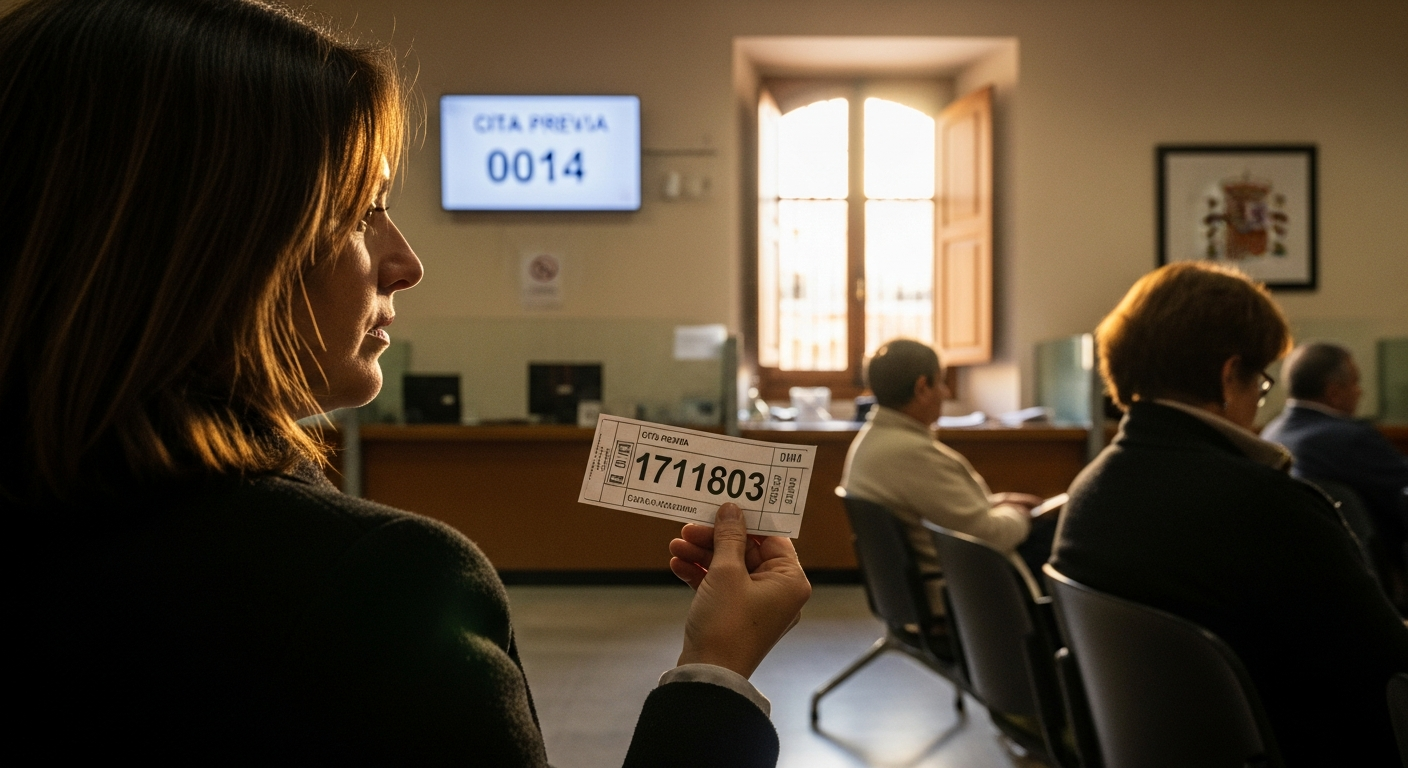
The cita previa (prior appointment) is the foundation of modern Spanish bureaucracy. Since the COVID-19 pandemic accelerated digitalisation, almost every interaction with government offices — from police stations to tax offices to Social Security — requires a pre-booked appointment. Walk-ins are rarely accepted, and arriving without a cita previa will almost certainly result in being turned away.
The system works through various online platforms depending on the institution:
- Policía Nacional (NIE, TIE): sede.administracionespublica.gob.es — notoriously difficult to get appointments in popular areas. Slots are released periodically and snapped up within minutes. Many expats use browser auto-refresh tools or check multiple times daily.
- Agencia Tributaria (tax office): sede.agenciatributaria.gob.es — for tax declarations, NIF assignment, and fiscal matters. Generally easier to book than police appointments.
- Seguridad Social: sede.seg-social.gob.es — for registering as self-employed (autónomo), social security numbers, and benefits. Can also be handled through their app.
- Ayuntamiento (town hall): Varies by municipality. Your local town hall website will have its own appointment system for padrón registration and other municipal matters.
- Servicio Público de Empleo (SEPE): Employment office. Appointments booked through their own website.
Pro tips for the cita previa system: try booking early in the morning (new slots often appear between 8:00 and 9:00), try different office locations (smaller towns often have better availability), and be persistent — if no appointments are available, keep checking daily as cancellations free up slots. Some processes can also be done entirely online if you have a digital certificate (see below).
Gestoría: Your Best Friend in Spain
A gestoría is a uniquely Spanish institution that has no exact equivalent in most Northern European countries. It is an administrative services office — staffed by qualified gestores administrativos — that specialises in handling bureaucratic procedures on your behalf. Gestorías manage tax filings, vehicle registrations, business formations, residence applications, social security registrations, and virtually any interaction with government that involves paperwork.
For expatriates, a good gestoría is arguably the single most valuable professional relationship you will establish in Spain. Here is what they do and when to use them:
- Tax declarations: Annual income tax (IRPF/Renta), non-resident tax (Modelo 210), property taxes, capital gains. Cost: €50-€150 per declaration depending on complexity.
- NIE and TIE applications: They prepare all documentation, make the appointment, and often accompany you. Cost: €80-€200.
- Padrón registration: Usually straightforward enough to do yourself, but gestorías handle it for €30-€60 if you prefer.
- Vehicle import and registration: Notoriously complex process. A gestoría is almost essential. Cost: €200-€400 plus official fees.
- Business formation: Setting up as autónomo or creating a company. Cost: €150-€500 depending on complexity.
- Social Security registration: Registering for the Spanish healthcare system (SIP card). Cost: €50-€100.
How to find a good gestoría: ask other expats in your area for recommendations, check Google reviews, ensure they have someone who speaks your language (many gestorías in expat areas have multilingual staff), and compare prices — there is genuine variation. A good gestoría will save you enormous amounts of time, stress, and potentially money by ensuring things are done correctly the first time.
Digital Certificate (Certificado Digital) and Cl@ve
The certificado digital is an electronic identity certificate that allows you to interact with Spanish government websites — filing taxes, checking your social security record, signing documents, downloading official certificates, and much more — all from your computer without visiting an office. Getting one is one of the most useful things you can do as a resident of Spain.
To obtain a digital certificate:
- Visit the FNMT (Fábrica Nacional de Moneda y Timbre) website at sede.fnmt.gob.es and request your certificate.
- You will receive a code by email.
- Take this code, along with your passport/NIE and original documents, to an authorised registration office (oficina de registro). Many town halls, tax offices, and Social Security offices can do this.
- Once your identity is verified in person, you can download and install the certificate on your computer.
- The certificate is valid for four years and can be renewed online before expiry.
Cl@ve is an alternative digital identification system that is simpler to set up but less powerful than the full digital certificate. Cl@ve PIN gives you temporary access codes (valid for minutes) sent to your phone, while Cl@ve Permanente gives you a password-based login for government services. Many everyday transactions can be done with Cl@ve, though some require the full digital certificate.
Our strong recommendation: get both. The digital certificate is more versatile and will eventually save you countless trips to government offices. Cl@ve is faster to set up and useful as a backup. Together, they give you maximum flexibility in dealing with Spanish administration online.
The Alphabet Soup: NIE, TIE, NIF, SIP, and Padrón
One of the most confusing aspects of Spanish bureaucracy for newcomers is the proliferation of identity numbers, cards, and registrations — each with its own acronym, its own application process, and its own purpose. Here is a clear breakdown:
NIE (Número de Identidad de Extranjero)
Your foreigner identity number. This is the single most important document for any non-Spanish person in Spain. You need a NIE to buy property, open a bank account, sign a rental contract, pay taxes, register a car, connect utilities, and virtually every other official or financial transaction. The NIE is a number — it does not expire, though the document confirming it may. EU citizens receive a green A4 certificate; non-EU citizens receive a card (TIE). Getting a NIE requires a cita previa at the Policía Nacional or the Oficina de Extranjería.
TIE (Tarjeta de Identidad de Extranjero)
The foreigner identity card. This is the physical card that non-EU citizens receive containing their NIE number, photo, and residence status. EU citizens technically receive a different document (the Certificado de Registro de Ciudadano de la UE) but the NIE number itself is the key element. The TIE must be renewed periodically depending on your visa/residence type.
NIF (Número de Identificación Fiscal)
Your tax identification number. For foreigners in Spain, your NIF is the same as your NIE — they are the same number used in different contexts. Spanish citizens use their DNI number as their NIF. You need this for all tax-related matters.
SIP Card (Tarjeta SIP)
Your health card for the public healthcare system. SIP stands for Sistema de Información Poblacional in the Valencian Community; other regions use the Tarjeta Sanitaria Individual (TSI). This card gives you access to your assigned doctor, specialist referrals, hospital care, and pharmacy discounts under the public health system. You register through your local health centre (Centro de Salud) after obtaining your padrón and social security number.
Padrón (Empadronamiento)
Municipal registration confirming where you live. Every person living in Spain — whether Spanish or foreign — is required to register on the padrón at their local town hall. This is not optional: it is a legal obligation. The padrón certificate is required for numerous other processes (healthcare registration, school enrolment, voting in local elections for EU citizens, certain tax benefits). Registration requires your passport/NIE, proof of address (rental contract, property deed, or utility bill), and sometimes a census form. The process is handled at your Ayuntamiento (town hall).
Notary and Property Registry (Registro de la Propiedad)
If you are buying property in Spain, two institutions will feature prominently in your transaction: the notary (notario) and the Property Registry (Registro de la Propiedad).
The notary in Spain has a more significant role than notaries in many other countries. The notario is a senior legal professional who supervises the signing of the escritura (title deed), verifies the identity of all parties, reads the deed aloud, ensures that taxes have been calculated correctly, and gives the transaction legal force. Attending the notary for the signing is the climactic moment of any property purchase in Spain — it is when ownership formally transfers.
After the notary signing, the escritura must be registered at the Registro de la Propiedad (Land Registry) within the relevant time period. Registration gives your ownership full legal protection against third-party claims. Your lawyer or gestoría will typically handle this registration, which takes 15-30 working days and involves paying the property transfer tax (ITP) or VAT (IVA) for new builds, plus the registration fee.
Key things to know:
- You can choose your own notary — you are not obligated to use one suggested by the seller or the estate agent.
- If you do not speak Spanish fluently, you have the right to have a sworn translator (traductor jurado) present at the signing.
- The notary fee is regulated by law and is the same regardless of which notary you choose — typically €600-€1,200 depending on the property value.
- Always request a copy of the escritura in advance (borrador) so your lawyer can review it before the signing day.
Tax Calendar: Key Dates and Forms
Spanish tax obligations follow a specific annual calendar. Missing deadlines can result in surcharges and penalties, so knowing the key dates is essential:
| Date / Period | Tax / Obligation | Details |
|---|---|---|
| January 1-20 | Modelo 303 (quarterly VAT) | Q4 of previous year. For autónomos and businesses. |
| January 1-31 | Modelo 210 (non-resident income tax) | Annual imputed income tax for non-residents who own property. |
| February | IBI (property tax) | Annual municipal property tax. Dates vary by municipality. Can be set up for direct debit. |
| April 1 - June 30 | Renta (IRPF, income tax) | Annual income tax declaration for residents. The main tax event of the year. |
| April 1-20 | Modelo 303 (quarterly VAT) | Q1. For autónomos and businesses. |
| July 1-20 | Modelo 303 (quarterly VAT) | Q2. For autónomos and businesses. |
| October 1-20 | Modelo 303 (quarterly VAT) | Q3. For autónomos and businesses. |
| December 31 | Modelo 720 (overseas assets) | Declaration of assets held outside Spain exceeding €50,000 (recently modified). |
For property owners who are not tax residents in Spain, the main obligation is the Modelo 210 — an annual declaration of imputed income from your Spanish property, even if you do not rent it out. If you do rent it out, quarterly or annual rental income declarations are required. A gestoría can handle all of this for you at reasonable cost.
Apostille and Document Legalisation
If you need to use foreign documents in Spain — birth certificates, marriage certificates, criminal record checks, educational qualifications, powers of attorney — they will generally need to be apostilled and, in many cases, officially translated by a sworn translator (traductor jurado).
The Hague Apostille is an international certification that authenticates documents for use in countries that are party to the Hague Convention (which includes Spain and most EU/EEA countries). The apostille is obtained from the designated authority in the country that issued the document — for example, the Foreign Office in the UK, the Ministry of Foreign Affairs in your home country, or specific courts or registries depending on the document type.
Key points:
- Apostilled documents from non-Spanish-speaking countries will also need a sworn translation (traducción jurada) into Spanish. Sworn translators are certified by the Spanish Ministry of Foreign Affairs.
- Some documents have expiry periods — criminal record checks, for example, are typically accepted only if less than 3-6 months old.
- Plan ahead: getting apostilles from your home country can take weeks, especially if done by post.
- For UK documents post-Brexit: the apostille process now goes through the Foreign, Commonwealth & Development Office (FCDO) legalisation service.
Practical Tips: Patience, Persistence, and a Smile
Beyond the specific systems and documents, here are battle-tested strategies from experienced expats for surviving and even thriving within Spanish bureaucracy:
- Bring everything: When going to any government office, bring originals and photocopies of every document you think might be relevant — and a few you think won't be. Spanish offices frequently request documents that were not listed in the requirements. Having them with you avoids a return trip.
- Bring your patience: Queues exist even with appointments. Systems go down. Staff take breaks. Accept this as part of the experience rather than an affront to your time. A book or podcast can make waiting productive.
- Be polite, even when frustrated: Spanish civil servants respond well to courtesy and poorly to impatience or aggression. A smile, a greeting ("Buenos días"), and a calm demeanour will get you further than demanding your rights. This is not weakness — it is strategy.
- Learn basic Spanish: Even a few phrases — "Tengo una cita previa" (I have an appointment), "¿Qué documentos necesito?" (What documents do I need?), "Gracias por su ayuda" (Thank you for your help) — show respect and smooth interactions enormously.
- Get a gestoría for anything complex: The cost of a gestoría is almost always less than the cost of your time, stress, and potential mistakes doing it yourself. Professional help is not a luxury in Spain — it is common sense.
- Keep copies of everything: Maintain a folder (physical and digital) with copies of every document, receipt, form, and certificate. Spanish bureaucracy has a habit of requesting documents you submitted months or years ago.
- Check requirements at the source: Before any appointment, check the specific office's website for their current document requirements. Requirements can vary between offices and change without notice.
- Consider timing: Avoid peak periods (September for NIE renewals, April-June for tax season). Monday mornings and Friday afternoons are often the busiest times at government offices.
- Use the Modelo 790 correctly: Many procedures require payment of a fee (tasa) using specific tax forms (Modelo 790, Código 012 for NIE, etc.). These must often be paid at a bank before your appointment. Your gestoría or the office website will specify the exact modelo and amount.
The Digital Transformation: It's Getting Better
It would be unfair to end this guide without acknowledging that Spanish bureaucracy has improved significantly in recent years. The digitalisation push — accelerated by the pandemic — means that many procedures that previously required multiple office visits can now be done online. The Sede Electrónica (electronic headquarters) of most government agencies offers increasingly comprehensive online services. The digital certificate and Cl@ve systems, while requiring initial setup effort, genuinely reduce the need for in-person visits once established.
Spain's bureaucracy will test your patience. That is almost guaranteed. But it will not defeat you — not if you approach it with preparation, professional help where needed, and the understanding that the system, for all its quirks, does ultimately work. Thousands of foreigners complete their NIE, padrón, tax filings, and property purchases every year without drama. You will join them. It just might take a little longer than you expected.
Frequently Asked Questions
The Cita Previa System: Online Appointments for Everything?
The cita previa (prior appointment) is the foundation of modern Spanish bureaucracy. Since the COVID-19 pandemic accelerated digitalisation, almost every interaction with government offices — from police stations to tax offices to Social Security — requires a pre-booked appointment. Walk-ins are rarely accepted, and arriving without a cita previa will almost certainly result in being turned away. The system works through various online platforms depending on the institution:
Gestoría: Your Best Friend in Spain?
A gestoría is a uniquely Spanish institution that has no exact equivalent in most Northern European countries. It is an administrative services office — staffed by qualified gestores administrativos — that specialises in handling bureaucratic procedures on your behalf. Gestorías manage tax filings, vehicle registrations, business formations, residence applications, social security registrations, and virtually any interaction with government that involves paperwork. For expatriates, a good gestoría is arguably the single most valuable professional relationship you will establish in Spain. Here is what they do and when to use them:
Digital Certificate (Certificado Digital) and Cl@ve?
The certificado digital is an electronic identity certificate that allows you to interact with Spanish government websites — filing taxes, checking your social security record, signing documents, downloading official certificates, and much more — all from your computer without visiting an office. Getting one is one of the most useful things you can do as a resident of Spain. To obtain a digital certificate:
The Alphabet Soup: NIE, TIE, NIF, SIP, and Padrón?
One of the most confusing aspects of Spanish bureaucracy for newcomers is the proliferation of identity numbers, cards, and registrations — each with its own acronym, its own application process, and its own purpose. Here is a clear breakdown: NIE (Número de Identidad de Extranjero) Your foreigner identity number. This is the single most important document for any non-Spanish person in Spain. You need a NIE to buy property, open a bank account, sign a rental contract, pay taxes, register a car, connect utilities, and virtually every other official or financial transaction. The NIE is a number — it does not expire, though the document confirming it may. EU citizens receive a green A4 certificate; non-EU citizens receive a card (TIE). Getting a NIE requires a cita previa at the Policía Nacional or the Oficina de Extranjería.
Notary and Property Registry (Registro de la Propiedad)?
If you are buying property in Spain, two institutions will feature prominently in your transaction: the notary (notario) and the Property Registry (Registro de la Propiedad). The notary in Spain has a more significant role than notaries in many other countries. The notario is a senior legal professional who supervises the signing of the escritura (title deed), verifies the identity of all parties, reads the deed aloud, ensures that taxes have been calculated correctly, and gives the transaction legal force. Attending the notary for the signing is the climactic moment of any property purchase in Spain — it is when ownership formally transfers.
Why Granfield Estate?
-
⚑
Office on the coast — we live here
Our office is in La Mata, Torrevieja. We know every neighbourhood, every street and the real prices — not from a catalogue, but from daily work on the ground.
-
⚖
In-house lawyer — 10+ years of experience
NIE, bank account, property check, contract, notary — legal support at every step. First consultation free.
-
🏠
Property management
Buying to rent? Our management company handles tenant search, maintenance and all questions.
-
🌐
We speak your language
English, Spanish, Russian, German, Finnish, Swedish and more. Licence RAICV 1663, member of Asivega.
Granfield Estate · Av. Bélgica 1, C.C. Parquemar, La Mata, 03188 Torrevieja · +34 865 44 33 33
Read also

Cost of Living in Spain 2026: Monthly Budget Breakdown
10.06.2026
What it really costs to live in Spain in 2026. Complete monthly budget breakdown for a couple: from €1,500 to €2,500 per month, comfortable but not luxury.

Healthcare in Spain for Foreigners: Complete Guide
12.06.2026
Spain has one of Europe's best healthcare systems. How to access public and private healthcare as a foreigner — EHIC, SIP card, convenio especial, and private insurance explained.

10 Best Beaches on Costa Blanca (and Property Nearby)
17.06.2026
From the golden dunes of Guardamar to the hidden cove of Granadella — the 10 best beaches on Costa Blanca, with Blue Flag status, crowd levels, facilities, and property prices within walking distance.