


Understanding Spanish Utilities: A Different System, A Different Approach
Moving to Spain means adapting to a utility system that works differently from what most northern Europeans, Americans, or Scandinavians are accustomed to. The electricity market has its own regulated tariff with time-of-use pricing. Water is municipal and priced in tiers. Gas might mean a butane cylinder delivered to your door rather than a piped supply. And internet — this is one area where Spain genuinely excels, with fibre-optic coverage that puts many supposedly more advanced countries to shame.
This guide covers every utility you will encounter as a property owner or resident in Spain. We include real costs from 2025-2026, compare providers objectively, and explain the setup process that catches many newcomers off guard. Whether you are relocating permanently, managing a holiday home from abroad, or preparing a rental property, understanding utilities is essential to managing your costs and your quality of life.
Electricity: The Most Complex Utility
Electricity in Spain deserves the most attention because it is the most complex, the most expensive relative to other utilities, and the one where informed decisions can save you the most money. The average Spanish household spends €50-€150 per month on electricity depending on the property size, consumption habits, and the tariff they have chosen. For foreign residents — particularly those coming from countries with different heating and cooling patterns — electricity can become the single largest utility expense.
The Two Markets: PVPC vs Free Market
Spain's electricity market is split into two fundamental options. Understanding this split is the first and most important decision you will make.
PVPC (Precio Voluntario para el Pequeño Consumidor): This is the regulated tariff set by the Spanish government. The price per kilowatt-hour changes every hour of every day based on wholesale market prices. You pay whatever the market rate is at the moment you consume electricity. This sounds risky, but over a full year, PVPC has historically been cheaper than most free-market contracts for disciplined consumers who can shift their consumption to off-peak hours. The PVPC tariff is only available through designated reference retailers (comercializadoras de referencia) — the main ones being Endesa Energía XXI, Iberdrola Comercializadora de Último Recurso, Naturgy Comercializadora de Último Recurso, and EDP Comercializadora de Último Recurso.
Free Market (Mercado Libre): Here you sign a contract with any electricity retailer at a fixed or semi-fixed rate per kWh. You get price certainty — you know what you will pay regardless of wholesale market fluctuations. The trade-off is that retailers build a margin into their fixed prices, so you typically pay more per kWh over the course of a year. However, the peace of mind and predictable billing appeals to many foreign residents. Providers include Endesa, Iberdrola, Naturgy, Repsol, Holaluz, Octopus Energy España, Factor Energía, and dozens of smaller companies.
Which should you choose? If you are living in the property full-time and can shift heavy consumption (washing machine, dishwasher, electric water heater) to off-peak hours, PVPC will almost certainly save you money — typically 10-20% over a year compared to average free-market contracts. If you want simplicity and predictable bills, or if you run a holiday rental where guests will use electricity whenever they please, a fixed-rate free-market contract gives you budgeting certainty.
The 2.0TD Tariff: Understanding Your Time Periods
Regardless of whether you choose PVPC or free market, all domestic electricity contracts in Spain now use the 2.0TD tariff structure. This tariff divides the day into three time periods with different prices, and understanding these periods is crucial to managing your electricity costs.
Punta (Peak): Monday to Friday, 10:00-14:00 and 18:00-22:00. This is the most expensive period. Electricity during peak hours can cost 50-100% more than during valley hours. Avoid running high-consumption appliances during these times if possible.
Llano (Flat/Shoulder): Monday to Friday, 08:00-10:00, 14:00-18:00, and 22:00-00:00. Mid-range pricing. Not as cheap as valley but significantly cheaper than peak.
Valle (Valley/Off-Peak): Monday to Friday, 00:00-08:00. All day Saturday, Sunday, and national holidays (24 hours). This is the cheapest period. Running your washing machine, dishwasher, and water heater during valley hours can reduce your electricity bill by 20-30%. If you have a swimming pool with a timer-controlled pump, set it to run during valley hours.
For a typical household, shifting just three appliance loads per day from peak to valley hours saves €15-€30 per month. Over a year, that is €180-€360 — real money for a simple behavioural change.
Potencia Contratada: Choosing Your Power Level
One of the most misunderstood aspects of Spanish electricity is the potencia contratada — your contracted power capacity, measured in kilowatts (kW). This determines how much power you can draw simultaneously before the ICP (automatic circuit breaker) trips and cuts your electricity. It also represents a significant fixed cost on your bill that you pay every month regardless of how much electricity you actually consume.
Under the 2.0TD tariff, you actually have two power levels: one for peak/shoulder periods (P1) and one for valley periods (P2). You can set these differently — for example, a lower power level during the day and a higher one at night when you might run more appliances simultaneously.
3.45 kW: The minimum level for most homes. Suitable for small apartments where you will not run multiple high-consumption appliances simultaneously. You can run an air conditioning unit, a fridge, lights, and a television, but adding a washing machine on a hot cycle or an electric oven might trip the breaker. Monthly fixed cost: approximately €12-€15 per power period.
4.6 kW: The most common level for apartments and smaller townhouses. Allows comfortable simultaneous use of air conditioning, washing machine, kitchen appliances, and general electronics. This is the sweet spot for most two-bedroom properties. Monthly fixed cost: approximately €16-€20 per power period.
5.75 kW: Recommended for larger properties, villas, and homes with electric water heaters or multiple air conditioning units running simultaneously. Essential if you have an electric hob or oven combined with other high-consumption appliances. Monthly fixed cost: approximately €20-€25 per power period.
6.9 kW and above: For large villas with pools (electric heat pump), multiple AC units, electric vehicle charging, and full electric kitchens. Monthly fixed cost: approximately €24-€30+ per power period.
Choosing too high a potencia means paying unnecessary fixed charges every month. Choosing too low means constant tripping of the breaker, which is infuriating and can damage electronic equipment. A common mistake among foreign buyers is accepting whatever power level the previous owner had without assessing their own needs. Review your first three months of bills and note whether the breaker ever trips. If it never trips and you have significant headroom, consider reducing your potencia — you can save €5-€15 per month on fixed charges alone.
Changing your potencia is straightforward but not instant. You request the change through your electricity provider, a technician visits to adjust the breaker, and the new rate takes effect within a few weeks. There may be a fee of €10-€50 depending on whether the change requires a physical visit or can be done remotely via smart meter.
Electricity Providers: A Practical Comparison
Endesa: Spain's largest electricity company, dominant in Catalonia, Andalusia, the Canaries, and the Balearics. Extensive customer service network with physical offices. English-language support is available but inconsistent. Online portal works well. Prices are mid-range on the free market. Their regulated arm (Endesa Energía XXI) offers PVPC.
Iberdrola: Second largest, dominant in the Levante (Valencia, Castellón, Alicante), Basque Country, and parts of central Spain. Strong online tools. Free-market prices competitive with Endesa. Their regulated arm offers PVPC. Known for aggressive upselling of additional services.
Naturgy (formerly Gas Natural Fenosa): Third largest, strong in Catalonia and Galicia. Often competitive on combined electricity-and-gas packages. Customer service quality has improved in recent years.
Repsol: The oil and gas company has become a serious electricity and gas retailer. Competitive pricing, often 5-10% below the big three. Their combined electricity-gas-fuel discount packages appeal to drivers. Online-first approach with good digital tools.
Holaluz: A Barcelona-based green energy company that has built a strong following among environmentally conscious consumers and expatriates. 100% renewable energy. Their English-language customer service is among the best in Spain. Slightly higher prices than the cheapest providers but transparent billing and good ethical credentials.
Octopus Energy España: The UK-based disruptor has entered the Spanish market with competitive pricing and excellent digital tools. Appeal particularly to British expatriates familiar with the brand. Innovative tariffs including some that reward flexible consumption.
Switching provider in Spain is free and straightforward. You contact the new provider, give them your CUPS code (the unique identifier for your supply point, found on any electricity bill), and they handle the switch. The process takes 2-3 weeks. There is no interruption in supply. Your old provider cannot block the switch. If you are on a contract with a minimum term, check for early exit fees — but most domestic contracts in Spain have no lock-in period.
Solar Panels: A Smart Investment in Spain
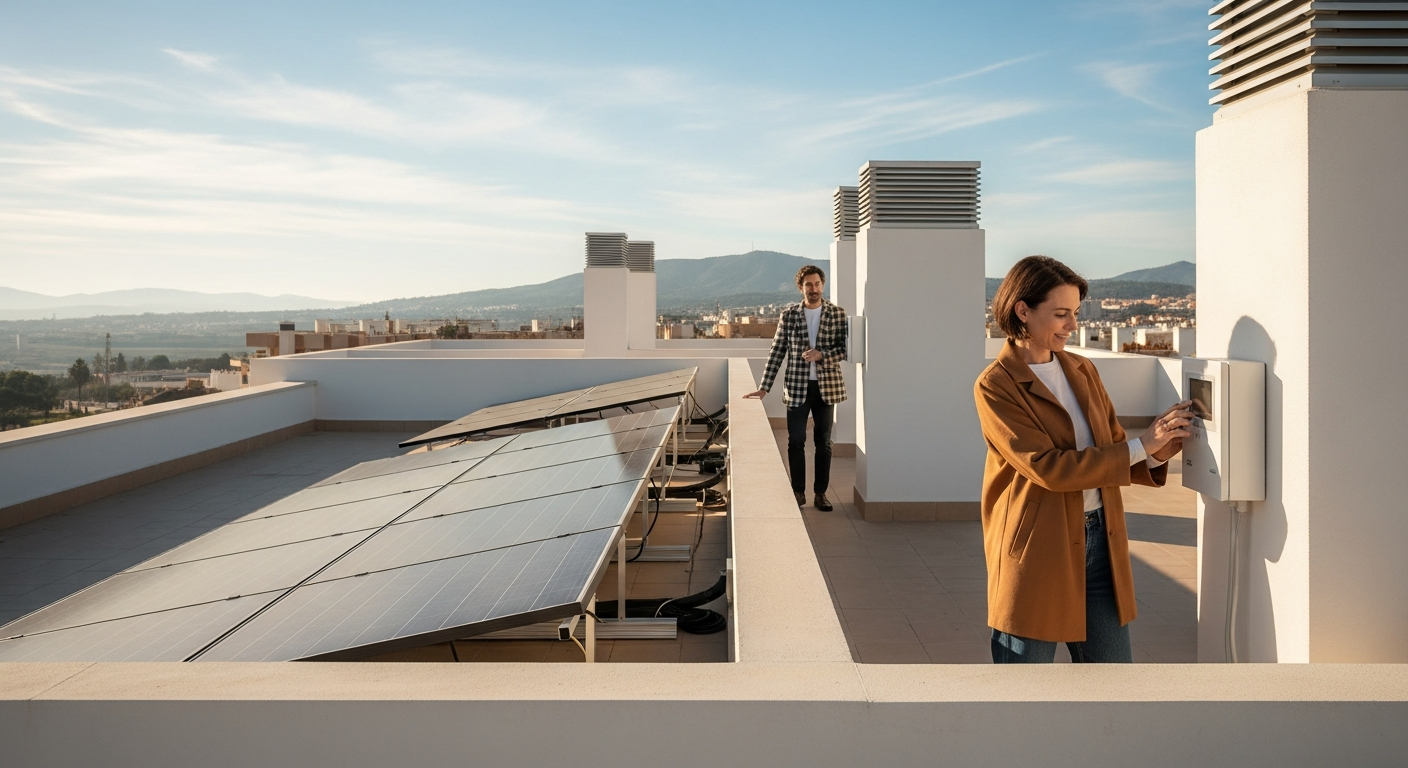
Spain's sunshine makes solar panels one of the best investments a property owner can make. After years of regulatory obstacles (the infamous "sun tax" that was abolished in 2018), Spain now actively encourages domestic solar installation through net metering, reduced VAT, and local tax incentives.
Costs: A typical domestic solar installation of 3-5 kW (suitable for a house or large apartment with roof access) costs €4,000-€8,000 including panels, inverter, installation, and paperwork. Prices have fallen significantly and continue to drop. Battery storage adds €3,000-€6,000 but is not essential if you have net metering and consume most electricity during daylight hours.
Return on investment: In southern and eastern Spain, a well-sized solar installation pays for itself in 5-7 years through reduced electricity bills and compensation for surplus energy fed back to the grid. After payback, you are generating essentially free electricity for the remaining 20+ years of the panels' productive life. Annual savings range from €600-€1,500 depending on system size, orientation, and consumption patterns.
Net metering (compensación de excedentes): Under Spain's current regulations, surplus electricity you feed back to the grid is compensated on your bill at the wholesale market rate. You cannot make money from your solar panels — the compensation can only reduce your bill to zero, not create a credit — but it effectively means your panels produce value even when you are not home. The compensation rate fluctuates with the market but averages €0.05-€0.08 per kWh.
IBI discounts: Many Spanish municipalities offer discounts of 25-50% on the IBI (property tax) for properties with solar installations. This discount typically lasts 3-5 years after installation and provides an additional financial incentive beyond the energy savings. Check with your town hall (ayuntamiento) for specific local incentives.
Community solar: For apartment owners who cannot install individual panels, community solar schemes are growing. The community of owners installs panels on the building's roof and shares the benefits among participants. This requires a vote at the annual community meeting and typically needs a three-fifths majority. If you are interested, propose it at the next junta de propietarios.
Water: Municipal and Tiered
Water in Spain is supplied by municipal water companies, which means prices, billing practices, and water quality vary by town and city. There is no national water market or choice of provider — you get whoever supplies your municipality.
Pricing Structure
Spanish water bills use tiered (block) pricing designed to encourage conservation. You pay a low rate for basic consumption, with the price per cubic metre increasing as you use more. A typical structure looks like this:
First block (0-6 m³ per quarter): Basic rate, often €0.30-€0.60 per m³. This covers essential domestic use for a small household.
Second block (6-15 m³): Standard rate, typically €0.80-€1.50 per m³. Normal household consumption for a family falls within this block.
Third block (15-25 m³): Elevated rate, often €1.50-€3.00 per m³. You enter this block if you have a garden, fill a pool, or have higher-than-average consumption.
Fourth block (25+ m³): Penalty rate, sometimes €3.00-€6.00 per m³. Designed to discourage excessive consumption. Villa owners with large gardens and pools can find themselves in this expensive tier during summer months.
Typical monthly costs for a standard household: €20-€50 per month for an apartment or townhouse. Villa owners with gardens and pools should budget €40-€80 per month, rising significantly in summer if irrigation is intensive. In water-stressed regions like Murcia, parts of Alicante, and the southeast generally, rates are higher and restrictions during drought periods are common and enforced.
Water bills also include sewerage charges (alcantarillado) and sometimes a waste water treatment levy. These are typically bundled into the water bill and add 30-50% to the base water cost.
Water Quality
Tap water in Spain is safe to drink in the vast majority of the country. It meets EU drinking water standards and is regularly tested. However, the taste varies dramatically by region. In many coastal areas, particularly along the southeast coast, tap water has a high mineral content and a noticeable taste of chlorine or minerals that many people find unpleasant.
In practice, many residents — Spanish and foreign alike — use bottled water for drinking and cooking, and tap water for everything else. A 5-litre bottle of water costs €0.50-€0.80 at the supermarket, and most families go through 2-4 per week. Alternatively, a domestic water filter (jug-style like Brita or an under-sink system) provides excellent drinking water from the tap. Under-sink reverse osmosis systems cost €200-€500 installed and provide virtually mineral-free water at a running cost of €30-€50 per year for filter replacements.
In northern Spain, inland areas, and many parts of Catalonia, tap water tastes perfectly fine and most residents drink it without any treatment.
Community Irrigation
If your property has a garden within an urbanisation, you may have access to community irrigation water (agua de riego) through a separate supply. This water comes from community wells or municipal irrigation networks and is significantly cheaper than mains drinking water — often a flat monthly fee of €10-€20 regardless of consumption. The water is not potable but is perfectly adequate for gardens, washing cars, and filling pools (though pool water should be properly treated regardless of source). Not all urbanisations have this — check before purchase, as it can save villa and townhouse owners hundreds of euros per year in garden watering costs.
Gas: Two Very Different Systems
Spain has two parallel gas systems and understanding which applies to your property is important for both daily convenience and budgeting.
Natural Gas (Gas Natural)
Piped natural gas is available in most Spanish cities and large towns but is far from universal. Many coastal urbanisations and rural areas have no gas network. Where available, natural gas is used primarily for heating, hot water, and cooking. It is generally the cheapest option for these purposes compared to electricity.
Monthly costs for a household using gas for hot water and cooking: €20-€40 per month. If gas central heating is also used (common in northern Spain and inland cities with cold winters): €40-€100 per month during winter, €15-€25 in summer. Annual average across the year: roughly €30-€60 per month.
The main providers mirror the electricity market: Naturgy (dominant), Endesa, Iberdrola, Repsol, TotalEnergies. As with electricity, you can switch gas provider freely by contacting your preferred company and providing your CUPS code. Gas contracts are separate from electricity — you do not need to use the same provider for both, though bundle discounts of 5-10% are common if you do.
Bottled Butane Gas (Bombona)
In areas without piped natural gas — which includes a huge proportion of coastal properties popular with foreign buyers — the alternative is bottled butane gas. The iconic orange butane cylinder (bombona) is a fixture of Spanish life. These 12.5 kg cylinders are used for cooking (gas hobs), hot water (gas water heaters/calentadores), and occasionally portable gas heaters.
The price of a bombona is regulated by the Spanish government and adjusted periodically. As of early 2026, a standard 12.5 kg butane cylinder costs approximately €15-€18. A typical household using gas only for cooking and hot water goes through one bombona every 4-6 weeks, making butane an extremely economical fuel source.
Delivery is handled by authorised distributors — you register your address with Repsol Butano (the dominant distributor) or Cepsa, and a delivery driver comes to your area on a regular schedule. You can call to request delivery, order online, or simply flag down the delivery truck when it passes through your neighbourhood playing its distinctive horn. Delivery is free. You exchange your empty cylinder for a full one and pay on the spot.
For properties that use gas heating extensively, the larger propane tanks (either buried underground or installed as large external cylinders) are available on rental contracts from Repsol, Cepsa, or Primagas. These tanks (50-1,000+ litres) are refilled by tanker truck periodically and are common for larger villas and country houses. Monthly rental for the tank is €5-€15 and propane costs approximately €1.00-€1.40 per litre.
Heating Options Compared
The choice of heating system significantly affects your winter comfort and costs in Spain. Despite the "sunny Spain" image, winters can be genuinely cold — particularly at night, in inland areas, at altitude, and across the entire northern half of the country.
Air conditioning reverse cycle (bomba de calor): The most common heating solution in coastal Spain. Modern split-unit air conditioners both cool in summer and heat in winter. They are highly energy efficient — a good unit produces 3-4 kW of heat for every 1 kW of electricity consumed (COP of 3-4). Running costs for heating a typical apartment: €40-€80 per month in winter. Disadvantage: the heated air can feel dry and the units can be noisy.
Natural gas central heating: Where available, this is the most comfortable and often the most economical option for whole-house heating. Radiators provide even, comfortable heat. Monthly costs: €50-€100 during the heating season (November-March in most areas).
Electric radiators: Convenient but expensive to run. Oil-filled electric radiators consume 1-2.5 kW each and produce only as much heat as the electricity consumed. Running two radiators for 8 hours daily costs €3-€6 per day at current electricity prices. Suitable for occasional use or supplementary heating, not as a primary heating system for the whole winter.
Pellet stoves and fireplaces: Growing in popularity in rural properties and villas. A pellet stove costs €1,500-€4,000 installed and burns wood pellets at approximately €4-€6 per 15 kg bag. A bag lasts 12-24 hours depending on the heat setting. Comfortable, atmospheric heat with reasonable running costs but requires storage space for pellets and regular maintenance.
Internet: Spain's Surprising Strength
If there is one area where Spain consistently surprises foreign residents, it is internet connectivity. Spain has invested heavily in fibre-optic infrastructure over the past decade, and the result is one of the best broadband networks in Europe. Over 90% of the Spanish population has access to fibre-to-the-home (FTTH) connections, and speeds of 300-1,000 Mbps are standard in most urban and suburban areas. This puts Spain ahead of Germany, the UK, and most of Scandinavia in fibre coverage.
Fibre Internet Providers
Movistar (Telefónica): The incumbent and largest provider. Owns the most extensive fibre network. Reliable service with good customer support (including English in major expat areas). Fibre packages start around €35-€40 per month for 300 Mbps and go up to €50-€60 for 1 Gbps. Movistar also offers the most comprehensive TV packages if that matters to you. The Movistar+ platform includes major Spanish channels, sports, and international content.
Orange: The second-largest provider with its own extensive fibre network. Competitive pricing at €30-€40 per month for fibre. Good English-language support online. Their combined fibre + mobile packages represent good value. Orange also owns Jazztel as a budget sub-brand.
Digi: The Romanian-origin disruptor that has transformed the Spanish broadband market. Digi offers fibre at €20-€25 per month for 300 Mbps — roughly half the price of Movistar or Orange for equivalent speed. Coverage is expanding rapidly but is not yet universal. Customer service is basic and primarily in Spanish. If Digi is available at your address and you do not need premium support, it is the best-value fibre provider in Spain.
MásMóvil / Yoigo: A growing provider with competitive pricing and its own fibre infrastructure. Packages from €25-€35 per month. Good for combined fibre + mobile deals. Customer service quality is middling.
Lowi: Vodafone's budget brand. Fibre packages from €25-€30 per month. Uses Vodafone's network infrastructure. Simple, no-frills approach. Online management only — no physical shops.
Vodafone: Solid network and service but typically the most expensive of the major providers. Fibre from €35-€45 per month. Good customer service infrastructure but increasingly pushing customers towards Lowi for basic packages.
For rural properties and areas without fibre, options include 4G/5G fixed wireless (Movistar, Orange, and others offer this at €30-€50/month with speeds of 30-100 Mbps), satellite internet (Starlink at approximately €45/month with €450 equipment cost — excellent for truly remote fincas), and ADSL (increasingly rare and being phased out, speeds of 10-20 Mbps).
Mobile Phone Packages
Most providers offer convergent packages combining fibre internet with one or more mobile phone lines. These represent the best value for households. A typical package includes 600 Mbps fibre + one mobile line with unlimited calls and 20-50 GB data for €35-€55 per month. Adding a second mobile line typically costs €5-€15 extra.
If you only need a mobile line, prepaid SIM cards from Digi (€3-€5/month for calls + data), Lycamobile, or Lebara provide affordable connectivity. For newcomers awaiting fibre installation, a mobile hotspot or 4G router with a data-heavy SIM card can bridge the gap effectively.
5G Coverage
Spain's 5G rollout is progressing steadily. Major cities — Madrid, Barcelona, Valencia, Seville, Malaga, Bilbao — have widespread 5G coverage from Movistar, Orange, and Vodafone. Coverage extends to many medium-sized cities and some coastal tourist areas. For most residential purposes, 5G is not a game-changer over existing fibre but it improves mobile connectivity significantly and provides a viable fixed-wireless alternative where fibre has not yet reached.
Television and Streaming
Traditional cable television has largely been replaced by streaming services and IPTV in Spain. The landscape is straightforward:
Free digital terrestrial television (TDT): Spain broadcasts approximately 30 free national television channels via digital terrestrial signal. These include La 1, La 2 (public broadcaster TVE), Antena 3, La Sexta, Telecinco, Cuatro, and various thematic channels. All content is in Spanish (Castilian), with regional channels available in Catalan, Basque, Galician, and Valencian depending on your location. Any television with a built-in digital tuner receives these channels with a simple antenna — no subscription needed.
Streaming services: Netflix (€5.49-€17.99/month), HBO Max (€4.49-€8.99/month), Amazon Prime Video (€4.99/month or included with Prime at €49.90/year), Disney+ (€5.99-€11.99/month), and DAZN for sports (€9.99-€24.99/month) are all available in Spain. Content is typically available in Spanish and original language with subtitles.
Foreign channels: British, German, Dutch, and Scandinavian residents often want access to their home country's television. A VPN service (€3-€8/month) allows access to BBC iPlayer, ITV Hub, ARD/ZDF, NPO, SVT Play, and other national streaming services. The legality of this is a grey area but it is widespread and universally practised. Satellite dishes can receive free-to-air foreign channels — a standard Sky dish can pick up UK Freesat channels on the Astra 2 satellite, though signal strength decreases in southern Spain.
Setting Up Utilities in a New Property
Whether you have bought a resale property or a new build, setting up utilities involves specific steps and documentation. The process varies depending on whether you are transferring existing contracts or setting up new ones.
Documents You Will Need
For all utility contracts, have the following ready:
- NIE (Número de Identidad de Extranjero) — your foreign identity number, essential for any contract in Spain
- Passport or national ID card
- Proof of property ownership (escritura) or rental contract
- Spanish bank account details (IBAN) for direct debit
- Previous owner's last bills (if available — these contain the CUPS code and contract details)
- Certificado de instalación eléctrica (electrical installation certificate) if setting up a new supply or if the existing certificate has expired (valid for 20 years)
Cambio de Titular vs Alta Nueva
Cambio de titular (change of account holder): This is the simpler process when taking over an existing utility supply. The meters and connections stay the same — only the name on the account changes. This is appropriate when buying a resale property where utilities are already connected and functioning. The process takes 5-7 business days and involves minimal paperwork. Cost: typically €0-€20 administrative fee per utility.
Alta nueva (new connection): Required when there is no existing supply — either in new-build properties or when a previous owner disconnected the supply. This process is longer and more expensive. Electricity alta nueva requires a boletín eléctrico (electrical certificate from a qualified installer), application to the distribution company, physical connection or reconnection, and meter installation. Timeline: 2-6 weeks. Cost: €200-€400 for electricity depending on the required potencia, €100-€200 for water, €100-€300 for gas.
If you are buying a property and the seller has already disconnected utilities, negotiate for them to reconnect before completion — or deduct the alta nueva costs from the purchase price. Reconnection is always more expensive and slower than a simple titular change.
Timeline for Setup
Be prepared for the following realistic timelines after completing your property purchase:
Electricity transfer: 5-7 business days for cambio de titular. The supply continues uninterrupted during the transfer.
Water transfer: Visit the municipal water company office in person (often required). Processing takes 3-10 business days.
Gas transfer: 5-10 business days for natural gas. For butane, simply register your address with the distributor — same-day setup.
Internet: Order online or by phone. Installation appointment typically within 5-15 business days, though this varies by area and provider. A technician visit is usually required for fibre, taking 1-2 hours.
In total, plan for 2-4 weeks to have all utilities fully operational after taking possession of a resale property. For a new build, add 4-8 weeks for initial connections.
Smart Home Energy Management
Given Spain's time-of-use electricity pricing, smart home technology offers genuine financial benefits — not just convenience.
Smart thermostats: A programmable or smart thermostat (Nest, Ecobee, Tado, or similar — €150-€300) allows you to schedule heating and cooling around the time-of-use tariff periods. Pre-cool your home during valley hours in summer and let the thermal mass carry through the expensive peak hours. Pre-heat during valley hours in winter. Savings: 15-25% on heating and cooling costs, paying for the thermostat in 6-12 months.
Smart plugs and timers: Program your water heater, pool pump, washing machine, and dishwasher to run during valley hours automatically. A set of smart plugs costs €30-€60 and the savings are immediate. Your pool pump running during valley hours instead of peak hours saves approximately €15-€25 per month in summer.
Energy monitoring: Devices like Shelly EM, Sense, or Emporia Vue (€100-€200) connect to your electrical panel and show real-time consumption by circuit. Understanding where your electricity goes is the first step to reducing waste. Many users discover that a poorly-insulated hot water tank or an old refrigerator accounts for 30-40% of their electricity bill.
Battery storage: For solar panel owners, a home battery (Tesla Powerwall, BYD, Huawei Luna — €3,000-€6,000 for 5-10 kWh) stores surplus solar energy for use during evening peak hours. The economics are improving but as of 2026, battery payback periods remain long (8-12 years) unless you have very high consumption or specific circumstances. For most domestic installations, net metering without a battery remains the better financial decision.
Cost Comparison: Spain vs Northern Europe
Understanding how Spanish utility costs compare to your home country helps set expectations and highlights where Spain offers genuine savings.
| Utility | Spain (monthly) | UK (monthly) | Germany (monthly) | Netherlands (monthly) | Sweden (monthly) |
|---|---|---|---|---|---|
| Electricity | €50-€150 | €80-€180 | €80-€200 | €70-€170 | €50-€130 |
| Gas/Heating | €15-€60 | €60-€150 | €80-€200 | €80-€200 | €60-€150 |
| Water | €20-€50 | €30-€50 | €25-€50 | €20-€45 | €25-€50 |
| Internet (fibre) | €20-€45 | €25-€55 | €30-€55 | €30-€55 | €25-€50 |
| Mobile (per line) | €5-€25 | €10-€35 | €15-€40 | €10-€30 | €10-€30 |
| Total typical | €130-€300 | €220-€440 | €250-€500 | €220-€470 | €180-€380 |
The differences are significant. A household moving from Germany or the Netherlands to Spain can expect to save €100-€200 per month on utilities — €1,200-€2,400 per year. The savings come primarily from lower heating costs (milder climate), cheaper internet and mobile services (competitive Spanish market), and lower water costs in most areas. Electricity per kWh is not dramatically cheaper in Spain, but total electricity costs are lower because air conditioning in summer costs less than heating in northern European winters.
The one exception is properties with swimming pools and large gardens in hot, dry areas. Water and electricity costs for pool operation can push summer utility bills above northern European levels. Budget accordingly and consider a pool cover, variable-speed pump, and solar heating to mitigate these costs.
Practical Tips for Managing Utility Costs
After helping thousands of foreign residents navigate Spanish utilities, these are the practical actions that make the biggest difference:
- Review your potencia contratada within three months of moving in. Do not pay for power capacity you do not need.
- Shift heavy appliance use to valley hours (nights and weekends). This single change can save €200-€400 per year.
- Compare electricity and gas providers annually. Use comparison websites like Selectra.es or Kelisto.es. Loyalty to a single provider is expensive.
- Install a water filter instead of buying bottled water. A family spending €5-€8 per week on bottled water saves €200-€350 per year after the initial filter investment.
- Consider solar panels if you own a villa or have roof access. With 5-7 year payback and 25-year panel life, this is one of the best investments available.
- Use a smart thermostat. Program your heating and cooling around the tariff periods. Pre-cool and pre-heat during valley hours.
- Check for IBI discounts. Solar panels, energy efficiency improvements, and large family (familia numerosa) status can all reduce your property tax.
- Register for the bono social if eligible. Low-income households, pensioners, and families in vulnerable situations qualify for a 25-40% discount on the PVPC electricity tariff.
- Keep your butane delivery registration active. Even if you barely use the gas hob, maintaining an active bombona account means you can get emergency delivery when needed — some areas have multi-day waits for new registrations.
Conclusion
Spanish utilities are not complicated once you understand the system, but they are different enough from most northern European countries to require active learning and initial effort. The electricity market rewards those who understand the tariff structure and adapt their behaviour to time-of-use pricing. Internet quality will pleasantly surprise most newcomers. Water and gas are straightforward. And the overall cost of utilities in Spain remains significantly lower than in most of the countries that supply Spain's foreign resident population.
Take the time during your first few months to optimise your utility setup — choose the right potencia, the right electricity contract, and the right internet provider. Invest in a smart thermostat and programme your appliances for valley hours. Consider solar panels if you have the roof space. These small decisions compound over the years into thousands of euros saved and a more comfortable daily life.
Frequently Asked Questions
Electricity: The Most Complex Utility?
Electricity in Spain deserves the most attention because it is the most complex, the most expensive relative to other utilities, and the one where informed decisions can save you the most money. The average Spanish household spends €50-€150 per month on electricity depending on the property size, consumption habits, and the tariff they have chosen. For foreign residents — particularly those coming from countries with different heating and cooling patterns — electricity can become the single largest utility expense. The Two Markets: PVPC vs Free Market Spain's electricity market is split into two fundamental options. Understanding this split is the first and most important decision you will make.
Gas: Two Very Different Systems?
Spain has two parallel gas systems and understanding which applies to your property is important for both daily convenience and budgeting. Natural Gas (Gas Natural) Piped natural gas is available in most Spanish cities and large towns but is far from universal. Many coastal urbanisations and rural areas have no gas network. Where available, natural gas is used primarily for heating, hot water, and cooking. It is generally the cheapest option for these purposes compared to electricity.
Television and Streaming?
Traditional cable television has largely been replaced by streaming services and IPTV in Spain. The landscape is straightforward: Free digital terrestrial television (TDT): Spain broadcasts approximately 30 free national television channels via digital terrestrial signal. These include La 1, La 2 (public broadcaster TVE), Antena 3, La Sexta, Telecinco, Cuatro, and various thematic channels. All content is in Spanish (Castilian), with regional channels available in Catalan, Basque, Galician, and Valencian depending on your location. Any television with a built-in digital tuner receives these channels with a simple antenna — no subscription needed.
Smart Home Energy Management?
Given Spain's time-of-use electricity pricing, smart home technology offers genuine financial benefits — not just convenience. Smart thermostats: A programmable or smart thermostat (Nest, Ecobee, Tado, or similar — €150-€300) allows you to schedule heating and cooling around the time-of-use tariff periods. Pre-cool your home during valley hours in summer and let the thermal mass carry through the expensive peak hours. Pre-heat during valley hours in winter. Savings: 15-25% on heating and cooling costs, paying for the thermostat in 6-12 months.
Practical Tips for Managing Utility Costs?
After helping thousands of foreign residents navigate Spanish utilities, these are the practical actions that make the biggest difference: Review your potencia contratada within three months of moving in. Do not pay for power capacity you do not need. Shift heavy appliance use to valley hours (nights and weekends). This single change can save €200-€400 per year. Compare electricity and gas providers annually. Use comparison websites like Selectra.es or Kelisto.es. Loyalty to a single provider is expensive. Install a water filter instead of buying bottled water. A family spending €5-€8 per week on bottled water saves €200-€350 per year after the initial filter investment. Consider solar panels if you own a villa or have roof access. With 5-7 year payback and 25-year panel life, this is one of the best investments available. Use a smart thermostat. Program your heating and cooling around the tariff periods. Pre-cool and pre-heat during valley...
Why Granfield Estate?
-
⚑
Office on the coast — we live here
Our office is in La Mata, Torrevieja. We know every neighbourhood, every street and the real prices — not from a catalogue, but from daily work on the ground.
-
⚖
In-house lawyer — 10+ years of experience
NIE, bank account, property check, contract, notary — legal support at every step. First consultation free.
-
🏠
Property management
Buying to rent? Our management company handles tenant search, maintenance and all questions.
-
🌐
We speak your language
English, Spanish, Russian, German, Finnish, Swedish and more. Licence RAICV 1663, member of Asivega.
Granfield Estate · Av. Bélgica 1, C.C. Parquemar, La Mata, 03188 Torrevieja · +34 865 44 33 33
Read also

Cost of Living in Spain 2026: Monthly Budget Breakdown
10.06.2026
What it really costs to live in Spain in 2026. Complete monthly budget breakdown for a couple: from €1,500 to €2,500 per month, comfortable but not luxury.

Healthcare in Spain for Foreigners: Complete Guide
12.06.2026
Spain has one of Europe's best healthcare systems. How to access public and private healthcare as a foreigner — EHIC, SIP card, convenio especial, and private insurance explained.

10 Best Beaches on Costa Blanca (and Property Nearby)
17.06.2026
From the golden dunes of Guardamar to the hidden cove of Granadella — the 10 best beaches on Costa Blanca, with Blue Flag status, crowd levels, facilities, and property prices within walking distance.