


Do You Need to Register Your Foreign Car in Spain?
If you are moving to Spain permanently — or spending more than 183 days per year here — you become a Spanish tax resident. Once that happens, you have six months from the date you establish residency to re-register any foreign-plated vehicle in Spain. This is not optional: driving with foreign plates as a resident is an infraction that can result in fines of €200 to €500, and your car can be immobilized by the Guardia Civil on the spot.
Non-residents visiting Spain can drive with their foreign plates without any issues, as long as the vehicle is legally registered and insured in their home country. However, once you cross the line into residency — whether by getting your NIE, registering on the padrón, or simply by exceeding the 183-day threshold — the clock starts ticking.
The process of registering a foreign car in Spain is called matriculación. It involves several steps, multiple government agencies, and a stack of paperwork. But thousands of expats complete it every year, and with this guide you will know exactly what to expect.
Step-by-Step: The Matriculación Process
Step 1: Get Your NIE Number
Your NIE (Número de Identidad de Extranjero) is the prerequisite for virtually everything in Spain — and registering a car is no exception. You cannot pay taxes, register at the DGT, or take out Spanish insurance without it.
If you do not already have an NIE, apply at your nearest Oficina de Extranjería or National Police station. You will need your passport, the EX-15 form, Tasa 790 código 012 (approximately €12), and a cita previa (appointment). Book early — appointments can be difficult to get in popular expat areas like the Costa Blanca and Costa del Sol.
EU citizens who plan to stay in Spain long-term should also obtain the Certificado de Registro de Ciudadano de la UE (the green registration certificate), which serves as proof of legal residency. Non-EU citizens will need their TIE (Tarjeta de Identidad de Extranjero) residency card.
Step 2: Empadronamiento (Municipal Registration)
You must be registered on the padrón at your local Ayuntamiento (town hall). The empadronamiento certificate proves your address in Spain, and the DGT will require it. If you have not already registered, bring your passport, NIE, and proof of your address (rental contract or property deed) to the town hall.
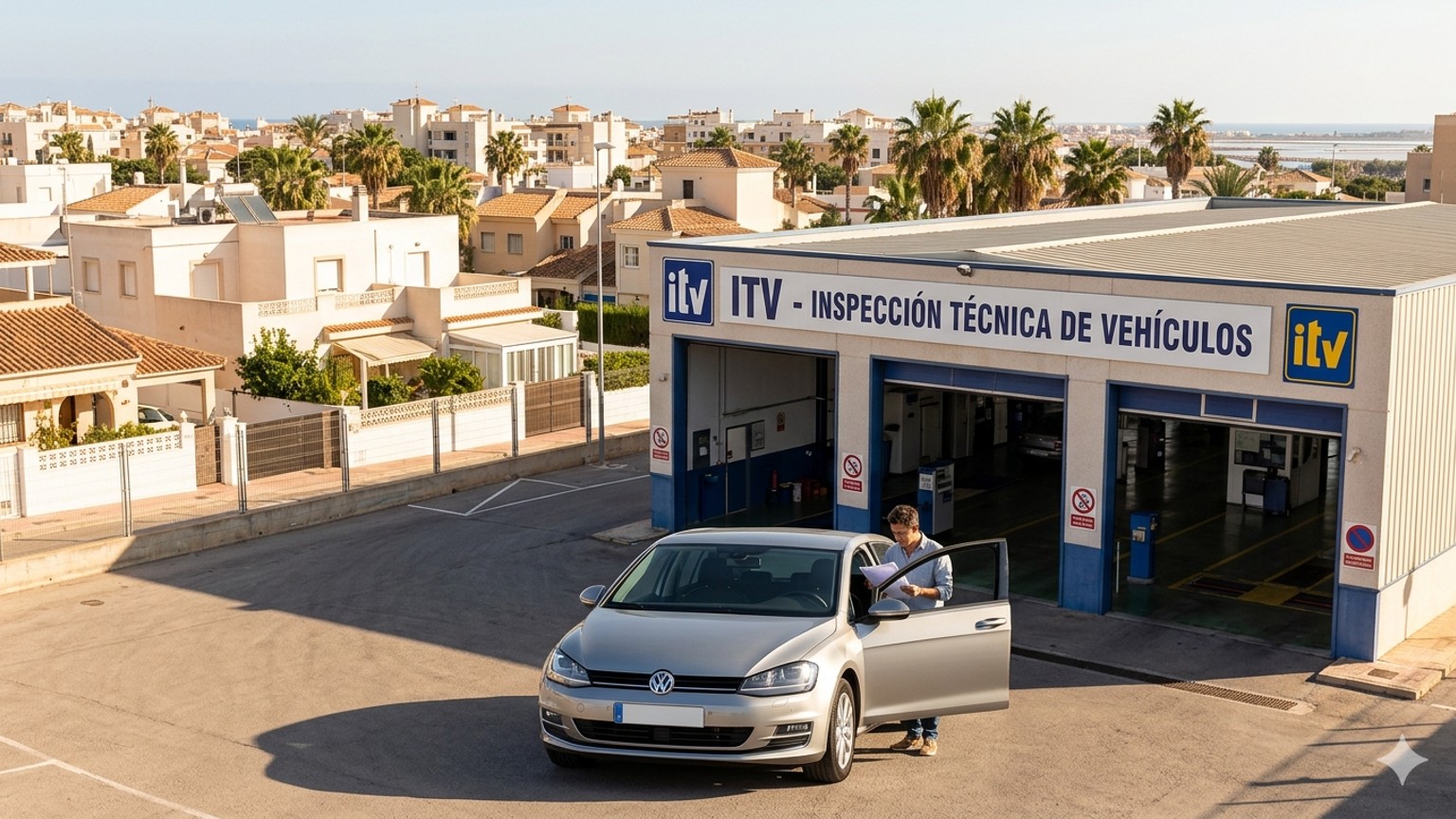
Step 3: ITV Inspection (Spanish MOT)
The ITV (Inspección Técnica de Vehículos) is Spain's equivalent of the MOT (UK), TÜV (Germany), APK (Netherlands), or Bilprovningen (Sweden). Every foreign vehicle must pass an ITV inspection before it can be registered in Spain.
Take your car to an authorized ITV station. There are both public and private stations throughout Spain. The inspection checks:
- Brakes, suspension, and steering
- Lights, indicators, and reflectors
- Exhaust emissions
- Tyres and wheels
- Chassis and bodywork condition
- Horn and windscreen wipers
- Seatbelts and mirrors
Cost: €30–50 depending on the region and vehicle type. If your car fails, you will be given a list of defects and typically have two months to fix them and return for a re-inspection (often at a reduced fee).
Tip: Make sure your headlights are properly adjusted for driving on the right side of the road before the inspection. Cars originally set up for left-hand traffic (UK, Ireland, Cyprus) will need headlight beam deflectors or realignment.
Step 4: Homologation (Technical Approval)
Homologation confirms that your car meets Spanish and EU technical standards. The process differs significantly depending on where your car was manufactured:
EU-registered vehicles: If your car was type-approved within the EU (which covers most cars bought in any EU country), you need a ficha técnica reducida — a simplified technical data sheet. This is issued by an ITV station or engineering laboratory based on your existing documentation (registration certificate, certificate of conformity). Cost: typically €0–200.
Non-EU vehicles: Cars imported from outside the EU (USA, Japan, Australia, etc.) require full homologation through the Ministerio de Industria. This can involve modifications to meet EU standards (headlights, emissions equipment, safety features) and is significantly more expensive — often €1,000–3,000 or more depending on the vehicle. In many cases, importing a non-EU car is so costly that it makes more sense to sell it and buy a car in Spain instead.
Step 5: Pay the Import Tax (Impuesto de Matriculación)
The Impuesto Especial sobre Determinados Medios de Transporte — commonly called the Impuesto de Matriculación — is a registration tax based on your vehicle's CO2 emissions. You pay it through Modelo 576 at the Agencia Tributaria (Spanish tax office).
The rates for 2026 are:
| CO2 Emissions (g/km) | Tax Rate |
|---|---|
| 0 g/km (electric vehicles) | 0% |
| Up to 120 g/km | 0% |
| 121–159 g/km | 4.75% |
| 160–199 g/km | 9.75% |
| 200+ g/km | 14.75% |
The tax is calculated on the vehicle's market value according to Hacienda's depreciation tables (based on the original list price minus a percentage for each year of age). For a typical family car with moderate emissions (under 120 g/km), you may owe nothing at all. For a larger petrol SUV, this tax can run into the thousands of euros.
Electric and hybrid vehicles: Fully electric cars (0 g/km) are exempt from this tax entirely. Plug-in hybrids with very low emissions may also qualify for the 0% band, making them particularly attractive to import.
Step 6: Pay the Transfer Tax (ITP)
The Impuesto de Transmisiones Patrimoniales (ITP) applies to the transfer of the vehicle. The rate is typically 4–8% depending on the autonomous community, calculated against the vehicle's value as per the Hacienda valuation tables. You pay this at your regional tax office (Oficina Liquidadora or through the online portal of your comunidad autónoma).
Note: Some regions have reduced or eliminated this tax for used vehicle imports. Check with your local tax office or a gestor for the specific rate in your area.
Step 7: Get Spanish Car Insurance
Before the DGT will issue Spanish plates, you need proof of valid Spanish car insurance. Your foreign insurance policy does not count — you must take out a policy from a Spanish insurer.
Major Spanish car insurance providers include:
- Línea Directa — popular with expats, online-focused, competitive prices
- Mapfre — Spain's largest insurer, extensive network
- Direct Seguros — online insurer with good value
- Pelayo, Mutua Madrileña, AXA — other well-known options
Coverage types:
- Terceros (third-party only) — the legal minimum, covers damage to others. Cheapest option, from around €200–350/year.
- Terceros ampliado (third-party fire and theft) — adds fire, theft, and windscreen cover. Around €300–500/year.
- Todo riesgo (fully comprehensive) — covers everything including damage to your own vehicle. From around €450–800/year depending on the car and driver profile.
No-claims bonus: Some Spanish insurers will recognize your no-claims history from abroad. Ask for a letter from your previous insurer confirming your claims-free years, and present it when requesting quotes. Línea Directa and Mapfre are known to accept foreign no-claims proof in many cases.
Step 8: DGT Registration — Getting Your Spanish Plates
The final step takes place at the Jefatura Provincial de Tráfico (your provincial DGT office). You will need a cita previa — book online at the DGT website (sede.dgt.gob.es).
Documents to bring:
- Passport and NIE/TIE
- Empadronamiento certificate
- Original foreign registration document (V5C, Fahrzeugbrief, kentekenbewijs, etc.)
- Certificate of deregistration from your home country (baja de vehículo)
- ITV inspection certificate (favorable result)
- Ficha técnica reducida or full homologation documents
- Proof of import tax payment (Modelo 576)
- Proof of ITP payment
- Spanish car insurance certificate
- DGT fee payment (Tasa DGT 1.1 — approximately €100)
- Completed application form (Solicitud de matriculación)
Once processed, you will receive your Spanish registration document (permiso de circulación) and a set of Spanish license plates. The plate number is assigned by the DGT — you do not choose it. Spanish plates use the format 1234 ABC and are valid for the life of the vehicle in Spain.
You will need to purchase the physical plates from an authorized plate maker (there are usually several near every DGT office). Cost: €20–40 for a pair.
Complete Cost Breakdown
Here is what you can expect to spend when registering a foreign car in Spain:
| Item | Cost |
|---|---|
| ITV inspection | €30–50 |
| Homologation (EU car) | €0–200 |
| Homologation (non-EU car) | €1,000–3,000+ |
| Import tax (Impuesto de Matriculación) | €0–3,000+ (depends on emissions) |
| Transfer tax (ITP) | 4–8% of vehicle value |
| DGT registration fee (Tasa 1.1) | €96–100 |
| License plates | €20–40 |
| Insurance (first year) | €300–600 |
| Gestor fee (optional, but recommended) | €200–400 |
| Total for typical EU car | €500–2,000 |
| Total for non-EU car | €2,000–6,000+ |
Using a gestor: A gestor administrativo is a licensed professional who handles bureaucratic procedures on your behalf. For €200–400, a gestor can manage the entire matriculación process — filling out forms, making appointments, paying taxes, and dealing with the DGT. For most expats, especially those whose Spanish is limited, a gestor is well worth the investment.
Right-Hand Drive Cars: Can You Register Them?
Yes, you can legally register a right-hand drive (RHD) vehicle in Spain. Spain does not prohibit RHD cars. However, there are practical considerations:
- Headlights must be adjusted — at a minimum, you need headlight beam deflectors or realignment so they do not dazzle oncoming traffic. The ITV station will check this.
- Visibility is reduced — overtaking on single-carriageway roads is significantly more dangerous in a RHD car on right-hand traffic roads.
- Toll booths, parking machines, and drive-throughs — all designed for the left side of the car. Inconvenient on a daily basis.
- Resale value is lower — when you eventually sell, fewer buyers will want a RHD car in Spain.
Many expats from the UK and Ireland choose to sell their car before moving and buy a left-hand drive vehicle in Spain instead. Unless your car has significant sentimental or financial value, this is usually the more practical option.
Buying a Car in Spain Instead
For many people, buying a car locally in Spain is simpler and cheaper than importing. Here is what you need to know:
New cars
Buying a new car from a dealer is straightforward. The dealer handles all registration and paperwork. You just need your NIE, empadronamiento, and a bank account. Prices for new cars in Spain are generally competitive within Europe.
Used cars (from a dealer)
Reputable used car dealers (concesionarios de segunda mano) handle the transfer paperwork for you. Prices are transparent and the dealer is legally liable for hidden defects for one year. Always check that the car has a valid ITV.
Used cars (private sale)
Private sales (compraventa entre particulares) require more caution:
- Draw up a contrato de compraventa (purchase contract) signed by both parties
- Check the DGT website for cargas (liens or encumbrances) on the vehicle — you can do this online with the license plate number
- Complete the transfer at the DGT (both buyer and seller, or via gestor with power of attorney)
- Pay the ITP (transfer tax) within 30 days
- Take out insurance before driving the car away
Spanish Driving Rules You Should Know
Traffic rules in Spain differ in some important ways from other European countries. Make sure you are aware of these:
- Reflective vest: You must carry a reflective vest inside the passenger compartment of the car (not in the boot/trunk), so you can put it on before exiting the vehicle in an emergency.
- Warning triangles: You must carry two warning triangles (although from 2026 a V-16 emergency beacon light is accepted as a replacement for placing triangles on the road).
- Speed limits: Urban areas 30–50 km/h, secondary roads 90 km/h, motorways (autopistas) 120 km/h. Speed cameras are widespread.
- Alcohol limit: 0.5 g/l blood alcohol (0.3 g/l for new drivers with less than 2 years experience). Lower than many countries.
- Mobile phone: Strictly prohibited while driving, even at traffic lights. Only fully hands-free systems are allowed.
- Zona Azul/Verde parking: Blue zones require paid parking (usually €0.50–2.00/hour). Green zones are often reserved for residents. Always check the signs — fines are swift.
- Roundabouts: You must signal when exiting a roundabout.
Annual Vehicle Tax (IVTM)
Once your car is registered in Spain, you will pay the Impuesto sobre Vehículos de Tracción Mecánica (IVTM) every year. This is a municipal tax collected by your Ayuntamiento, and the rate depends on your municipality and the vehicle's fiscal horsepower (caballos fiscales).
Typical annual costs:
- Small car (up to 8 fiscal HP): €25–70/year
- Medium car (8–12 fiscal HP): €60–150/year
- Larger car (12–16 fiscal HP): €130–250/year
- High-powered car (16+ fiscal HP): €200–400/year
Payment is usually due in spring (March–May) and most municipalities send out receipts or offer direct debit (domiciliación bancaria). If you miss the payment, surcharges apply — typically 5–20% depending on how late.
Electric and hybrid discount: Many municipalities offer a 50–75% reduction on IVTM for electric and plug-in hybrid vehicles. Check with your local Ayuntamiento.
ITV Schedule: When Inspections Are Due
After your initial ITV for the matriculación, your car will need periodic inspections according to this schedule:
- New vehicles: First ITV at 4 years from registration
- 4–10 years old: ITV every 2 years
- Over 10 years old: ITV every year
The inspection station will place a sticker on your windscreen showing the due date for your next ITV. Driving without a valid ITV is an infraction (fine of €200 for expired up to 3 months, €500+ if more than 3 months overdue) and your insurance may not cover you in case of an accident.
Deregistering Your Car in Your Home Country
Before or during the Spanish registration process, you must deregister the vehicle in your home country. This is important both legally and practically — you should not have the same car registered in two countries simultaneously.
The process varies by country, but generally involves notifying the national vehicle registry and surrendering or invalidating your old plates:
- UK: Notify the DVLA using the V5C/4 section (export notification). You can do this online.
- Germany: Deregister at the Zulassungsstelle with your Fahrzeugbrief (Zulassungsbescheinigung Teil II) and Kennzeichen (plates).
- Netherlands: Export the vehicle through the RDW (Rijksdienst voor het Wegverkeer) and return or invalidate the kentekenbewijs.
- France: Apply for a certificat de cession and déclaration d'exportation through the ANTS (Agence Nationale des Titres Sécurisés).
- Sweden: Notify Transportstyrelsen and deregister via their online service.
- Norway: Deregister at Statens vegvesen.
- Finland: Notify Traficom (Finnish Transport and Communications Agency).
- Poland: Deregister at the local Starostwo Powiatowe, notifying the CEPiK database.
Keep the deregistration certificate — the DGT will require it.
Common Mistakes to Avoid
Learning from other expats' errors can save you time, money, and stress:
- Driving too long on foreign plates: The 6-month rule is strictly enforced. The Guardia Civil conducts regular checks, especially in popular expat areas. Fines start at €200 and your car can be immobilized.
- Not cancelling foreign insurance: Remember to cancel your home country policy once you have Spanish insurance. Otherwise you are paying double.
- Forgetting the IVTM: The annual municipal road tax does not arrive automatically for newly registered vehicles. Visit your Ayuntamiento to set up payment or direct debit.
- Ignoring parking fines on foreign plates: Spain has agreements with most EU countries for cross-border fine enforcement. Unpaid fines may follow you home or cause problems when you try to register.
- Not getting the deregistration certificate: Without proof of deregistration from your home country, the DGT may refuse to process your application.
- Trying to do everything without a gestor: While possible to do yourself, the bureaucracy is complex and almost entirely in Spanish. A gestor costs €200–400 and handles everything — a worthwhile investment for most expats.
- Not checking CO2 emissions first: Before committing to import, check your car's emissions. A high-emission vehicle could cost thousands in import tax alone, making it cheaper to sell and buy locally.
Timeline: How Long Does It Take?
If you have all your documents ready and use a gestor, the typical timeline is:
- ITV inspection: 1 day (book in advance)
- Homologation / ficha técnica: 1–2 weeks
- Tax payments: 1–3 days
- DGT appointment and registration: 1–2 weeks (depending on appointment availability)
- Total: 3–6 weeks from start to Spanish plates on your car
Allow extra time during summer months (June–September) when DGT offices are busiest, and in January when appointments fill up after the holiday backlog.
Is It Worth Importing Your Car?
The honest answer depends on your specific situation:
Import makes sense when:
- Your car is relatively new, low-emission, and in good condition
- It is a left-hand drive EU vehicle (simplest process)
- The car has significant value (luxury or specialty vehicle)
- You have an emotional attachment to the car
Buying in Spain makes more sense when:
- Your car is old, high-emission, or right-hand drive
- The import tax bill would be substantial
- The car is not worth the hassle and cost of the process
- You want to start fresh with a vehicle suited to Spanish conditions
Do the maths before you decide. Get quotes on the import tax, ITP, and homologation costs. Compare that total against selling your car at home and buying an equivalent in Spain. In many cases — especially for older cars or high-emission vehicles — buying locally is the smarter financial choice.
Why Granfield Estate?
-
⚑
We live on the coast
Our team lives and works on the Costa Blanca. We know every neighbourhood, every street and the real prices — not from a catalogue, but from daily work on the ground.
-
⚖
In-house lawyer — 10+ years of experience
NIE, bank account, property check, contract, notary — legal support at every step. First consultation free.
-
🏠
Property management
Buying to rent? Our management company handles tenant search, maintenance and all questions.
-
🌐
We speak your language
English, Spanish, Russian, German, Finnish, Swedish and more. Licence RAICV 1663, member of Asivega.
Read also

Cost of Living in Spain 2026: Monthly Budget Breakdown
10.06.2026
What it really costs to live in Spain in 2026. Complete monthly budget breakdown for a couple: from €1,500 to €2,500 per month, comfortable but not luxury.

Healthcare in Spain for Foreigners: Complete Guide
12.06.2026
Spain has one of Europe's best healthcare systems. How to access public and private healthcare as a foreigner — EHIC, SIP card, convenio especial, and private insurance explained.

10 Best Beaches on Costa Blanca (and Property Nearby)
17.06.2026
From the golden dunes of Guardamar to the hidden cove of Granadella — the 10 best beaches on Costa Blanca, with Blue Flag status, crowd levels, facilities, and property prices within walking distance.