


Retirement in Spain: The Complete Guide for European Pensioners
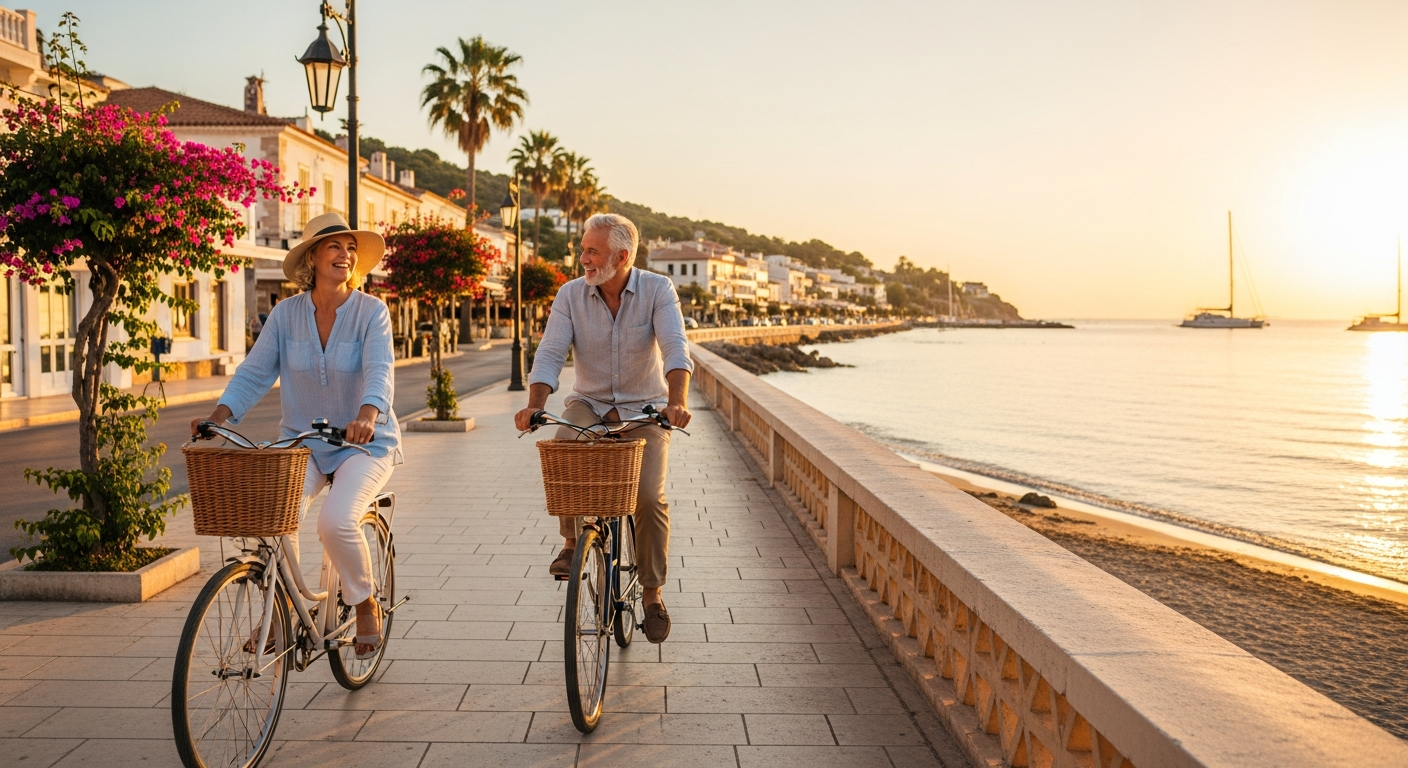
Why Spain Is Europe's #1 Retirement Destination
Every year, hundreds of thousands of European pensioners make the same decision: sell up, pack the essentials, and move south. Spain has been the top retirement destination for Europeans for decades, and in 2026 it shows no sign of changing. The reasons are obvious to anyone who's visited — but the practicalities of actually doing it are less so.
This guide is specifically for European pensioners. Not digital nomads, not investors, not young families. If you're retired or approaching retirement and considering Spain, this covers everything: how your pension works across borders, which country taxes you, how to access healthcare, where to live, and what it actually costs.
The Numbers
An estimated 500,000+ British retirees live in Spain (many pre-Brexit), alongside 200,000+ Germans, 100,000+ Scandinavians, and tens of thousands of Dutch, French, Belgian, and other European pensioners. The Alicante province alone has more foreign residents over 65 than many European cities have total residents.
Why? Three hundred days of sunshine per year. A cost of living 40-60% lower than Northern Europe. Excellent healthcare. Good food. A relaxed pace of life. And crucially — a well-established infrastructure of expat communities that means you don't have to do it alone.
Healthcare for Pensioners in Spain
This is the number one concern for retirees, and rightly so. The good news: Spain's healthcare system is ranked among the best in Europe. The question is how you access it.
The S1 Form: Your Key to Spanish Public Healthcare
If you're an EU/EEA state pensioner, the S1 form (formerly E121) is your most important document. It's issued by the country that pays your pension and tells Spain: "We'll pay for this person's healthcare." You register it with your local INSS (Instituto Nacional de la Seguridad Social) office in Spain, and you get a Spanish health card (tarjeta sanitaria) giving you full access to the public system.
How it works:
- Request the S1 from your home country's pension/health authority before you move
- Register at your local health centre (centro de salud) in Spain with your S1, NIE, empadronamiento, and passport
- You'll be assigned a GP (médico de cabecera) and can access the full public health system
- Your home country reimburses Spain for your healthcare costs — you pay nothing
Important: The S1 only works if you receive a state pension. If you retired early and don't yet receive a state pension, you may need private insurance until your pension starts.
Convenio Especial: Paying Into the Spanish System
If you don't qualify for an S1 (for example, you're not yet receiving a state pension, or you're from a country without an S1 agreement), Spain offers the convenio especial — a voluntary subscription to the public health system. As of 2026, it costs approximately €60/month for those under 65 and €157/month for those 65 and over. This gives you full access to the public system.
Private Healthcare
Many retirees combine public healthcare with a private policy. Private insurance in Spain costs €50-200/month depending on age and coverage. Companies like Sanitas, Adeslas, and Asisa are the main providers. Benefits: shorter waiting times for specialists, English-speaking doctors in expat areas, and private hospital rooms. One warning: private health insurance becomes significantly more expensive after age 70, and some insurers won't take new clients over 75.
Pension Taxation: Which Country Taxes You?
This is where it gets complicated — and where getting professional advice is essential. The basic principle:
The General Rule
If you become a tax resident in Spain (living there more than 183 days per year), Spain has the right to tax your worldwide income. However, double taxation treaties between Spain and your home country prevent you from being taxed twice on the same income.
Government vs. Private Pensions
Most double taxation treaties make a crucial distinction:
- Government/civil service pensions: Usually taxed ONLY in the country that pays them. If you were a teacher, police officer, or civil servant, your pension is typically taxed in your home country, not Spain.
- Private/occupational pensions: Usually taxed ONLY in your country of residence — which means Spain, if you live there full-time.
- State old-age pensions: The rules vary by treaty. In many cases, state pensions are taxed in the country of residence (Spain), but some treaties assign taxation to the paying country.
Critical point: Every country's treaty with Spain is different. A German civil service pension is treated differently from a Dutch AOW pension, which is treated differently from a Swedish state pension. You MUST check the specific treaty between your country and Spain.
Spanish Income Tax for Pensioners
Spain's income tax (IRPF) is progressive:
| Taxable Income | Tax Rate |
|---|---|
| Up to €12,450 | 19% |
| €12,450 - €20,200 | 24% |
| €20,200 - €35,200 | 30% |
| €35,200 - €60,000 | 37% |
| €60,000 - €300,000 | 45% |
| Over €300,000 | 47% |
However, personal allowances reduce the taxable amount. For those over 65, there's an additional allowance of €1,150. For those over 75, it's €1,400 extra. Combined with the general personal allowance of €5,550, a single pensioner over 65 has at least €6,700 tax-free.
Advice: Hire a fiscal advisor (asesor fiscal) in Spain who specialises in expatriate taxation. This is not optional — it's essential. Expect to pay €200-500 for annual tax preparation. The cost is trivial compared to the mistakes you'll make doing it yourself.
Best Areas for Retirees
Not every part of Spain suits retirees equally. The best retirement spots combine affordable living, good healthcare access, established expat communities, mild winters, and practical amenities. Here are the top choices:
Torrevieja and Orihuela Costa (Alicante Province)
The undisputed capital of European retirement in Spain. Torrevieja and the surrounding Orihuela Costa area (La Zenia, Villamartín, Playa Flamenca, Cabo Roig) have the highest concentration of retired Europeans in the country. Reasons: very affordable property (apartments from €80,000-120,000), salt lakes said to have health benefits, multiple international health clinics, supermarkets stocking northern European products, and a massive established community. English, German, and Scandinavian languages are widely spoken. The downside: in peak areas it can feel more like a British or Scandinavian enclave than Spain. If you want authentic Spanish culture, you'll need to look slightly inland.
Benidorm
Don't dismiss it. Beyond the tower blocks and package tourists, Benidorm has a thriving retiree community. The advantages: superb public transport (including the TRAM system to Alicante), a hospital, flat promenades perfect for walking, a mild microclimate protected by mountains, entertainment year-round, and property that ranges from budget apartments (€90,000) to luxury beachfront (€300,000+). Many pensioners come for a winter stay and end up moving permanently.
Fuengirola and Benalmádena (Costa del Sol)
The Costa del Sol's retirement heartland. Fuengirola has a large Scandinavian, British, and Finnish community. The Malaga region offers excellent healthcare (major university hospital), an international airport with year-round connections, and a slightly warmer winter climate than the Costa Blanca. Property is somewhat more expensive than Torrevieja but still very affordable by Northern European standards — two-bedroom apartments from €150,000.
Jávea (Xàbia)
A more upmarket retirement choice. Jávea attracts retirees with larger budgets who want a quieter, more refined environment. Beautiful scenery, excellent restaurants, a cultured international community, and lower density development. Property starts around €200,000 for apartments, with villas from €350,000. Less "mass tourism" feel, more "Mediterranean village life." The trade-off: fewer budget amenities and further from a major airport (Alicante is 90 minutes).
Other Popular Spots
Calpe, Moraira, Altea (Costa Blanca North — quieter, more Spanish); Nerja, Mijas, Estepona (Costa del Sol — varied character); Mazarrón, Águilas (Costa Cálida — very affordable, less developed expat infrastructure).
Cost of Living on a Pension
The critical question: can you live well in Spain on a European pension? For most northern European pensioners, the answer is a comfortable yes.
Monthly Budget for a Retired Couple (2026)
| Expense | Budget (€) | Comfortable (€) | Premium (€) |
|---|---|---|---|
| Rent / mortgage | 500 | 700 | 1,000 |
| Groceries | 300 | 400 | 500 |
| Eating out / entertainment | 150 | 300 | 500 |
| Utilities (electricity, water, internet) | 180 | 250 | 350 |
| Healthcare (private top-up) | 0 | 120 | 250 |
| Transport (car + fuel) | 100 | 200 | 300 |
| Miscellaneous | 100 | 200 | 300 |
| TOTAL | 1,330 | 2,170 | 3,200 |
If you own your property outright (as many retirees do after selling a home in Northern Europe), deduct the rent line and a couple living in the Costa Blanca can live well on €1,200-1,500/month.
Spain vs Northern Europe: Retirement Cost Comparison
| Expense (monthly, couple) | Spain (coast) | Northern Europe | Saving |
|---|---|---|---|
| Rent (2-bed apartment) | €500-800 | €1,200-2,000 | 50-60% |
| Groceries | €300-400 | €500-800 | 40-50% |
| Dining out (per meal for two) | €25-40 | €70-120 | 60-70% |
| Beer in a bar | €2-3 | €6-9 | 65-70% |
| Private healthcare | €50-150/person | Included in tax/€200+ | Varies |
| Heating costs (annual) | €200-400 | €1,500-3,000 | 80-85% |
Social Life: You Won't Be Alone
One of the biggest fears about retiring abroad is isolation. In Spain's popular retirement areas, this is genuinely not a problem — if you make even minimal effort.
Clubs and Associations
Every major retirement area has clubs for walking, golf, bowling, bridge, book clubs, art classes, photography, wine tasting, and more. Many are nationality-specific (Scandinavian clubs, British social clubs, German Stammtisch groups) and others are international. The Royal British Legion, International Women's Clubs, Lions Clubs, and Rotary all have active branches on the costas.
Churches and Community Groups
Anglican, Catholic, Scandinavian Lutheran, and non-denominational churches serve as social hubs as much as places of worship. Sunday services in English, German, Norwegian, Swedish, and Finnish are common in retirement areas.
Volunteer Opportunities
Animal rescue organisations, charity shops, food banks, and environmental groups all rely heavily on retired expats. Age Concern España, HELP Vega Baja, and similar organisations provide services for elderly expats AND opportunities to volunteer. This is one of the best ways to build a social network and find purpose in retirement.
Language Exchange
Intercambio (language exchange) groups are hugely popular — you teach English (or German, or Dutch) and locals teach you Spanish. It's social, free, and genuinely useful.
Practical Considerations
Driving
EU driving licences are valid in Spain. You should register your licence with the DGT (Dirección General de Tráfico) after becoming resident — this is technically required and practically important if your licence needs renewing (renewals in Spain require a medical test every 10 years, or every 5 years after age 65). If you bring a car from another EU country, you have 6 months to re-register it in Spain (matriculación) — this involves import tax and new plates. Many retirees find it simpler to sell the old car and buy locally.
Language
Can you retire to Spain without speaking Spanish? Honestly, yes — in the main expat areas. Torrevieja, Fuengirola, and Benidorm function perfectly well in English. But your life will be immeasurably better with even basic Spanish. Healthcare appointments, dealing with the town hall, understanding your electricity bill, chatting with neighbours — all easier with Spanish. Most towns offer affordable Spanish classes, and your retired schedule gives you time to attend them.
Bureaucracy
Spain's bureaucracy is legendary, and it doesn't get easier because you're retired. You'll need: a NIE number (tax identification), empadronamiento (town hall registration), the green EU registration certificate, to register with the health system, to register for tax purposes, to open a Spanish bank account. Each step involves appointments (cita previa), paperwork, and patience. Budget 2-3 months for the initial setup. A gestor (administrative agent, ~€200-500) can handle much of this for you — money very well spent.
Banking
Open a Spanish bank account early. You'll need it for utility direct debits, community fees, and receiving pension payments. Most EU pensions can be paid directly into a Spanish account via SEPA transfer at no additional cost. Banks like Sabadell, CaixaBank, and Bankinter have English-speaking staff in expat areas. Online banks like Openbank (Santander's digital bank) charge no maintenance fees.
Climate and Health Benefits
This isn't just about comfort — the climate genuinely affects health in retirement. Studies consistently show that retirees in Mediterranean climates experience:
- Less joint pain: Warmth and lower humidity reduce arthritis symptoms. Many retirees report significant improvement within months of moving.
- Better cardiovascular health: More time outdoors, more walking, more physical activity year-round.
- Improved mental health: Seasonal Affective Disorder (SAD) is widespread in Northern Europe. Spain's 300+ days of sunshine essentially eliminates it.
- More active lifestyle: When it's sunny and 18°C in January, you walk. When it's dark and -5°C, you don't.
- Mediterranean diet: Fresh produce, olive oil, fish, and moderate wine consumption. The health benefits are well-documented.
The WHO ranks Spain's life expectancy among the highest in the world — 84 years on average. The combination of climate, diet, social culture, and healthcare quality contributes directly.
Step-by-Step: How to Retire to Spain
12-18 Months Before
- Research areas — visit in winter (not summer) to see the real climate and activity level
- Calculate your pension income and check the double taxation treaty between your country and Spain
- Consult a cross-border tax advisor in your home country AND a fiscal advisor in Spain
- Start learning basic Spanish
6-12 Months Before
- Request your S1 form from your home country's health authority
- Research property — consider renting for the first year before buying
- Sort out your pension payments (can they be paid to a Spanish bank account?)
- Get comprehensive private health insurance for the transition period
- Organise your documents: apostilled birth/marriage certificates, pension statements, medical records
First Month in Spain
- Get your NIE number (Número de Identidad de Extranjero)
- Register at the town hall (empadronamiento)
- Get your green EU registration certificate
- Open a Spanish bank account
- Register your S1 at the INSS and get your health card
- Register with a local GP (centro de salud)
First 3 Months
- Set up utility direct debits
- Register your driving licence with the DGT
- Find a gestor and/or fiscal advisor
- Join local clubs, associations, or volunteer groups
- Explore your area — markets, restaurants, beaches, walking routes
- Start (or continue) Spanish classes
By End of Year One
- File your first Spanish tax return (Modelo 100) — deadline June 30
- Decide whether to rent long-term or buy property
- Review your setup: healthcare, banking, insurance, social life
- Consider whether you want to apply for permanent residency (available after 5 years)
Retiring to Spain isn't a leap into the unknown — it's a well-trodden path followed by hundreds of thousands of Europeans before you. The infrastructure exists, the communities exist, the systems exist. The only thing you need to bring is the willingness to deal with some paperwork and the openness to embrace a different pace of life.
Frequently Asked Questions
Healthcare for Pensioners in Spain?
This is the number one concern for retirees, and rightly so. The good news: Spain's healthcare system is ranked among the best in Europe. The question is how you access it. The S1 Form: Your Key to Spanish Public Healthcare
If you're an EU/EEA state pensioner, the S1 form (formerly E121) is your most important document. It's issued by the country that pays your pension and tells Spain: "We'll pay for this person's healthcare." You register it with your local INSS (Instituto Nacional de la Seguridad Social) office in Spain, and you get a Spanish health card (tarjeta sanitaria) giving you full access to the public system.
Pension Taxation: Which Country Taxes You?
This is where it gets complicated — and where getting professional advice is essential. The basic principle: The General Rule
If you become a tax resident in Spain (living there more than 183 days per year), Spain has the right to tax your worldwide income. However, double taxation treaties between Spain and your home country prevent you from being taxed twice on the same income.
Best Areas for Retirees?
Not every part of Spain suits retirees equally. The best retirement spots combine affordable living, good healthcare access, established expat communities, mild winters, and practical amenities. Here are the top choices: Torrevieja and Orihuela Costa (Alicante Province)
The undisputed capital of European retirement in Spain. Torrevieja and the surrounding Orihuela Costa area (La Zenia, Villamartín, Playa Flamenca, Cabo Roig) have the highest concentration of retired Europeans in the country. Reasons: very affordable property (apartments from €80,000-120,000), salt lakes said to have health benefits, multiple international health clinics, supermarkets stocking northern European products, and a massive established community. English, German, and Scandinavian languages are widely spoken. The downside: in peak areas it can feel more like a British or Scandinavian enclave than Spain. If you want authentic Spanish culture, you'll need to look slightly inland.
Cost of Living on a Pension?
The critical question: can you live well in Spain on a European pension? For most northern European pensioners, the answer is a comfortable yes. Monthly Budget for a Retired Couple (2026)
ExpenseBudget (€)Comfortable (€)Premium (€) Rent / mortgage5007001,000 Groceries300400500 Eating out / entertainment150300500 Utilities (electricity, water, internet)180250350 Healthcare (private top-up)0120250 Transport (car + fuel)100200300 Miscellaneous100200300 TOTAL1,3302,1703,200
If you own your property outright (as many retirees do after selling a home in Northern Europe), deduct the rent line and a couple living in the Costa Blanca can live well on €1,200-1,500/month.
Social Life: You Won't Be Alone?
One of the biggest fears about retiring abroad is isolation. In Spain's popular retirement areas, this is genuinely not a problem — if you make even minimal effort. Clubs and Associations
Every major retirement area has clubs for walking, golf, bowling, bridge, book clubs, art classes, photography, wine tasting, and more. Many are nationality-specific (Scandinavian clubs, British social clubs, German Stammtisch groups) and others are international. The Royal British Legion, International Women's Clubs, Lions Clubs, and Rotary all have active branches on the costas.
Why Granfield Estate?
-
⚑
We live on the coast
Our team lives and works on the Costa Blanca. We know every neighbourhood, every street and the real prices — not from a catalogue, but from daily work on the ground.
-
⚖
In-house lawyer — 10+ years of experience
NIE, bank account, property check, contract, notary — legal support at every step. First consultation free.
-
🏠
Property management
Buying to rent? Our management company handles tenant search, maintenance and all questions.
-
🌐
We speak your language
English, Spanish, Russian, German, Finnish, Swedish and more. Licence RAICV 1663, member of Asivega.
Read also

Residency and Visa Options in Spain 2026: The Complete Guide
11.06.2026
Every route to legal residency in Spain — from EU free movement to the digital nomad and non-lucrative visas, plus what the 2025 Golden Visa abolition means for buyers. Requirements, costs, and timelines for 2026.

How to Move to Spain from Sweden: Complete Guide 2026
20.06.2026
Everything you need to know about moving from Sweden to Spain — EU registration, tax obligations, pension transfers, healthcare, Swedish communities on Costa Blanca, and a full moving checklist.

How to Move to Spain from Germany: The Complete Guide
21.06.2026
Everything German residents need to know about relocating to Spain — from Abmeldung and tax treaties to pensions, health insurance, and finding the right community.