


Spain: Where Eating Well Is a Right, Not a Luxury
There is a moment, usually within your first week of living in Spain, when it hits you. You are sitting on a sunny terrace at 2pm on a Tuesday. In front of you is a three-course lunch with bread, a glass of wine, and coffee. The bill arrives: €12. You look around. Everyone else is doing the same thing. This is not a special occasion. This is Tuesday.
For anyone moving to Spain from Northern Europe, the food situation is one of the most pleasant shocks. It is not just that food is cheaper — it is that the entire relationship between quality, variety, and price is fundamentally different. Spain is the second-largest country in Western Europe, with coastline on two seas and an ocean, mountain pastures, vast olive groves, rice paddies, and some of the most productive agricultural land on the continent. All of this ends up on your plate, and it does not cost a fortune.
This guide breaks down exactly what you will spend on food in Spain — at supermarkets, local markets, restaurants, and tapas bars — with real prices from 2026 and honest comparisons with what you were paying back home.
Supermarket Shopping: Your Six Main Options
Spain has an excellent supermarket landscape, and understanding the differences will save you money from day one. Here are the six chains you will encounter most often, ranked by overall value.
Mercadona — The National Champion
Mercadona is Spain's largest supermarket chain and the one most expats eventually settle on as their primary shop. Their own-brand products (Hacendado for food, Deliplus for personal care, Bosque Verde for cleaning) offer remarkable quality at low prices. The fresh fish counter is excellent, the bakery is solid, and the fruit and vegetables are reliably good if not spectacular. A full weekly shop for a couple runs €40-60 here. Mercadona's strength is consistency — you always know what you are getting, the stores are clean and well-organised, and the prices are hard to beat across a full basket.
Lidl — German Efficiency Meets Spanish Ingredients
Lidl has expanded aggressively across Spain and offers genuinely good quality at the lowest prices. Their bakery section is arguably the best of any Spanish supermarket — freshly baked bread, pastries, and cakes that rival standalone bakeries. The rotating weekly specials mean you never quite know what you will find, which is part of the charm. Lidl is particularly good for dairy, meats, and their own-brand staples. For budget-conscious shoppers, combining a main Lidl shop with a Mercadona top-up is an unbeatable strategy.
Aldi — The Other German Contender
Aldi arrived later in Spain and has fewer locations, but offers similarly low prices. Their range is more limited than Lidl, but the quality of their core products is high. Aldi tends to be slightly cheaper on specific items — frozen goods, basics, and cleaning products. If there is one near you, it is worth checking out, but most expats find Lidl or Mercadona more convenient due to store density.
Consum — The Premium Local Choice
Consum is a Valencian cooperative supermarket that operates primarily along the Mediterranean coast — exactly where many expats live. It is a step up in quality and price from Mercadona, with better fresh produce, a wider selection of local and regional products, and a more pleasant shopping experience. If you care about sourcing quality Spanish ingredients and do not mind paying 10-15% more, Consum is excellent. Their fresh meat and deli counters are particularly strong. Think of Consum as Spain's answer to a quality neighbourhood supermarket.
Carrefour — The French Hypermarket
Carrefour operates everything from massive hypermarkets to small express shops. The hypermarkets are useful for bulk buying, non-food items, and finding international products you cannot get elsewhere. Prices are generally higher than Mercadona or Lidl for everyday items, but Carrefour frequently runs promotions and their loyalty card offers genuine savings. If you miss specific French products, Carrefour is your best bet. The express shops are convenient but expensive for daily shopping.
Dia — The Discount Survivor
Dia has been through financial difficulties but remains widespread across Spain. It is a genuine discounter — no-frills stores with low prices, particularly on own-brand basics. The quality can be inconsistent, and the stores are not the most appealing, but for stretching a budget on staples like rice, pasta, tinned goods, and cleaning products, Dia delivers. Their fresh produce is not a strength, so shop elsewhere for fruits and vegetables.
What Your Weekly Grocery Bill Actually Looks Like
Let us talk real numbers. These are based on actual spending patterns for people who cook at home most days, eat a varied Mediterranean diet, and are not trying to live on rice and beans.
Couple (two adults): €50-80 per week. This covers fresh fruit and vegetables, meat or fish three to four times per week, dairy, bread, olive oil, wine for dinner, coffee, and all household basics. On the lower end if you shop strategically between Lidl and Mercadona, on the higher end if you favour Consum and include more seafood or premium products.
Family of four: €80-120 per week. Children's snacks, more dairy, larger quantities of everything. Spanish supermarkets are very affordable for family basics — yoghurts, cereals, fruit, and sandwich ingredients cost noticeably less than in Northern Europe.
Single person: €30-50 per week. The per-person cost drops because cooking for one is efficient in Spain — a rotisserie chicken from Mercadona costs €4.50 and feeds you for two days. A bag of oranges is €2 and lasts all week.
What Is Much Cheaper Than Northern Europe
This is the section that makes people book flights. Some products in Spain are not just a little cheaper — they are in a completely different price universe.
Olive Oil
Spain produces nearly half the world's olive oil. A litre of excellent extra virgin olive oil costs €4-6 in any supermarket. The same quality in Sweden or the Netherlands would cost €10-15. A really premium single-estate oil for dipping bread and drizzling over salads runs €8-12 per litre — and this is oil that would win awards. You will go through more olive oil than you ever imagined, because once you start cooking with the good stuff daily, butter starts to feel like a compromise.
Wine
A perfectly good table wine for dinner costs €2-5 in any Spanish supermarket. We are not talking about wine that you would be embarrassed to serve — these are honest, drinkable wines from regions like La Mancha, Jumilla, Utiel-Requena, or Valdepeñas. For €8-15, you enter the territory of genuinely excellent bottles — aged Riojas, complex Ribera del Duero, elegant Priorats. In Sweden (where wine is sold through the state monopoly Systembolaget at substantial markups), a bottle that costs €3 in Spain would cost €8-12. In Norway (Vinmonopolet), the markup is even more dramatic. Even in Germany, the Netherlands, or the UK, the price difference is significant.
Fruit and Vegetables
Seasonal, locally grown produce in Spain costs roughly half what it costs in Northern Europe. Oranges direct from Valencia: €0.80-1.50/kg. Tomatoes in summer: €1-2/kg. Strawberries from Huelva in season: €1.50-3/kg. Watermelons in summer: €0.50-0.80/kg. A kilo of fresh peppers: €1.50-2.50. Lemons: €1-1.50/kg. The difference is that this produce has not been shipped thousands of kilometres — it was probably picked yesterday. The flavour difference alone is worth the move.
Seafood
Spain has the highest seafood consumption in Europe after Portugal. Fresh fish arrives daily from the lonja (fish auction) in coastal towns. Whole fresh sea bream (dorada): €6-10/kg. Fresh prawns: €8-15/kg depending on size and origin. Mussels: €2-3/kg. Sardines: €3-5/kg. Squid: €5-8/kg. In Scandinavian or Dutch supermarkets, the same fish — if you can even find it fresh — would cost two to three times more.
Bread and Bakery
A fresh baguette from a panadería costs €0.60-1. Artisan sourdough loaves run €2-3. Even supermarket bakery sections turn out surprisingly good bread at low prices. If you are used to paying €3-5 for a decent loaf in Northern Europe, prepare to be delighted.
Cured Meats and Cheese
Spain is the land of jamón, chorizo, salchichón, lomo, and dozens of other cured meats. A pack of sliced jamón serrano at Mercadona costs €2-3. Manchego cheese — one of the world's great cheeses — costs €8-12/kg. Ibérico products are more expensive (real jamón ibérico de bellota runs €30-80/kg sliced) but still far cheaper than importing it to London, Amsterdam, or Stockholm.
What Costs the Same or More
It is not all savings. Some categories will surprise you in the other direction.
- Imported goods: If you are addicted to specific British, Dutch, German, or Scandinavian brands, you will pay a premium — if you find them at all. Marmite, Heinz baked beans, specific Dutch cheeses, Swedish crispbread — these are available in international shops and some Carrefour locations, but at import prices.
- Organic/bio products: Spain's organic market is less developed than Germany's or the Netherlands'. Organic produce costs 50-100% more than conventional, and the selection is smaller. If organic is important to you, try Carrefour Bio or Veritas (in Catalonia).
- Northern European dairy: Spanish dairy is perfectly good, but if you want specific Scandinavian-style products (filmjölk, specific Dutch butter brands, etc.), you will pay more or substitute. Spanish fresh milk is often sold UHT — finding fresh pasteurised milk requires looking for "leche fresca" specifically.
- Craft beer: Spain's craft beer scene is growing but still behind countries like the UK, Netherlands, Belgium, or Germany. Imported craft beers cost €2-4 per bottle in shops. Local craft beer is emerging but not yet widely available in supermarkets.
Local Markets: The Real Spanish Shopping Experience
Every Spanish town of any size has a mercado municipal — a covered market building housing independent vendors selling fresh produce, meat, fish, cheese, olives, bread, and speciality foods. This is where Spanish people have shopped for generations, and it is where you will find the best quality at the best prices.
Typical mercado municipal prices are 10-20% lower than supermarkets for fresh produce, and the quality is noticeably better. The tomatoes actually smell like tomatoes. The fish was swimming this morning. The fruit is ripe because it was picked ripe, not shipped green from another continent.
Beyond the daily covered markets, most towns hold a weekly outdoor street market (mercadillo). These are partly for fresh produce and partly for clothing, household goods, and general merchandise. The produce stalls at weekly markets often have the absolute lowest prices anywhere — local farmers selling seasonal surplus. A crate of oranges for €3. A bag of lemons for €1. Five avocados for €2.
Some notable market days by area on the Costa Blanca: Torrevieja (Friday), Orihuela Costa/Playa Flamenca (Saturday), Alicante (Thursday and Saturday at the Central Market), Benidorm (Wednesday and Sunday), Jávea (Thursday), Altea (Tuesday), and Guardamar (Wednesday). Ask your neighbours — everyone knows their local market schedule.
Dining Out: The World's Best-Value Restaurant Culture
This is where Spain truly has no equal in Europe. Dining out in Spain is not a luxury reserved for special occasions — it is a normal, everyday part of life. And the reason is simple: it is astonishingly affordable.
The Menú del Día: Possibly the Best Deal in World Gastronomy
The menú del día is a set lunch offered by the vast majority of Spanish restaurants on weekdays. For €10-14, you get a first course (choose from three or four options), a second course (again, three or four options), dessert or coffee, bread, and a drink (which usually means a glass of wine, a beer, water, or a soft drink). Some places include both dessert AND coffee.
Let that sink in. For €12, a typical menú del día might offer you a salad or soup to start, grilled sea bream with potatoes or a pork loin with vegetables as your main, and flan or fruit for dessert, with a glass of Rioja and a coffee. This is not fast food. This is a proper, sit-down lunch with real cooking, served in a real restaurant with a waiter.
To put this in perspective: a comparable lunch in Stockholm would cost €20-30 minimum. In Amsterdam, €15-22. In London, €18-25. And none of those would include wine.
The menú del día exists because Spanish working culture revolves around a proper midday meal. Workers, tradespeople, office staff — everyone expects to sit down for a real lunch. Restaurants compete fiercely on their menú offerings, which keeps quality high and prices low. It is one of the greatest aspects of Spanish daily life.
Tapas Economics
Tapas culture varies significantly across Spain. In parts of the south (Granada, Almería, Jaén), you still get a free tapa with every drink — a genuine, proper-sized portion of food, not a bowl of crisps. Order three beers and you have had dinner. Total cost: €6-8.
In most of the Mediterranean coast and major cities, tapas are ordered and paid for separately. A typical tapa costs €2-4. A ración (larger sharing portion) costs €6-12. A full tapas dinner for one person — three or four tapas and a couple of drinks — runs €12-18. For two people sharing several dishes, expect €25-40 total including drinks.
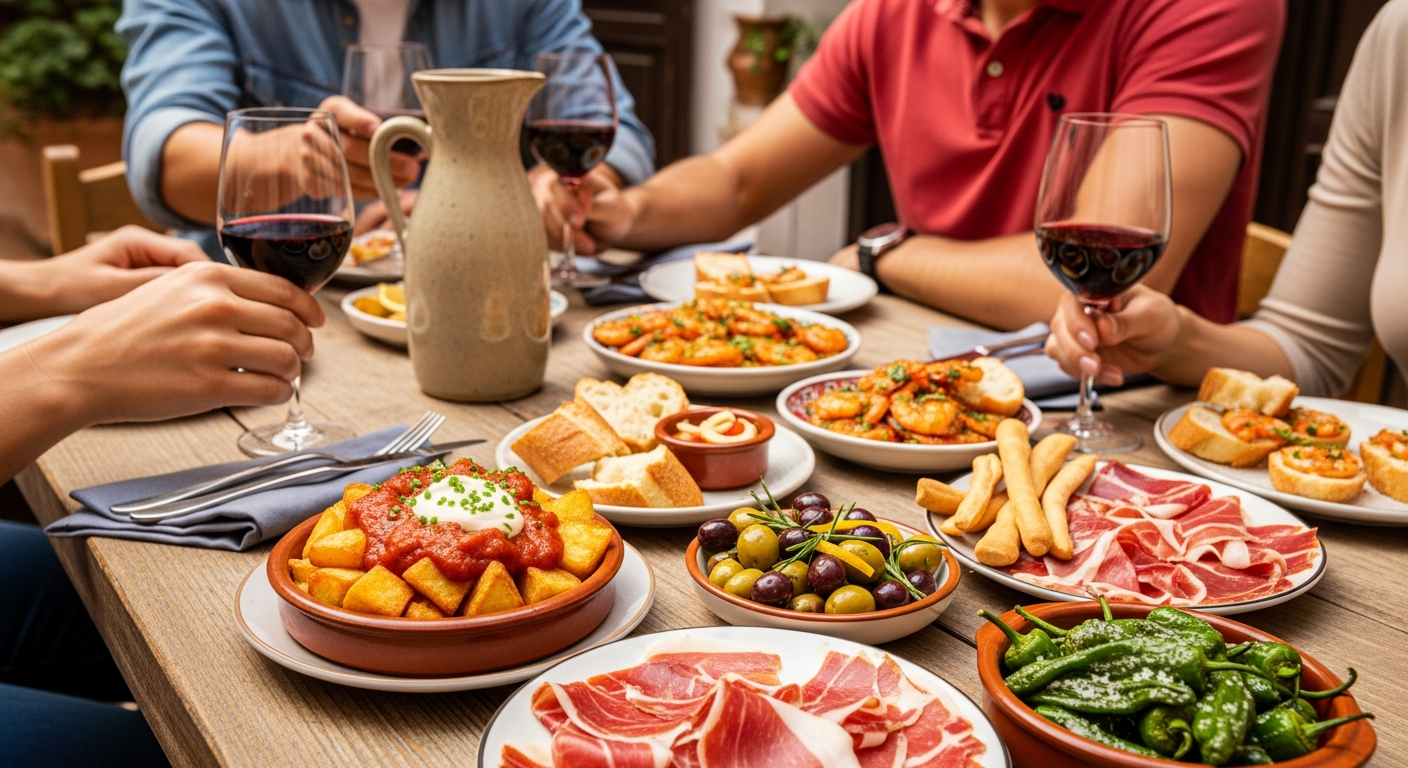
The beauty of tapas dining is the variety. Instead of committing to one main course, you can try patatas bravas, croquetas de jamón, gambas al ajillo, pimientos de padrón, boquerones en vinagre, and pulpo a la gallega — all in one evening. It is social, it is flexible, and it is excellent value.
Coffee Culture
Spanish coffee prices make Northern Europeans weep with joy. A café solo (espresso): €1-1.30. A cortado (espresso with a dash of milk): €1.20. A café con leche (the Spanish standard — equal parts coffee and steamed milk): €1.40-1.80. Sitting on a terrace adds €0.30-0.50 in some places, nothing at all in others. Compare this to €4-6 for a latte in Stockholm, Oslo, or Amsterdam.
The quality is generally good — Spain uses strong blends, often torrefacto-roasted (a Spanish speciality that adds a slightly bitter intensity). Speciality third-wave coffee shops are appearing in larger cities and charge €2.50-3.50, but the traditional bar serving a perfectly good café con leche for €1.50 remains the norm.
Beer and Drinks
A caña (small draft beer, typically 200ml): €1.50-2.50. A cerveza (330ml): €2-3. A copa de vino (glass of wine): €2-3 in a normal bar, €4-6 in upmarket establishments. A tinto de verano (red wine with lemon soda — the summer essential): €2-3. A gin-tonic (Spain's cocktail obsession): €6-10, served in a balloon glass with elaborate garnishes.
In Scandinavia, a single beer in a bar costs €7-10. In Spain, for the price of one Scandinavian beer, you can have two beers AND a tapa.
Fine Dining
Spain has more Michelin-starred restaurants than almost any country on earth, and they are remarkably accessible. A tasting menu at a one-Michelin-star restaurant in Spain starts from around €60-80 per person. In Scandinavia, equivalent restaurants charge €150-250. Spain's gastronomic tradition — from the Basque Country's pintxos bars to Catalonia's molecular gastronomy — offers world-class dining at prices that feel almost absurd compared to Northern European fine dining.
Seasonal Food Calendar: What to Eat When
One of the great pleasures of living in Spain is eating seasonally. The climate means something is always in peak season, and seasonal produce is dramatically cheaper and better than out-of-season alternatives.
- January-March: Strawberries from Huelva (the best in Europe), artichokes, oranges in full swing, broad beans, cauliflower. This is prime citrus season — Valencia oranges and mandarins at their peak.
- April-June: Cherries from Valle del Jerte (extraordinary), apricots, peaches begin, tomatoes improving, green beans, asparagus. The transition to summer produce begins.
- July-September: Watermelons and melons at giveaway prices, tomatoes at their absolute best, peaches, nectarines, figs, peppers, aubergines, courgettes. This is peak Mediterranean eating — gazpacho weather, salads, grilled vegetables.
- October-December: Grapes, persimmons (caquis — Spain grows fantastic ones), pomegranates, mushrooms (especially in Catalonia and the north), chestnuts, early citrus begins. Root vegetables and heavier cooking returns.
Oranges are available from roughly November through May, meaning cheap fresh-squeezed orange juice for more than half the year. Many expats buy boxes of oranges directly from local farms — 10kg for €5-8 is common. You will never look at imported orange juice the same way again.
Spanish Food Customs Every Expat Should Know
Spanish eating habits follow a very different rhythm from Northern Europe, and understanding this will make your life better and your food cheaper.
Meal Times
Breakfast (desayuno) is light — coffee and toast with olive oil and tomato (pan con tomate) or a pastry. Lunch (comida/almuerzo) is the main meal, eaten between 2pm and 3:30pm. This is when the menú del día is served. Dinner (cena) is lighter and late — 9pm at the earliest, 10pm more typical. Many restaurants do not open for dinner before 8:30pm.
If you try to eat lunch at noon or dinner at 7pm, you will find yourself alone in empty restaurants or, more likely, locked doors. Adapt to the Spanish schedule and your dining options (and social life) will expand enormously.
Sobremesa
The sobremesa is the time spent lingering at the table after a meal — talking, having another coffee, maybe a copa. It is one of the most civilised traditions in European culture. Nobody will rush you out of a restaurant. Nobody will bring the bill until you ask for it ("la cuenta, por favor"). A two-hour lunch is normal, not an indulgence. This is perhaps the hardest adjustment for Northern Europeans accustomed to efficient, clock-conscious dining — and the most rewarding one.
Tipping
Tipping in Spain is appreciated but not expected. Leaving small change (rounding up to the nearest euro, or leaving €1-2 on a restaurant bill) is normal. The 15-20% American-style tip does not exist here. A €1 coin left after a menú del día is perfectly generous.
Bread
Bread comes automatically with most meals in restaurants and is usually included in the price. If it is charged separately, expect €1-2 per person. Spanish bread is typically a simple white baguette or rustic loaf — the elaborate artisan bread culture of Germany or Scandinavia does not have the same tradition here, though it is growing in cities.
Regional Specialities Worth Travelling For
Spanish cuisine is not one cuisine — it is a collection of fiercely regional traditions, each brilliant in its own way.
- Valencia and Alicante: Paella (the real one, with rabbit, chicken, beans, and snails — not the tourist seafood version), arroz a banda (rice cooked in fish stock), fideuà (paella but with noodles), all varieties of rice dishes that this region does better than anywhere on earth.
- Andalucía: Gazpacho, salmorejo (thicker, richer, topped with jamón and egg), fried fish (pescaíto frito — battered and fried anchovies, squid, and small fish), espinacas con garbanzos (spinach with chickpeas).
- Castilla: Cochinillo asado (roast suckling pig — Segovia is the capital), cordero asado (roast lamb), hearty bean stews, roasted meats of every description.
- Galicia: Pulpo a la gallega (octopus with paprika and olive oil), percebes (goose barnacles — expensive but extraordinary), empanada gallega, Albariño white wine, and the freshest Atlantic seafood imaginable.
- Basque Country: Pintxos (the Basque version of tapas, often elaborate and creative), bacalao (salt cod prepared in dozens of ways), txuletón (enormous grilled steaks), and the highest concentration of Michelin stars per capita in the world.
- Catalonia: Pa amb tomàquet (bread rubbed with tomato), escalivada (roasted vegetables), botifarra (sausage), crema catalana, and a sophisticated cooking tradition that spans rustic mountain dishes to avant-garde gastronomy.
Food Cost Comparison: Spain vs Northern Europe
| Item | Spain | Sweden | Germany | UK | Netherlands |
|---|---|---|---|---|---|
| Menú del día / lunch set | €10-14 | €15-22 (dagens lunch) | €10-15 (Mittagstisch) | €13-20 | €14-20 |
| Coffee (café con leche) | €1.40-1.80 | €4-5.50 | €2.80-3.80 | €3.50-4.50 | €3-4.50 |
| Beer (bar, 330ml) | €2-3 | €7-9 | €3.50-5 | €5-7 | €4-6 |
| Glass of wine (bar) | €2-3 | €8-12 | €4-6 | €6-9 | €5-7 |
| Bottle of good wine (shop) | €3-8 | €8-15 (Systembolaget) | €5-10 | €6-12 | €5-10 |
| Olive oil (1L, extra virgin) | €4-6 | €10-15 | €7-12 | €8-12 | €7-11 |
| Dinner for two (mid-range) | €30-50 | €80-130 | €50-80 | €60-100 | €55-90 |
| Weekly groceries (couple) | €50-80 | €90-140 | €70-110 | €80-130 | €75-120 |
| Fresh fish (sea bream, 1kg) | €6-10 | €15-25 | €12-20 | €12-18 | €10-16 |
| Michelin tasting menu | €60-80 | €150-250 | €100-160 | €120-200 | €100-170 |
Practical Tips for Eating Well on a Budget
- Make the menú del día your main meal. Cooking a light dinner at home and eating a proper restaurant lunch is both cheaper and more Spanish than the Northern European pattern of a sandwich lunch and a big dinner.
- Shop at the mercado for produce and fish, supermarkets for everything else. This split gives you the best of both worlds.
- Buy seasonal. Strawberries in January are €1.50/kg; in August they are €4 if you can find them. Spanish seasonal produce is so good and so cheap that eating seasonally is not a sacrifice — it is an upgrade.
- Learn to cook Spanish. The Mediterranean diet is based on olive oil, vegetables, legumes, fish, and simple preparations. Ingredients are cheap, techniques are straightforward, and the results are spectacular. A pot of cocido madrileño or lentejas costs €3 to make and feeds four people.
- Do not underestimate Mercadona prepared foods. Their deli counter, pre-made tortilla española, ensaladilla rusa, and rotisserie chicken are all genuinely good and incredibly cheap for nights when you do not want to cook.
- Buy wine in boxes for daily drinking. It sounds wrong, but Spanish bag-in-box wine at €8-12 for 3 litres is perfectly acceptable for weeknight dinners. Save the bottled wine for weekends.
The Bottom Line
A couple living in Spain can eat extraordinarily well — fresh Mediterranean ingredients at home, menú del día twice a week, tapas on Saturdays, good wine every evening — for €600-900 per month total, including all groceries and dining out. The same lifestyle in Sweden, Norway, the Netherlands, or the UK would cost €1,200-2,000 or more.
But it is not really about the money. It is about living in a country where food is central to daily life, where a two-hour lunch with friends is normal, where the waiter does not bring the bill until you ask, where the tomatoes taste like summer, and where a €3 bottle of wine is not a compromise — it is just Tuesday.
Welcome to Spain. You are going to eat very well.
Frequently Asked Questions
Supermarket Shopping: Your Six Main Options?
Spain has an excellent supermarket landscape, and understanding the differences will save you money from day one. Here are the six chains you will encounter most often, ranked by overall value. Mercadona — The National Champion Mercadona is Spain's largest supermarket chain and the one most expats eventually settle on as their primary shop. Their own-brand products (Hacendado for food, Deliplus for personal care, Bosque Verde for cleaning) offer remarkable quality at low prices. The fresh fish counter is excellent, the bakery is solid, and the fruit and vegetables are reliably good if not spectacular. A full weekly shop for a couple runs €40-60 here. Mercadona's strength is consistency — you always know what you are getting, the stores are clean and well-organised, and the prices are hard to beat across a full basket.
What Is Much Cheaper Than Northern Europe?
This is the section that makes people book flights. Some products in Spain are not just a little cheaper — they are in a completely different price universe. Olive Oil Spain produces nearly half the world's olive oil. A litre of excellent extra virgin olive oil costs €4-6 in any supermarket. The same quality in Sweden or the Netherlands would cost €10-15. A really premium single-estate oil for dipping bread and drizzling over salads runs €8-12 per litre — and this is oil that would win awards. You will go through more olive oil than you ever imagined, because once you start cooking with the good stuff daily, butter starts to feel like a compromise.
Local Markets: The Real Spanish Shopping Experience?
Every Spanish town of any size has a mercado municipal — a covered market building housing independent vendors selling fresh produce, meat, fish, cheese, olives, bread, and speciality foods. This is where Spanish people have shopped for generations, and it is where you will find the best quality at the best prices. Typical mercado municipal prices are 10-20% lower than supermarkets for fresh produce, and the quality is noticeably better. The tomatoes actually smell like tomatoes. The fish was swimming this morning. The fruit is ripe because it was picked ripe, not shipped green from another continent.
Seasonal Food Calendar: What to Eat When?
One of the great pleasures of living in Spain is eating seasonally. The climate means something is always in peak season, and seasonal produce is dramatically cheaper and better than out-of-season alternatives. January-March: Strawberries from Huelva (the best in Europe), artichokes, oranges in full swing, broad beans, cauliflower. This is prime citrus season — Valencia oranges and mandarins at their peak. April-June: Cherries from Valle del Jerte (extraordinary), apricots, peaches begin, tomatoes improving, green beans, asparagus. The transition to summer produce begins. July-September: Watermelons and melons at giveaway prices, tomatoes at their absolute best, peaches, nectarines, figs, peppers, aubergines, courgettes. This is peak Mediterranean eating — gazpacho weather, salads, grilled vegetables. October-December: Grapes, persimmons (caquis — Spain grows fantastic ones), pomegranates, mushrooms (especially in Catalonia and the north), chestnuts, early citrus begins. Root vegetables and heavier cooking returns. Oranges are available from roughly November through May, meaning cheap fresh-squeezed orange...
Regional Specialities Worth Travelling For?
Spanish cuisine is not one cuisine — it is a collection of fiercely regional traditions, each brilliant in its own way. Valencia and Alicante: Paella (the real one, with rabbit, chicken, beans, and snails — not the tourist seafood version), arroz a banda (rice cooked in fish stock), fideuà (paella but with noodles), all varieties of rice dishes that this region does better than anywhere on earth. Andalucía: Gazpacho, salmorejo (thicker, richer, topped with jamón and egg), fried fish (pescaíto frito — battered and fried anchovies, squid, and small fish), espinacas con garbanzos (spinach with chickpeas). Castilla: Cochinillo asado (roast suckling pig — Segovia is the capital), cordero asado (roast lamb), hearty bean stews, roasted meats of every description. Galicia: Pulpo a la gallega (octopus with paprika and olive oil), percebes (goose barnacles — expensive but extraordinary), empanada gallega, Albariño white wine, and the freshest Atlantic seafood imaginable. Basque Country:...
Why Granfield Estate?
-
⚑
Office on the coast — we live here
Our office is in La Mata, Torrevieja. We know every neighbourhood, every street and the real prices — not from a catalogue, but from daily work on the ground.
-
⚖
In-house lawyer — 10+ years of experience
NIE, bank account, property check, contract, notary — legal support at every step. First consultation free.
-
🏠
Property management
Buying to rent? Our management company handles tenant search, maintenance and all questions.
-
🌐
We speak your language
English, Spanish, Russian, German, Finnish, Swedish and more. Licence RAICV 1663, member of Asivega.
Granfield Estate · Av. Bélgica 1, C.C. Parquemar, La Mata, 03188 Torrevieja · +34 865 44 33 33
Read also

Cost of Living in Spain 2026: Monthly Budget Breakdown
10.06.2026
What it really costs to live in Spain in 2026. Complete monthly budget breakdown for a couple: from €1,500 to €2,500 per month, comfortable but not luxury.

Healthcare in Spain for Foreigners: Complete Guide
12.06.2026
Spain has one of Europe's best healthcare systems. How to access public and private healthcare as a foreigner — EHIC, SIP card, convenio especial, and private insurance explained.

10 Best Beaches on Costa Blanca (and Property Nearby)
17.06.2026
From the golden dunes of Guardamar to the hidden cove of Granadella — the 10 best beaches on Costa Blanca, with Blue Flag status, crowd levels, facilities, and property prices within walking distance.