


Spain vs Greece, Cyprus, Croatia: Mediterranean Property Comparison
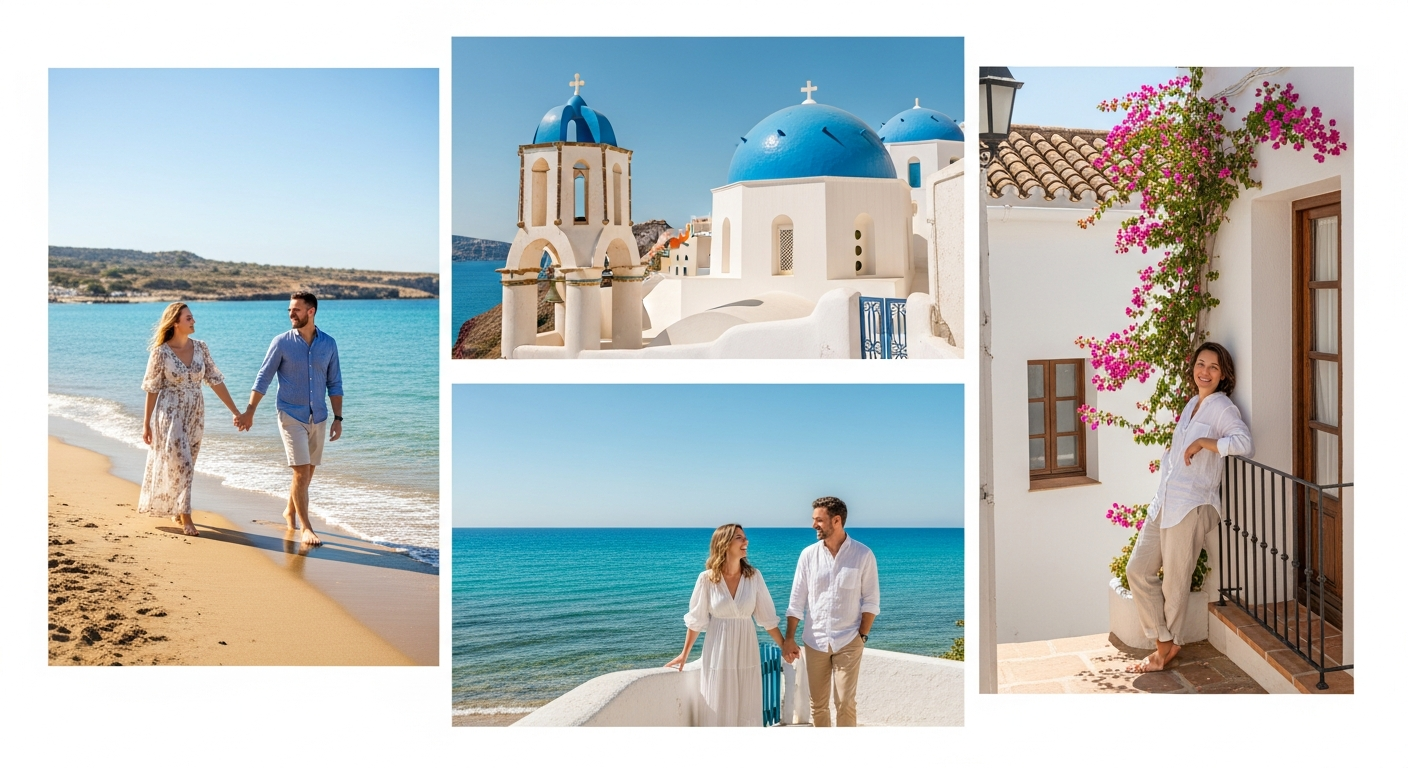
The Mediterranean Dream: Four Countries, One Big Decision
You have decided to buy property in the Mediterranean. The lifestyle, the climate, the food — it all makes sense. But which country? Spain, Greece, Cyprus, and Croatia all offer sun-drenched coastlines, ancient cultures, and property prices that look attractive compared to Northern Europe. On the surface, they seem interchangeable. They are not.
Each of these four countries presents a fundamentally different proposition for property buyers. The differences in legal frameworks, healthcare systems, flight connectivity, tax regimes, and market maturity are enormous — and they have direct, measurable consequences for your investment, your lifestyle, and your peace of mind.
This is not a promotional piece for any single country. It is a factual, detailed comparison based on data from 2025-2026, designed to help you make an informed decision. We will look at each country honestly, including their weaknesses, before drawing conclusions about which destination suits which buyer profile.
Greece: Affordable Entry, Complex Reality
Greece captures the imagination like few other countries. The islands, the light, the history, the pace of life. And the prices — Greek property remains among the cheapest in the Mediterranean. You can buy a village house on a smaller island for €50,000-80,000 or a two-bedroom apartment in Athens for €120,000-180,000. Coastal properties on popular islands like Crete or Corfu start around €150,000 for something liveable.
But price is only part of the equation, and Greece's affordability comes with significant complications that many buyers discover too late.
The Legal Labyrinth
Greek property law is notoriously complex. There is no centralised land registry covering all properties. The Hellenic Cadastre (Ktimatologio) project, which began in 1995, is still not complete in 2026. In many areas — particularly islands and rural regions — ownership relies on a chain of contracts going back decades, sometimes to the Ottoman era. Disputes over boundaries and ownership are common. Properties may have multiple claimants. A significant number of properties, particularly older ones, have never been formally registered.
The purchasing process itself is cumbersome. You need an AFM (tax number), a Greek bank account, and a lawyer. Notary fees, transfer tax (3.09%), and legal fees add 8-10% to the purchase price. For properties in border regions (including many islands near Turkey), non-EU buyers need special military approval that can take months.
Island Logistics
The Greek islands are the primary draw for foreign buyers, but island living presents logistical challenges that romantic visions tend to overlook. Ferry services are seasonal and weather-dependent. In winter, smaller islands may have ferry connections only a few times per week. Medical emergencies on small islands often require helicopter evacuation to the mainland — a service that is not always available quickly.
Construction costs on islands are 20-40% higher than the mainland because materials must be shipped. Finding reliable tradespeople is difficult. Many skilled workers leave smaller islands during winter. Internet connectivity, while improving, remains unreliable on smaller islands.
The Golden Visa Question
Greece's Golden Visa programme was one of the most attractive in Europe, offering residency permits for property investment starting at €250,000. However, in 2024-2025, the Greek government significantly tightened the programme. In Athens, Thessaloniki, Mykonos, Santorini, and other high-demand areas, the minimum investment has doubled to €500,000. Additional restrictions limit the use of Golden Visa properties for short-term rentals. The programme remains available, but it is no longer the bargain it was.
Rental Yields and Market Dynamics
Greek rental yields are modest for long-term lets — typically 3-4% gross in Athens and 2-3% on islands. Short-term holiday rentals perform better in peak season (June-September), but the season is short. Most island properties sit empty for six to seven months. Maintenance costs during the off-season — damp, storm damage, garden care — eat into returns. Capital appreciation has been strong since the post-crisis lows, but from historically depressed levels. Athens property prices are still 25-30% below their 2008 peaks in real terms.
Cyprus: Tax Haven with Caveats
Cyprus offers a genuinely attractive tax environment. Corporate tax of 12.5%, no inheritance tax, no capital gains tax on shares, and favourable treatment of rental income make it popular with entrepreneurs and retirees structuring their finances efficiently. The island's legal system, based on English common law, is more familiar to British and Irish buyers than the civil law systems of the other three countries.
But Cyprus has complications that are unique and significant.
The Division
Cyprus has been divided since 1974. The northern third of the island is occupied by Turkey and operates as the self-declared Turkish Republic of Northern Cyprus, recognised only by Turkey. Property rights in the north are deeply contested. Greek Cypriot owners lost properties in 1974 that were subsequently given to Turkish settlers or sold to foreign buyers. Legal challenges continue. Buying in the north carries genuine title risks, despite lower prices. The European Court of Human Rights has ruled in favour of original Greek Cypriot owners in multiple cases.
Even in the Republic of Cyprus (the south), the property market has its issues. The title deed system was historically problematic, with many properties — particularly those built during the 2000s boom — lacking proper title deeds due to developer debts and mortgages on the land. Reforms have improved the situation, but buyers must still exercise extreme caution and verify that clear title deeds exist before purchasing.
Limited Healthcare
Cyprus launched its General Healthcare System (GHS/GESY) in 2019, providing universal coverage. However, the system is young and strained. Specialist care is limited — for complex medical conditions, patients are often referred to hospitals in Greece, Israel, or the UK. The island has only one major public hospital in each of the main cities (Nicosia, Limassol, Larnaca, Paphos). Private healthcare is available but expensive, and options are narrower than in larger countries.
Market Size and Liquidity
Cyprus is a small island with a population of approximately 1.2 million. The property market is correspondingly small. In popular coastal areas like Paphos and Limassol, prices have risen substantially — two-bedroom apartments in Limassol now start at €250,000-350,000, comparable to or above many Spanish coastal areas. The premium you pay does not always come with proportional infrastructure or amenity improvements.
Market liquidity is limited. Selling a property in Cyprus can take significantly longer than in Spain or Greece. The buyer pool is smaller. During market downturns, this illiquidity becomes a serious problem — as Cyprus experienced during the 2013 banking crisis, when property values collapsed and remained depressed for years.
Croatia: EU Newcomer, Rising Star
Croatia joined the EU in 2013 and adopted the euro in 2023. The Dalmatian coast is genuinely spectacular — Dubrovnik, Split, Hvar, and the hundreds of islands along the coastline rival anything in the Mediterranean. Tourism has boomed. Property prices have risen sharply. And Croatia is increasingly on the radar of international buyers.
But Croatia's property market is still maturing, and there are important realities to consider.
Rising Prices, Limited Infrastructure
Croatian coastal property prices have increased 40-60% since 2019 in the most popular areas. A stone house in Dubrovnik's old town can exceed €500,000. Even smaller towns along the coast now see two-bedroom apartments at €200,000-300,000. Croatia is no longer cheap.
Infrastructure has not kept pace with this growth. The motorway network is incomplete — driving from Zagreb to Dubrovnik requires passing through a small section of Bosnia. The Peljesac Bridge, completed in 2022, helped, but coastal roads remain narrow and congested in summer. Public transport outside Zagreb is minimal. Reliable internet in rural coastal areas is not guaranteed.
Healthcare Limitations
Croatia's public healthcare system is functional but under-resourced. Waiting times for specialist appointments are long — often months. The best hospitals are in Zagreb, meaning coastal residents may need to travel hours for serious medical care. For retirees, this is a significant consideration. Private healthcare exists but is far less developed than in Spain.
Bureaucracy and Language
The Croatian property purchase process involves layers of bureaucracy. Foreign EU citizens can buy freely, but non-EU buyers face restrictions and need reciprocity agreements. The land registry (Zemljišna knjiga) is sometimes outdated or inaccurate, particularly for older properties and on islands. Croatian is spoken by approximately 5 million people worldwide, and English proficiency, while improving, is not universal — particularly among older people and in administrative offices. Official documents, court proceedings, and municipal communications are exclusively in Croatian.
Seasonal Economy
Croatia's coast is heavily tourism-dependent, even more so than Spain or Greece. The season runs from June to September, with a sharp peak in July-August. Outside this window, many coastal towns become very quiet. Rental yields of 5-7% are achievable during the season, but annual yields drop to 3-4% when factoring in the long off-season. Year-round rental demand is minimal outside Zagreb.
Spain: The Established Option
Spain is the most popular destination for foreign property buyers in Europe. In 2025, over 90,000 foreigners purchased property in Spain — more than Greece, Cyprus, and Croatia combined by a significant margin. This popularity is not accidental. It reflects decades of market development, infrastructure investment, and a regulatory framework that, while imperfect, is the most mature of the four countries.
Market Maturity and Transparency
Spain's property market is deep, liquid, and well-regulated. The Land Registry (Registro de la Propiedad) covers virtually every property in the country. Ownership records are reliable. The cadastral system is digitised. Online tools allow buyers to verify property details, tax values, and registered charges before even contacting an agent. The notarial system provides a layer of legal oversight at completion that protects both parties.
This maturity means more choice at every price point. Studio apartments on the coast start under €60,000. Family villas with pools are available from €200,000 in many areas. Luxury new-build developments with sea views, communal pools, and underground parking are common at €250,000-400,000. Whatever your budget and lifestyle, Spain has options — and enough market depth that you are not forced to compromise.
Healthcare: Best in Class
Spain's healthcare system consistently ranks among the top ten globally. The public system (SNS) covers residents comprehensively. Every province has public hospitals with emergency departments. Major cities — Madrid, Barcelona, Valencia, Malaga, Alicante — have world-class university hospitals with full specialist services. For foreign residents, private health insurance costs €80-150 per month and provides fast access to English-speaking doctors.
This is not a minor point. For retirees and families, healthcare quality is arguably the most important factor in choosing where to live. Greece, Cyprus, and Croatia simply cannot match Spain's healthcare infrastructure in terms of scope, quality, accessibility, and language support.
Flight Connections: Unmatched
Spain has 47 airports, of which more than 30 serve international routes. Alicante-Elche airport alone connects to over 150 destinations across Europe. Malaga, Palma de Mallorca, Barcelona, Madrid, Tenerife, and a dozen other airports offer year-round connections to virtually every European city. Low-cost carriers — Ryanair, easyJet, Vueling, Wizz Air — provide flights from €20-50 each way.
Compare this to Greece (limited winter schedules to islands, Athens as the main hub), Cyprus (two airports, Larnaca and Paphos, with more limited route networks), and Croatia (small airports in Dubrovnik, Split, and Zagreb with heavily seasonal schedules). If being able to fly home easily and cheaply — year-round, not just in summer — matters to you, Spain wins decisively.
Language Support and Expat Communities
Spain's established expat communities provide a support network that does not exist at the same scale in the other three countries. Along the Costa Blanca, Costa del Sol, and in the Balearics, you will find English-speaking lawyers, doctors, accountants, and tradespeople. Scandinavian communities in areas like Alfaz del Pi and Torrevieja have their own churches, social clubs, and even dedicated healthcare centres. German-speaking communities are established in Mallorca and parts of the Costa Blanca.
PropMia provides property search support in 12 languages — Spanish, English, German, Dutch, French, Swedish, Norwegian, Finnish, Polish, Italian, Ukrainian, and Russian. This multilingual infrastructure reflects the diversity of Spain's foreign buyer market and the maturity of services available.
The Comparison Table
Here are the key metrics compared side by side. All figures are for 2025-2026 and represent typical values for coastal property popular with foreign buyers.
| Factor | Spain | Greece | Cyprus | Croatia |
|---|---|---|---|---|
| Entry price (2-bed apartment, coast) | €100,000-180,000 | €80,000-150,000 | €180,000-300,000 | €150,000-280,000 |
| Purchase costs (taxes, fees) | 10-13% | 8-10% | 6-10% | 7-10% |
| Annual property tax | €200-800 | €100-500 (ENFIA) | €0-300 | €100-400 |
| Non-resident income tax | 19% (EU) / 24% | 15-44% (scale) | 0% under threshold | 10% flat |
| Capital gains tax (non-resident) | 19% | 15% | 20% | 10% (reducing) |
| Healthcare ranking (WHO/Lancet) | Top 10 | Top 30 | Top 40 | Top 50 |
| International airports | 30+ | 15 (seasonal) | 2 | 4 (seasonal) |
| Year-round flight connections | Excellent | Limited (island) | Moderate | Limited |
| Gross rental yield (annual) | 4-7% | 3-5% | 4-6% | 3-5% |
| Rental season length | 8-12 months | 4-6 months | 6-9 months | 3-5 months |
| Land registry reliability | High | Variable | Improving | Variable |
| Legal security for buyers | High | Moderate | Moderate | Moderate |
| English widely spoken | In tourist areas | In tourist areas | Yes (widely) | In tourist areas |
| Multilingual services (12+ languages) | Yes (established) | Limited | Limited | Minimal |
| Expat community size | Very large | Moderate | Moderate | Small |
| Market liquidity (ease of resale) | High | Moderate | Low-Moderate | Moderate |
When Each Country Makes Sense
Choose Greece If...
You are looking for the lowest possible entry price, you are adventurous and comfortable navigating bureaucracy, you love island culture and do not mind seasonal isolation, you are not dependent on year-round flight connections, and you have the patience for a potentially complex legal process. Greece is best suited to younger buyers, those seeking a holiday home they will use in summer, or retirees who are healthy, independent, and drawn to the authentic Greek lifestyle. Budget: under €150,000 for basic island or rural property.
Choose Cyprus If...
Tax optimisation is your primary motivation, you have a business or income structure that benefits from Cyprus's corporate tax regime, you are comfortable with a small island environment, you do not need extensive healthcare options, and you are prepared to accept limited market liquidity. Cyprus works well for entrepreneurs, digital nomads with specific tax planning needs, and British retirees who appreciate the English-language legal system. Budget: €200,000+ for anything worthwhile in the south.
Choose Croatia If...
You want to be an early mover in a market with potential upside, you prioritise natural beauty and are willing to trade infrastructure for landscape, you are primarily looking for a summer holiday home, and you are comfortable with a developing market and limited expat support. Croatia suits younger buyers, sailing enthusiasts, and those with existing connections to the region. Budget: €200,000+ for coastal property.
Choose Spain If...
You want the most complete package: reliable healthcare, year-round flight connections, a deep and liquid property market, strong legal protections, established expat communities, and the widest choice at every price point. Spain is the right choice for retirees who need healthcare certainty, families with children who need schools and activities, investors seeking reliable rental yields with longer seasons, anyone who wants to fly home frequently and cheaply, buyers who value legal security and market transparency, and anyone who does not speak the local language fluently — because Spain has the most developed multilingual support infrastructure in the Mediterranean.
Spain's Infrastructure Advantage
The difference that separates Spain most clearly from the other three countries is not price — it is infrastructure maturity. Infrastructure in this context means the full system that supports property ownership and quality of life: transport networks, healthcare facilities, legal frameworks, financial services, language support, and community integration.
Spain has had decades to develop this infrastructure for foreign buyers. The first wave of British and German buyers arrived in the 1970s and 1980s. By the 1990s, entire service ecosystems had developed. Today, in areas like the Costa Blanca, you can complete an entire property purchase, set up utilities, register with healthcare, find schools, and manage your tax affairs — all in your own language, through professionals who specialise in serving foreign clients.
This ecosystem does not exist at the same scale in Greece, Cyprus, or Croatia. In Greece, you may find English-speaking lawyers in Athens, but try finding a Swedish-speaking tax advisor on a Cycladic island. In Croatia, multilingual real estate services outside Dubrovnik and Split are rare. In Cyprus, English services are good but other languages are poorly served.
For many buyers, this infrastructure is the decisive factor. It is the difference between buying a property and building a life.
The Numbers Tell the Story
In 2025, approximately 92,000 foreigners bought property in Spain, compared to roughly 15,000 in Greece, 8,000 in Cyprus, and 5,000 in Croatia. These numbers are not a coincidence. They reflect millions of individual decisions by buyers who compared their options and chose Spain — not because it was cheapest, but because it offered the best overall package.
The average foreign buyer in Spain is not choosing blindly. They have often visited multiple Mediterranean countries. They have compared prices, visited properties, and evaluated the lifestyle. The fact that Spain attracts six times more foreign buyers than Greece, ten times more than Cyprus, and eighteen times more than Croatia tells you something meaningful about the relative proposition each country offers.
Making Your Decision
Every Mediterranean country has genuine appeal. Greek islands have a magic that nowhere else can replicate. The Croatian coast is breathtakingly beautiful. Cyprus offers real tax advantages for the right profile. None of these countries is a bad choice for the right buyer.
But for most buyers — especially those making their first overseas property purchase, those who need healthcare reliability, those who want year-round lifestyle rather than just a summer house, and those who value being able to fly home easily — Spain offers the strongest overall proposition. The market is deeper, the infrastructure is more mature, the legal framework is more reliable, the healthcare is better, the flight connections are more extensive, and the multilingual support ecosystem is decades ahead of the competition.
The cheapest option is not always the best investment. The most beautiful coastline does not guarantee the best lifestyle. And the lowest tax rate does not matter if you cannot sell your property when you need to. Spain's strength is that it does nothing perfectly but does everything well — and in property, that consistency is what protects your investment and your quality of life over the long term.
Frequently Asked Questions
Greece: Affordable Entry, Complex Reality?
Greece captures the imagination like few other countries. The islands, the light, the history, the pace of life. And the prices — Greek property remains among the cheapest in the Mediterranean. You can buy a village house on a smaller island for €50,000-80,000 or a two-bedroom apartment in Athens for €120,000-180,000. Coastal properties on popular islands like Crete or Corfu start around €150,000 for something liveable. But price is only part of the equation, and Greece's affordability comes with significant complications that many buyers discover too late.
Cyprus: Tax Haven with Caveats?
Cyprus offers a genuinely attractive tax environment. Corporate tax of 12.5%, no inheritance tax, no capital gains tax on shares, and favourable treatment of rental income make it popular with entrepreneurs and retirees structuring their finances efficiently. The island's legal system, based on English common law, is more familiar to British and Irish buyers than the civil law systems of the other three countries. But Cyprus has complications that are unique and significant.
Croatia: EU Newcomer, Rising Star?
Croatia joined the EU in 2013 and adopted the euro in 2023. The Dalmatian coast is genuinely spectacular — Dubrovnik, Split, Hvar, and the hundreds of islands along the coastline rival anything in the Mediterranean. Tourism has boomed. Property prices have risen sharply. And Croatia is increasingly on the radar of international buyers. But Croatia's property market is still maturing, and there are important realities to consider.
Spain: The Established Option?
Spain is the most popular destination for foreign property buyers in Europe. In 2025, over 90,000 foreigners purchased property in Spain — more than Greece, Cyprus, and Croatia combined by a significant margin. This popularity is not accidental. It reflects decades of market development, infrastructure investment, and a regulatory framework that, while imperfect, is the most mature of the four countries. Market Maturity and Transparency Spain's property market is deep, liquid, and well-regulated. The Land Registry (Registro de la Propiedad) covers virtually every property in the country. Ownership records are reliable. The cadastral system is digitised. Online tools allow buyers to verify property details, tax values, and registered charges before even contacting an agent. The notarial system provides a layer of legal oversight at completion that protects both parties.
The Comparison Table?
Here are the key metrics compared side by side. All figures are for 2025-2026 and represent typical values for coastal property popular with foreign buyers. FactorSpainGreeceCyprusCroatia Entry price (2-bed apartment, coast)€100,000-180,000€80,000-150,000€180,000-300,000€150,000-280,000 Purchase costs (taxes, fees)10-13%8-10%6-10%7-10% Annual property tax€200-800€100-500 (ENFIA)€0-300€100-400 Non-resident income tax19% (EU) / 24%15-44% (scale)0% under threshold10% flat Capital gains tax (non-resident)19%15%20%10% (reducing) Healthcare ranking (WHO/Lancet)Top 10Top 30Top 40Top 50 International airports30+15 (seasonal)24 (seasonal) Year-round flight connectionsExcellentLimited (island)ModerateLimited Gross rental yield (annual)4-7%3-5%4-6%3-5% Rental season length8-12 months4-6 months6-9 months3-5 months Land registry reliabilityHighVariableImprovingVariable Legal security for buyersHighModerateModerateModerate English widely spokenIn tourist areasIn tourist areasYes (widely)In tourist areas Multilingual services (12+ languages)Yes (established)LimitedLimitedMinimal Expat community sizeVery largeModerateModerateSmall Market liquidity (ease of resale)HighModerateLow-ModerateModerate
Why Granfield Estate?
-
⚑
Office on the coast — we live here
Our office is in La Mata, Torrevieja. We know every neighbourhood, every street and the real prices — not from a catalogue, but from daily work on the ground.
-
⚖
In-house lawyer — 10+ years of experience
NIE, bank account, property check, contract, notary — legal support at every step. First consultation free.
-
🏠
Property management
Buying to rent? Our management company handles tenant search, maintenance and all questions.
-
🌐
We speak your language
English, Spanish, Russian, German, Finnish, Swedish and more. Licence RAICV 1663, member of Asivega.
Granfield Estate · Av. Bélgica 1, C.C. Parquemar, La Mata, 03188 Torrevieja · +34 865 44 33 33
Read also

Rental Investment in Guardamar del Segura: Why the Short-Term Rental Ban Is Actually an Advantage
30.03.2026
Guardamar del Segura is one of the few Costa Blanca towns where the municipality does not issue short-term rental licences. For investors this means stable income without seasonal gaps, and for those buying to live — peace and permanent neighbours instead of noisy tourists.

Apartments and Penthouses in Los Alcázares: Investment Guide
16.04.2026
Los Alcázares is one of the most promising property investment destinations on the Mar Menor coast. Apartments from €90,000, penthouses with terraces from €200,000, seasonal rental yields of 6-9%. We break down property types, real running costs and the best areas.

Rent vs Buy in Spain: Which Makes More Sense in 2026?
13.06.2026
A data-driven analysis of price-to-rent ratios, purchase costs versus accumulated rent, Spanish rental regulations, and tax implications to help you decide whether to rent or buy in Spain.